

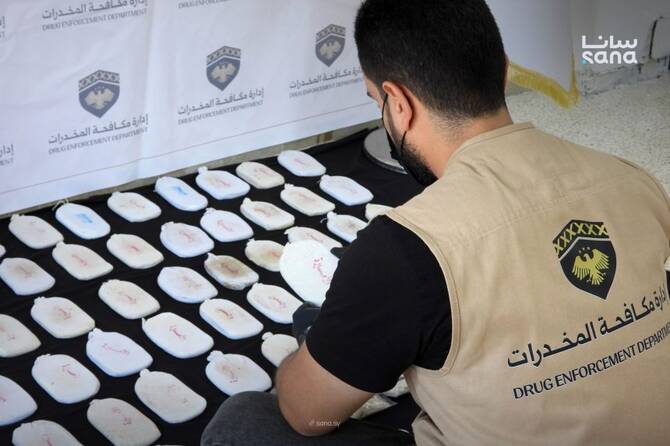

LONDON: Syrian authorities said on Friday that they arrested two suspected drug traffickers in the coastal governorate of Tartous and seized narcotics, weapons and ammunition.
The Interior Ministry’s Drug Enforcement Department said that its officers carried out the operation after surveilling the suspects and monitoring their activities.
Authorities seized 27 kg of hashish, 5,000 captagon pills and other narcotics, along with weapons and ammunition, the department said in a Telegram post.
The suspects remain in custody as officials complete legal procedures before referring the case to the appropriate judicial authorities. The drugs, weapons and ammunition were confiscated.
The arrests were part of the department’s continuing campaign against drug trafficking and distribution networks.
In late July, the department arrested two other suspected traffickers in Tartous following a separate surveillance operation, state-run news agency SANA reported.
Since the fall of Syria’s longtime President Bashar Assad on Dec. 8, 2024, the country’s captagon trade appears to have been disrupted and decentralized, not eliminated, according to media reports.
The transitional government has raided laboratories and warehouses and destroyed large drug stockpiles, but trafficking networks, remaining inventory and the incentives that fueled the trade persist.
After the collapse of Assad’s government, the new authorities uncovered large quantities of captagon in former regime-linked facilities.
New Lines Institute documented seizures of more than 200 million pills in the first four months after Assad’s fall, largely from laboratories, warehouses and former strongholds rather than routine border interdictions.


