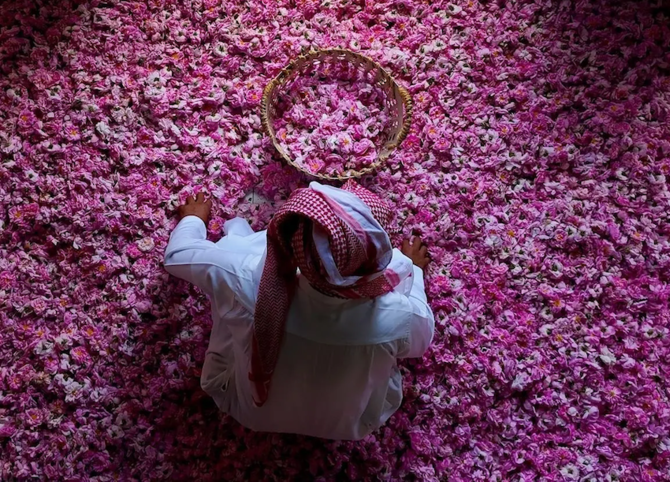
MAKKAH: For decades, the Taif rose was a symbol: A fragrant shrub bound to the name of Taif, sold fresh and admired for a few weeks each spring. It is now also a manufacturing base.
Processing plants have extended the flower’s commercial life across the whole year, creating an economic and tourism asset for the region and binding two groups of businesses together, the farmers who grow the petals and the manufacturers who distil them, harnessing modern equipment to draw out perfume and cosmetic ingredients.
Rashid Al-Qurashi, one of the largest rose growers in Taif, told Arab News the crop rewards inherited expertise and year-round attention, all geared toward a picking window of about 45 days.
The cultivation calendar, as he described it, begins with winter pruning, then steady irrigation and soil care, and ending with the harvest itself carried out in the dark hours before dawn, when the flower’s oils remain most concentrated.
Growers expand their acreage each year out of attachment to the plant as much as commercial logic, he said. Demand has risen annually as the rose’s reputation has spread internationally, encouraging farmers to increase output and to support processing so that supply is no longer limited to the harvest season.
State backing for agriculture and local industry has been the decisive factor, Al-Qurashi said, helping growers move from traditional practice to methods that are more sustainable and more competitive in export markets. Their priorities now are higher yields and modern irrigation to cope with climate and water constraints.
Hamed Al-Hudhali, who runs a rose processing plant, told Arab News that manufacturing has been reshaped in recent years by new distillation and extraction equipment, which has raised both quality and volume for local and international buyers.
Production is no longer limited to rose oil and rose water in their conventional forms. Factories now turn out cosmetics, skincare products, concentrated essential oils and natural soaps, and rose extract has begun appearing in food products such as confectionery and tea.
“The added value in processing lies in using every part of the production line,” Al-Hudhali said. Extracted oils go into fine perfumes, while the residual liquid and second distillation become hair and skin products he described as entirely natural.
That has lifted the value of the local crop, he said, keeping Taif rose goods available year-round and raising the Saudi product’s profile at international trade fairs. He described the relationship between farms and factories as the industry’s foundation: manufacturers secure reliable, high-grade material and growers secure prices that justify expansion.
The rose has become a brand and an investment rather than simply a crop, one that contributes to the national economy, Al-Hudhali said — evidence, in his view, of how far Saudi products can go in terms of quality and manufacturing standards.