

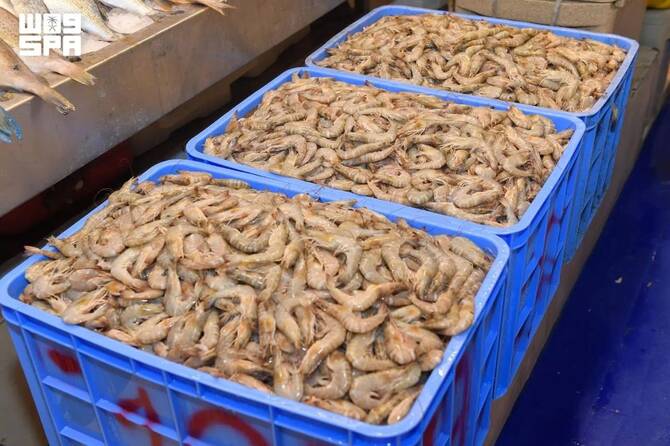
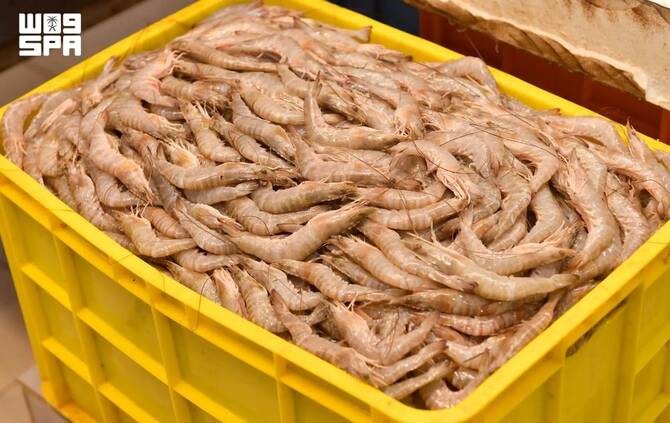

RIYADH: Qatif’s central fish markets have witnessed heightened trading activity following the launch of the 2026 shrimp fishing season, with fresh shipments arriving daily at wholesale auctions and supply expected to surge in the coming weeks.
Shrimp remains one of the Kingdom’s most popular seafood choices, enjoying strong demand among Saudi and Gulf households year-round and taking center stage at dining tables during special occasions.
The Eastern Province branch of the Ministry of Environment, Water and Agriculture announced the opening of the shrimp fishing season in Saudi Arabian Gulf waters in early August, with the season scheduled to run through the end of January 2027.
The ministry said that the regulated season aimed to ensure sustainability, strengthen food security, protect marine stocks and support the local economy.
Logistical preparations at regional ports have been completed alongside efforts to accelerate the digital transformation of fishermen’s services. Comprehensive monitoring plans across ports, markets and supply chains have also been implemented to ensure product safety and quality.
Initial indicators point to an abundant harvest, with catch volumes expected to peak mid-season before experiencing a natural decline as January draws to a close.
Local fish traders anticipate a significant rise in supplies as fishing activity gains momentum. Shrimp is currently available in a range of varieties and colors — including white, red, and brown— appealing to different culinary preferences.
Larger shrimp sizes are expected to enter the market in September and remain available through the end of the season.
Badr Al-Muhaishi, a fish trader at Qatif market, said it remained too early to assess overall yield, noting that daily catch volumes typically stabilized after two to three weeks.
“Current supply is largely limited to medium and small-sized shrimp,” Al-Muhaishi said. “Premium varieties, including jumbo and super jumbo sizes, typically enter the market toward the end of the season, particularly in December.”
He highlighted key operational differences between local fleets, explaining that smaller boats conducted daily trips off the coasts of Qatif, Dammam, Alkhobar and Al-Aziziyah, while larger vessels spent two to three days in deeper northern Gulf waters before returning with heavier catches.
Prices are expected to drop as larger vessels return and overall market volumes rise, reflecting standard supply and demand dynamics.
Shrimp harvested off Qatif and Dammam is considered among the highest quality in the region, prized for its size and flavor — advantages that become more pronounced as the season progresses, making it a preferred choice for major hotels and restaurants.
According to Al-Muhaishi, local consumers often wait until late in the season to purchase and freeze larger quantities to take advantage of peak size and quality.
Weather conditions play a critical role in catch abundance. High humidity and calm seas encourage shrimp to gather, while strong winds and rough waves disperse schools, making harvesting more difficult.
Al-Muhaishi said that local fishermen relied on inter-generational expertise to identify prime fishing grounds based on seabed conditions and marine terrain.
Qatif’s fish market operates under a unified auction schedule to ensure fair and orderly trading, according to Mabrouk Al-Harthi, manager at Al-Fahdah Co., which operates the facility.
The main auction bell rings at 2:30 p.m., with security personnel supervising transactions. Dedicated cleaning crews begin work immediately after the auction concludes to prepare the floor for the next session.
Al-Harthi added that the facility hosts two daily auctions — the first following dawn prayers and the second before afternoon prayers — as part of an integrated system supporting the Middle East’s largest fish market.
The market attracts thousands of daily visitors from across the Kingdom and neighboring GCC nations, with footfall rising sharply during the shrimp season. Managing peak periods requires close coordination among market operators, security forces and municipal authorities to regulate traffic flow and prevent congestion.
To modernize operations, management is preparing to pilot a remote auction platform during the current season.
The initiative will allow traders and investors to participate in live bidding remotely, broadening the buyer base and boosting daily trading volumes while maintaining transparency and competitiveness.


