





RIYADH/ROME: Water scarcity is taking center stage at art exhibitions across the globe, calling attention to the consequences of climate change. From Portugal’s Bienal Del Agua to the UNESCO Office’s “Water Dream Memory” at the Venice Biennale, art is not only a tool for contemplation but also a platform to shape future policy.
This year’s edition of Videocitta, an international festival dedicated to vision, video art and digital culture which ended in Rome last week, put water at the heart of its vision, exploring its ecological, political and cultural significance.
Videocitta President Francesco Rutelli said: “The challenges concerning water are and will remain crucial. Water, after all, is a theme the Arab world understands better than anyone. Scarcity has always been the mother of ingenuity.
“Bringing decision-makers together with a new generation of digital artists and with a wide public helps create collaborations that are both pragmatic and visionary, especially in the decisive field of adaptation: a challenge all humankind must confront, yes, creatively and solve in the medium term,” he told Arab News.
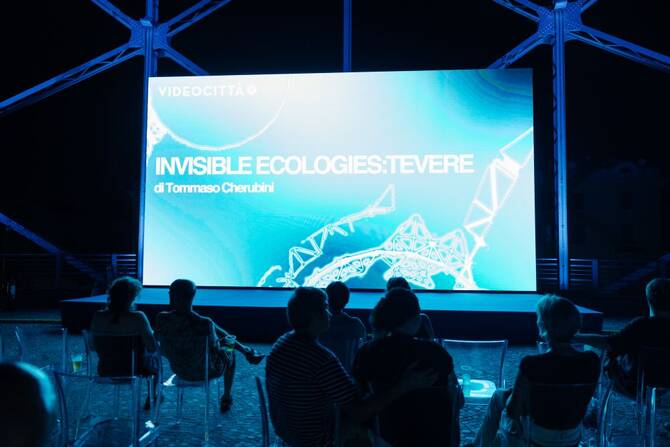
The festival was held at Gazometro di Roma, once the largest gasometer in Italy, to bring immersive light installations, augmented reality and virtual reality experiences, video art, talks, DJ sets to the public.
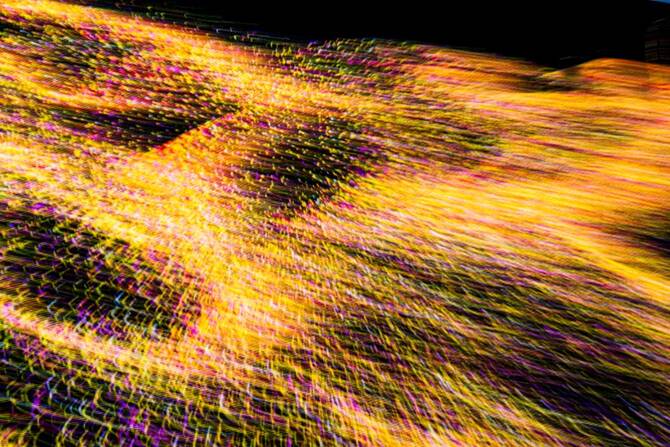
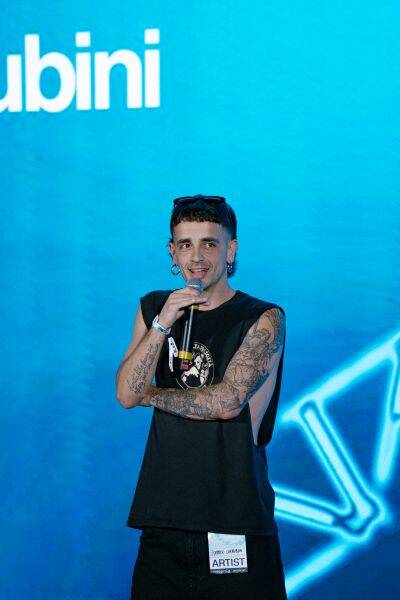
Italian artist Tommaso Cherubini’s work “Invisible Ecologies: Tevere” is a data-driven audiovisual installation that translates the River Tiber’s history into a generative particle system.
It moves through 14 chapters spanning from 1900 to 2024, built on hydrological and water quality data drawn from sources like historical flood studies, hydrological archives and monitoring records.
“Every chapter connects a real event in the river’s life to a real event in Rome’s life: the construction of the embankment walls, the industrial pollution that began during World War I, the leptospirosis outbreak of 1960 that ended an entire culture of river life in the city,” Cherubini said.
“The second part of the work shifts scale and gives space to the organisms that live in and depend on the river, from phytoplankton to microscopic species that reveal the real biological health of the water.”
He said his inspiration came from the idea that the river had memory.
Every transformation Rome has gone through, its growth, industrialization and relationship with water is written into the data he presents.
“I wanted to give the people of Rome a way to see themselves reflected in that history and at the same time confront them with the river as a living subject rather than a backdrop or a resource,” he said.
The Videocitta’s approach was unique in that it dedicated the whole edition to water, which meant it trusted art to validate the urgency of an issue that is usually communicated through numbers and reports, he said.
“Water scarcity is difficult to grasp when it’s presented only as data. Art can create a bridge that connects a scientific fact to something people actually feel. That’s exactly the approach I try to bring to my own work, using digital art and beauty as an entry point, not as decoration.
“Beauty draws people in and once they’re inside the work they’re closer to understanding the environmental issue underneath it.
“Videocitta built a whole festival around that same principle and having ‘Invisible Ecologies: Tevere’ inside a program entirely dedicated to water meant the work wasn’t just seen, it was seen in a context that was already asking the audience to think differently about their relationship with it.”
The festival is also a path to cultural diplomacy. Rutelli said he had a special relationship with Saudi Arabia, with which he collaborates as head of the art and culture branch of Proger, the engineering company behind the Riyadh Art project.
Rutelli is a former deputy prime minister and culture minister of Italy and served as mayor of Rome from 1993 to 2001. With his political and strategic experience he has devoted his work to protecting, promoting and renewing museums and cultural institutions.
“If we want to bring onboard the new generations and new private and public investors we must bring together great and emerging artists, digital innovation and genuine public involvement,” he said.
“I am confident we can open new horizons, also through the soft power of culture and cultural diplomacy, in these troubled and complex geopolitical times.”


