
RIYADH: While most people know Prince Sultan bin Salman Al-Saud as the first Arab and Muslim astronaut to travel into space, the years that followed were devoted to a different mission: reviving Saudi Arabia’s heritage and documenting the people whose lives helped shape the Kingdom’s history through numerous publications.
That mission was on display at Al-Uthaibat farm in Diriyah, where Prince Sultan honored one of the Arab world’s foremost conservation architects, Egyptian heritage expert Saleh Lamei Mustafa, with the launch of “Pages from a Lifetime: Seventy Years in the Corridors of Heritage,” a book documenting Lamei’s seven decades of work preserving the region’s architectural legacy.

“Pages from a Lifetime: Seventy Years in the Corridors of Heritage,” is a book documenting Lamei’s seven decades of work preserving the region’s architectural legacy. (Supplied)
Throughout his career, Lamei contributed to the restoration of some of the region’s most significant heritage landmarks, including the Qibla Wall of Al-Masjid an-Nabawi, Al-Aqsa Mosque, the Dome of the Rock, Baalbek and Al-Azhar Mosque.
Through the nonprofit Al-Turath Foundation, Prince Sultan has spent decades preserving Saudi Arabia’s architectural heritage and documenting the people whose lives helped shape the Kingdom’s history.
Prince Sultan traces that mission back to Al-Uthaibat, a historic family farm in Diriyah that he acquired in the mid-1980s after returning from his space mission. The property, part of an inheritance from King Faisal, included a mud-brick house that had fallen into disrepair.

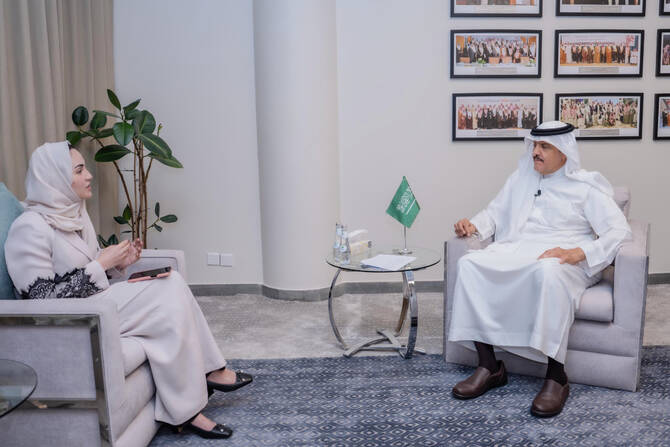
Prince Sultan bin Salman Al-Saud reflects on his lifelong mission to preserve Saudi Arabia’s heritage during an interview with Noor Nugali, deputy editor in chief of Arab News, in Riyadh on June 24, 2026. (Supplied)
While others saw a crumbling structure beyond repair, he saw something worth saving.
“They saw ruins … I saw heaven,” Prince Sultan Al-Saud, special adviser to King Salman and founder and chairman of the board of trustees of the nonprofit Al-Turath Foundation, told Arab News.
“My intention was to bring it back to life,” he said, describing the restoration as the turning point that transformed heritage from an interest into what he now calls his life’s cause.
“In the mid-’80s, when I came back from the space mission … I ended up buying that King Faisal inheritance,” Al-Saud said.

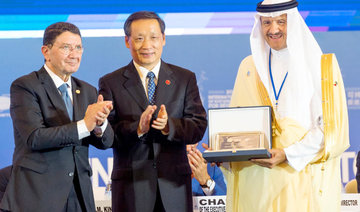
Lifetime Achievement Award was presented to King Salman by Prince Sultan during a ceremony held in his honor at King Abdulaziz Palace in Al-Murabba on Dec. 18, 2012. (Supplied)
At the time, this was not his field. He had built his career in aviation, serving in the Royal Saudi Air Force and flying extensively. Working with mud, rebuilding walls by hand and learning traditional construction methods was unfamiliar.
Prince Sultan worked alongside traditional builders, learning techniques that had been passed down across generations.
“My very first experience building with mud bricks … was building this house,” he said. “That was a transformation for me.”
He credits those craftsmen with changing his perspective, saying he has always believed in learning from masters, regardless of their profession.
“I’ve always respected masters,” he said. “Whether they build with mud or fly airplanes, wisdom comes from experience.”
The process required time and immersion. He stayed at Al-Uthaibat while construction was ongoing, sometimes spending nights there as work continued into the next day.
“I fell in love with Al-Uthaibat,” he said.
“Heritage imposed itself on me as a life mission. The heritage cause began with Al-Uthaibat.”

Al-Uthaibat farm in Diriyah. (Supplied)
His passion for heritage and reviving history led to the establishment of the Al-Turath Foundation in 1996, with a mission to preserve Saudi, Arab and Islamic heritage.
“That’s when Al-Turath Foundation came to life,” he said.
That commitment to championing heritage is also reflected in the Prince Sultan bin Salman Award for Urban Heritage, established in 2005 to recognize individuals, institutions and professionals who have played a key role in preserving, maintaining and reviving architectural heritage across the Kingdom and the Gulf Cooperation Council countries.
The seventh student edition attracted 122 participants from 15 universities across nine regions of the Kingdom, competing in two categories: Adaptive Reuse of Heritage Buildings and Sites, and Urban Design and Integration with the Heritage Environment.
Following several rounds of evaluation, 20 projects — 10 in each category — advanced to the final stage. The winners are expected to be announced at the award ceremony in the fourth quarter of 2026.
Over the years, the award has honored some of the most prominent advocates of heritage preservation. Its first edition, in 2006, was presented to Prince Charles, the then Prince of Wales and now King Charles III, a longtime champion of traditional architecture.

Prince Sultan bin Salman bin Abdulaziz presents the Lifetime Achievement Award to King Charles III—then Prince of Wales and heir to the British throne—during the inaugural edition of the award at the King Abdulaziz Historical Center in Riyadh on March 25, 2006. (Supplied)
In 2012, during its fourth session, the award was presented to King Salman — then crown prince, deputy prime minister and minister of defense — at a ceremony at King Abdulaziz Al-Murabba Palace, in recognition of his efforts in safeguarding urban heritage and supporting heritage programs.
Prince Sultan told Arab News that this year’s award will go to Al-Elisha group — a joint award for about 20-25 people in November.
Over time, the foundation evolved. Reviving heritage remained central, but its scope expanded to include documentation, research and new technologies.
Today, Al-Turath is entering what he describes as a new phase.
“It’s coming to a second golden era,” he said.
“We do studies now by advanced technology.”

Prince Sultan honored one of the Arab world’s foremost conservation architects, Egyptian heritage expert Saleh Lamei Mustafa, with the launch of “Pages from a Lifetime: Seventy Years in the Corridors of Heritage,” at Al-Uthaibat farm in Diriyah. (Supplied)
The organization also adapted structurally, separating its commercial and nonprofit activities to sustain long-term work.
“It’s going to be a whole institution. It has its own initiatives, training programs, a network of partnerships.”
That vision also includes a new educational institution called Erth, meaning “legacy” in Arabic, that will be established in Al-Ghat, northwest of Riyadh.
“It will offer master’s programs, student training programs, scholarships, visiting professors and experts.”
He added that it will be “a joint venture” through partnerships with international institutions and local universities.
The institute, he said, is designed to combine academic study with practical field experience, allowing students to learn traditional earth construction techniques firsthand.
“An institution that will basically teach a master’s degree. Part of it, you build by yourself. You go into the dirt, and you learn what being in the dirt is like in the summer.”
Al-Saud said that it will also support Al-Turath’s broader work in heritage conservation, including the revival of historic buildings and villages, research, and the use of advanced technologies such as artificial intelligence and laser.

Prince Sultan honored one of the Arab world’s foremost conservation architects, Egyptian heritage expert Saleh Lamei Mustafa, with the launch of “Pages from a Lifetime: Seventy Years in the Corridors of Heritage,” at Al-Uthaibat farm in Diriyah. (Supplied)
That phase includes expanding into exhibitions, conferences and partnerships, as well as building a broader institutional framework around heritage work.
“We are looking at joint ventures … a whole cluster that will support the foundation,” he said.
Reflecting on almost four decades of work, he added: “Every person has to have a cause in life. Heritage became mine.”
Throughout his interview, Al-Saud returned repeatedly to one person when explaining where that sense of purpose came from: his father, King Salman bin Abdulaziz Al-Saud.
He described a childhood shaped by exposure to history, traveling with his parents to places where key moments in Saudi Arabia’s past had unfolded.

Throughout Lamei’s career, he contributed to the restoration of some of the region’s most significant heritage landmarks, including the Qibla Wall of Al-Masjid an-Nabawi, Al-Aqsa Mosque, the Dome of the Rock, Baalbek and Al-Azhar Mosque. (Supplied)
“My story with heritage started in childhood,” he said. “It started in going places with my father, with my mother, looking at places where Saudi history was made.”
He believes those experiences shaped more than his appreciation of history.
“Things don’t happen by coincidence,” he said. “They happen when your heart is in the right place.”
Those early experiences were reinforced in later years through conversations and shared visits.
He recalled discussions in which King Salman encouraged him to think practically about development and to move ideas forward, even when resources were limited.

King Salman, published in 2024 documents later chapters of King Salman's life and public service across political, economic, social and humanitarian fields. (Supplied)
One example was Wadi Hanifa, long before it became one of Riyadh’s best-known public spaces.
“I learned how to have this kind of drive from my father,” Al-Saud said.
During a visit to Historic Jeddah, Al-Saud expected to guide his father through the area. Instead, King Salman took the lead.
“He said: ‘I will be the tour guide’,” Al-Saud recalled.
As they walked through the district, King Salman pointed out homes and recalled the families who had lived there decades earlier.
“He knew every place,” Al-Saud said, recalling how his father remembered the families, homes and neighborhoods.
That understanding shaped Al-Turath’s later focus on documentation, not only of buildings, but also of people and their stories.
“I documented it,” he said. “And it’s coming through a lot of the books.”
Among those publications are two volumes dedicated to King Salman. “Salman,” published in 2025, traces the king’s life from his birth in 1935 until he became ruler in 2015 through rare historical photographs and archival material.
“King Salman,” released a year earlier, documents later chapters of his life and public service across political, economic, social and humanitarian fields.

Salman, published in 2025 by Al-Turath Foundation, traces the King’s life from his birth in 1935 until he became king in 2015 through rare historical photographs and archival material. (Supplied)
The books highlight his longstanding relationship with people and his role in shaping the Kingdom’s development over decades.
In 2026, Al-Turath has also produced a book on Prince Saud Al-Faisal, the late Saudi foreign minister who served for four decades and became one of the Arab world’s most influential diplomats, documenting his decades-long career in diplomacy.
The book includes a wide range of photographs reflecting both his public role and his broader interests, from heritage and environmental issues to culture and international relations.
It is part of a wider series of historical photo books produced by the foundation, which aim to document the Kingdom’s memory both visually and narratively.
The Royal Series includes biographies through never-before-seen photos of King Abdulaziz , King Faisal, King Khalid, King Salman and Prince Saud Al-Faisal. The books were researched, prepared and accumulated with love and respect of the lives of these great men.
As Al-Turath has grown, Prince Sultan has increasingly focused on expanding this area of work.
“We are now starting a direction called encyclopedic books,” he said.

In 2026, Al-Turath has also produced a book on Prince Saud Al-Faisal, the late Saudi foreign minister who served for four decades and became one of the Arab world’s most influential diplomats, documenting his decades-long career in diplomacy.
The goal is to produce comprehensive works that combine images, research and narrative into lasting records.
At the same time, the foundation continues to develop new initiatives, from archives and databases to large-scale cultural programs.
“We are expanding,” he said.
Almost four decades after Al-Uthaibat, the project that began with a single mud-brick house has grown into a broad effort spanning reviving, documentation, education and publishing.
Through the Al-Turath Foundation, Prince Sultan has helped preserve not only Saudi Arabia’s historic buildings, but also the stories of the people behind them, ensuring that memory is protected alongside architecture.
Today, he describes heritage as both a “mission” and a “cause.”
Yet he still traces everything back to that moment in Diriyah.
“Al-Uthaibat was a very strong impact for me,” he said.