ISLAMABAD: Prime Minister Shehbaz Sharif on Thursday ordered officials to prepare for the economic impact of rising regional tensions, as renewed fighting between the United States and Iran threatened to destabilize the Gulf once again.
The directive came amid continuing military exchanges between the US and Iran, raising fears of a broader conflict in the region.
The latest escalation has also put the Pakistan-brokered Islamabad Memorandum of Understanding (MoU), signed last month to guide Washington and Tehran toward a final agreement within 60 days, under renewed strain.
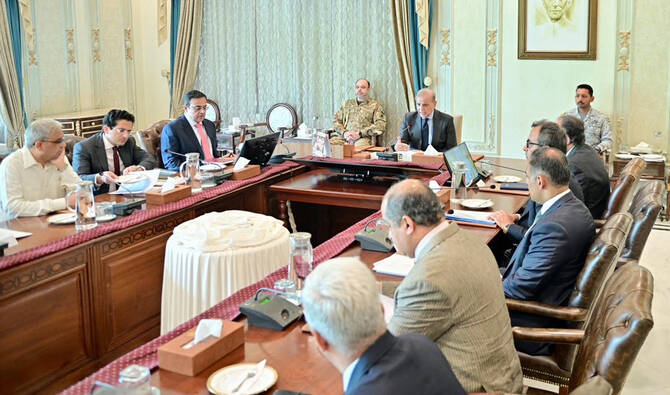
“There are concerns that escalating tensions in the region could negatively affect the country’s economy in the future,” Sharif said while chairing a meeting to review the impact of regional developments on Pakistan’s economy, according to a statement from his office.
“Just as the public fully supported the previous austerity campaign, we must adopt the same spirit of austerity at the national level,” he added.
Sharif said Pakistan’s economy remained stable and directed officials to prepare a comprehensive contingency plan to enable timely action should the regional situation deteriorate further.
He praised public cooperation during the government’s earlier energy conservation campaign and said “timely and effective government strategy ensured fuel supplies were managed in the best possible manner across the country.”
The prime minister maintained the government had “protected ordinary citizens, motorcycle riders, rickshaw drivers and transporters,” adding that fuel subsidies had helped contain the impact of higher petroleum prices.
Earlier this year, after fighting between the US and Iran disrupted global energy markets and raised concerns over shipping through the Strait of Hormuz, Pakistan sought to maintain adequate petroleum stocks.
It also introduced temporary austerity measures, including restrictions on non-essential official travel, reduced government operations and broader energy conservation steps to stretch available fuel supplies.
At Thursday’s meeting, officials briefed Sharif that Pakistan currently has sufficient petroleum reserves to meet domestic requirements and that arrangements have been made to ensure future supplies.
The prime minister also directed authorities, in coordination with provincial governments, to take strict action against anyone attempting to create artificial shortages of petroleum products.