

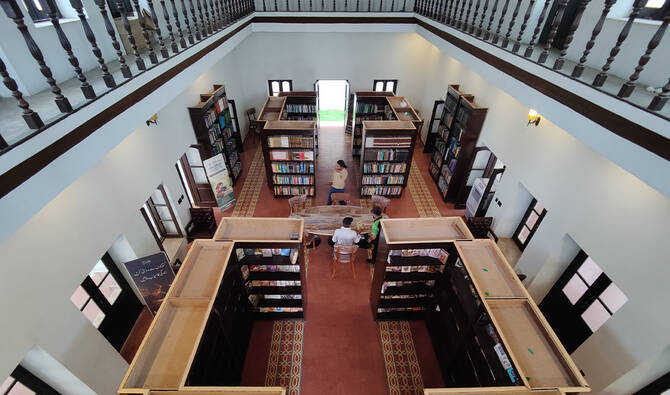

JHELUM: Last week, when 22-year-old Zain-ul-Abideen returned to Jhelum’s historic Lala Lajpat Rai Library after about a year, he barely recognized it.
The dimly lit reading room with faded paint and little more than a single table had been transformed into a bright, modern space with polished wooden bookshelves, thousands of books and a new computer lab following a four-month restoration project by the district administration.
“It looked like an old building with faded paint,” Abideen said. “Now, with the new shelves, lights and books, it feels like a completely different place.”
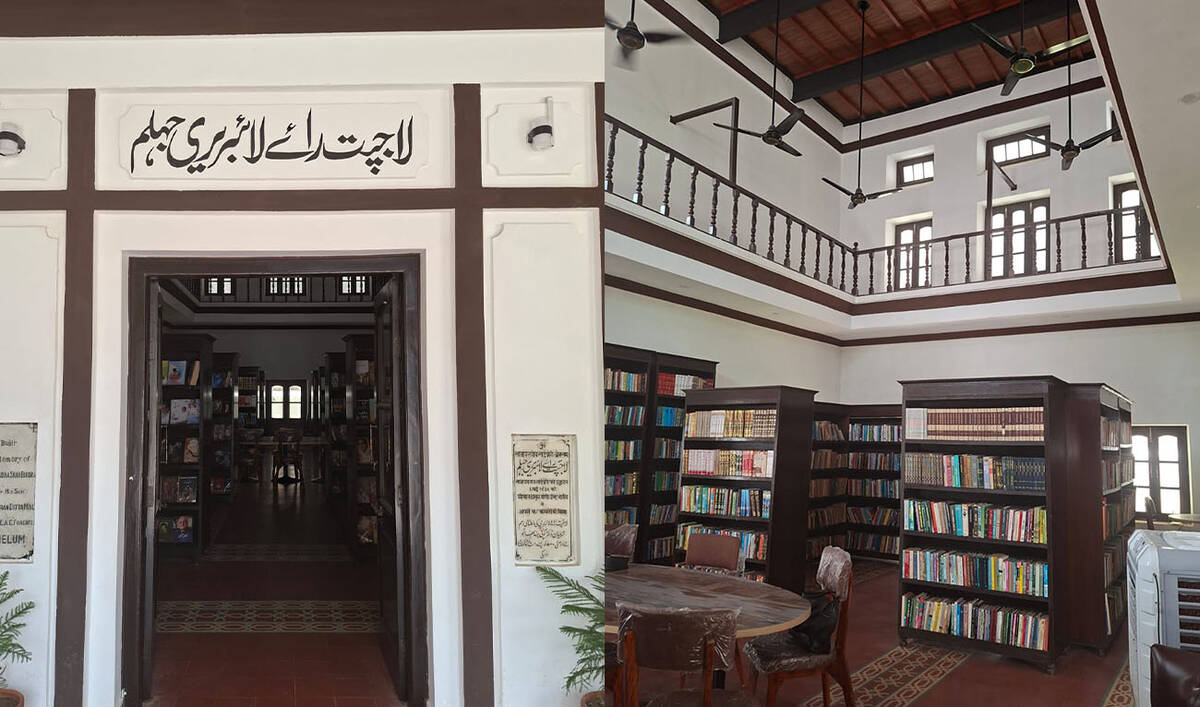
(Left) The entrance gate of the historic Lajpat Rai Library and (right) books arranged on shelves inside the library in Jhelum, Pakistan, on July 11, 2026. (AN Photo)
Built in 1936 during British colonial rule, the library is one of Jhelum’s oldest public institutions. It was established by Punjab forest department officer Lala Goran Ditta Mal in memory of his father, Lala Ladha Shah, before later being named after Indian independence leader and writer Lala Lajpat Rai, a prominent figure in the anti-colonial movement.
After the creation of Pakistan in 1947, the library was renamed Allama Iqbal Library after the country’s national poet. Following the restoration, it has reopened under its original name, Lala Lajpat Rai Library.
The project forms part of a broader effort to revive public reading spaces at a time when many libraries in Pakistan have struggled with years of neglect, limited funding and declining visitor numbers as digital media has become increasingly dominant.
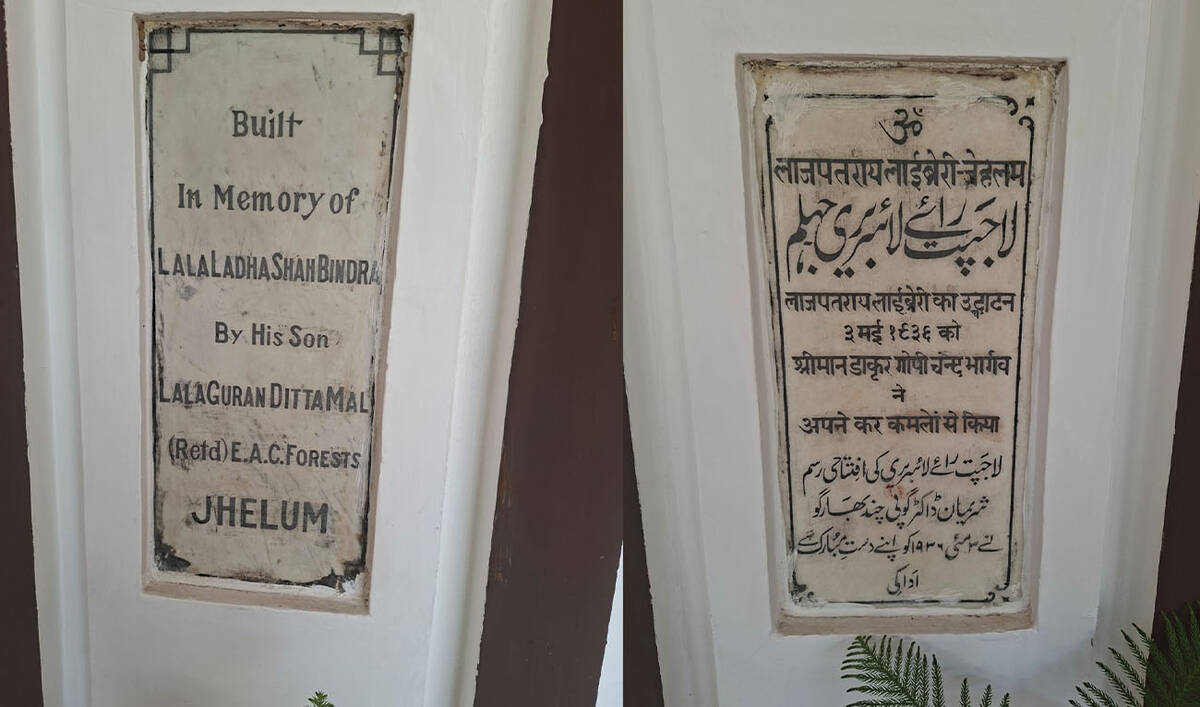
Plaques at the entrance of the historic Lajpat Rai Library detail the building's history in Jhelum, Pakistan, on July 11, 2026. (AN Photo)
The restoration was led by Jhelum Deputy Commissioner Mir Reza Ozgen, who said he decided to revive the library after finding only two men reading old newspapers in the neglected building during an earlier visit.
“I thought this was a place that required a lot of attention,” Ozgen recalled.
One of the biggest challenges, he said, was removing encroachments from land allocated to the library before restoration work could begin.
The district administration spent around Rs10 million ($36,000) on the renovation, adding new furniture, lighting, computers and nearly 4,000 books while preserving much of the building’s original woodwork.
The renovated building has now become more accessible to students, they said.
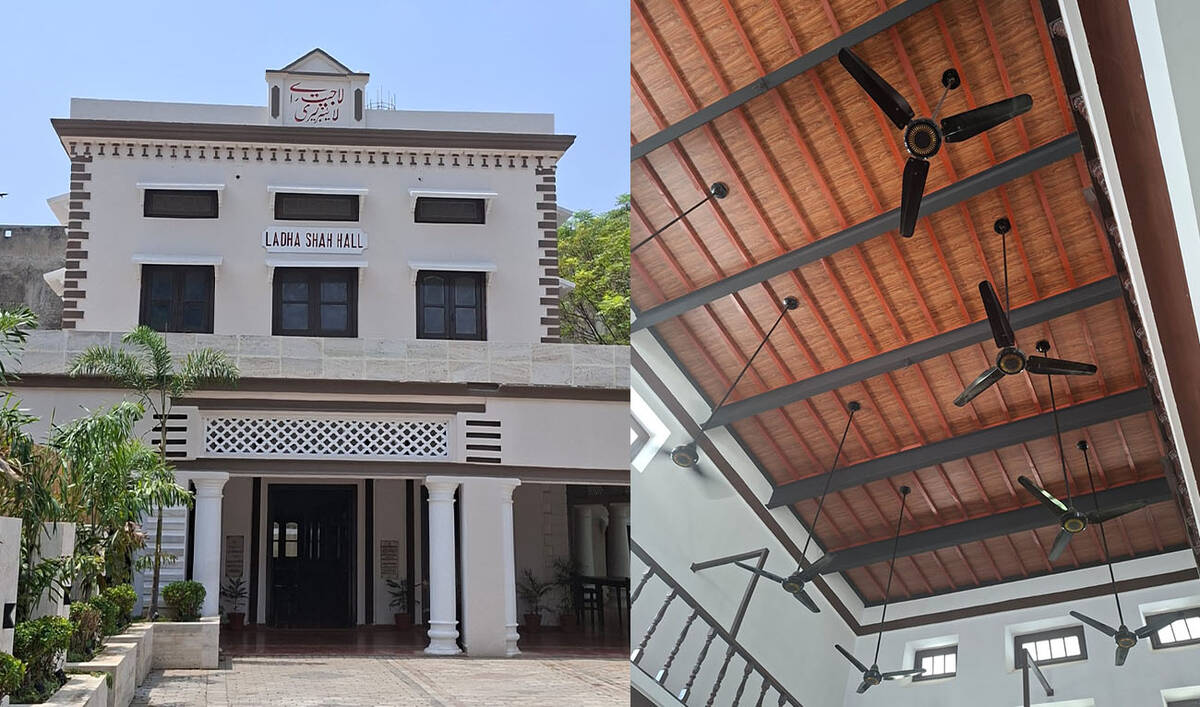
(Left) The exterior of the historic Lajpat Rai Library after restoration and (right) the library's renovated ceiling fitted with ceiling fans in Jhelum, Pakistan, on July 11, 2026. (AN Photo)
Muaz Naeem, a 23-year-old university student, said visiting the library previously required official permission, discouraging many readers and forcing some students to travel to nearby Rawalpindi or even Lahore to access better study facilities.
“Now we can come here freely without unnecessary restrictions,” he said. “It’s a comfortable place where students can study, read and focus.”
Wajiha, a 27-year-old teacher who gave only her first name, said the transformation had created an environment that encouraged people to spend more time reading.
“The ventilation is good despite the heat, the arrangements are impressive and the environment makes you want to sit and read,” she told Arab News.
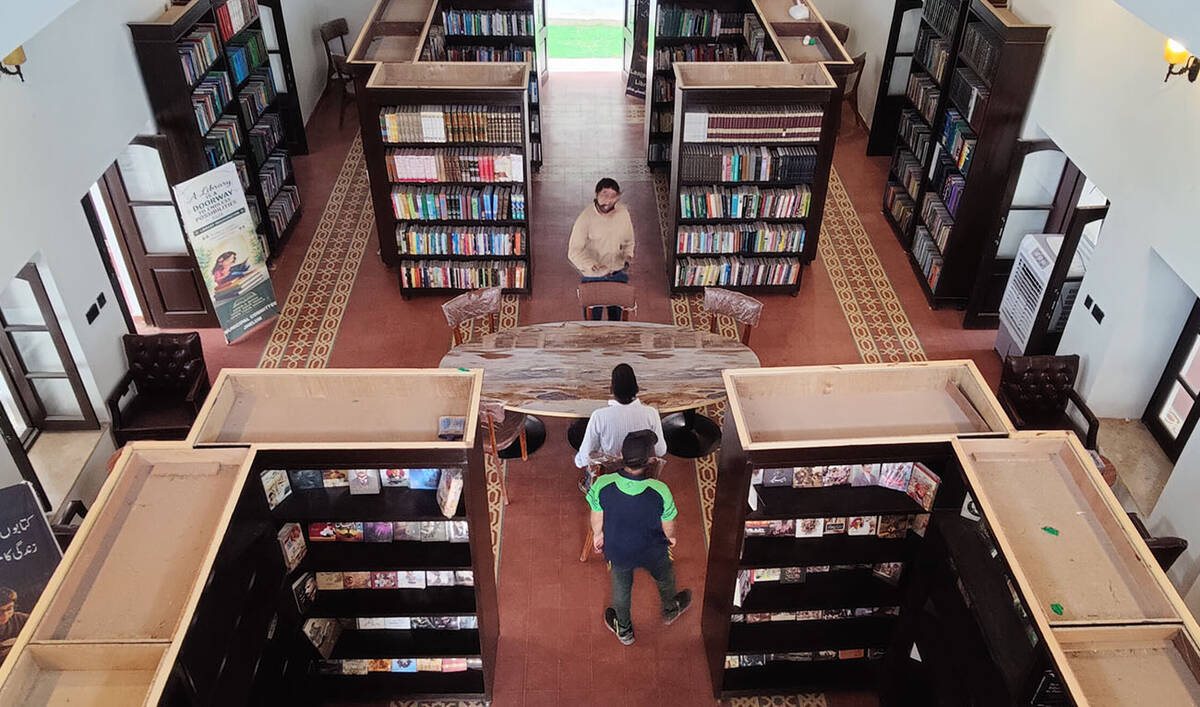
Visitors stand inside the historic Lajpat Rai Library in Jhelum, Pakistan, on July 11, 2026. (AN Photo)
Ozgen said the administration hoped to build on the renovation by installing Internet access and security cameras, opening a small coffee shop and hosting regular literary events featuring local writers and educators.
He said the long-term goal was for the community itself to take ownership of the space.
“The idea is to hand this place back to the people of Jhelum,” Ozgen said.


