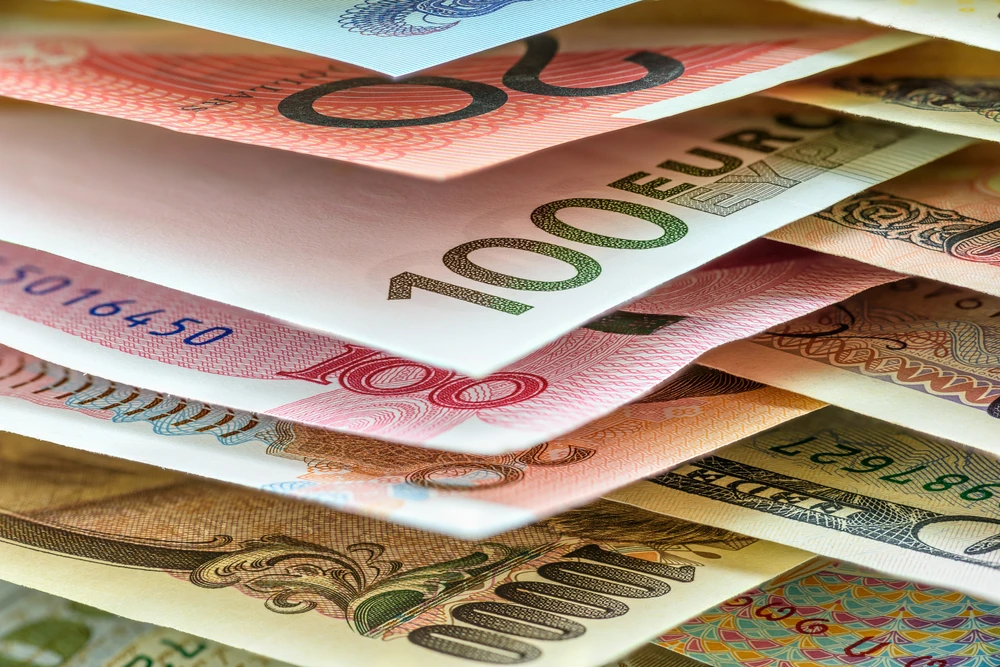
RIYADH: Saudi Arabia’s official reserve assets rose 8.06 percent from a year earlier to SR1.85 trillion ($494.55 billion) at the end of June, driven by higher foreign currency reserves, official data showed.
On a monthly basis, the Kingdom’s official reserve assets increased by 1.28 percent during June, up by SR23.44 billion from their value at the end of May, which stood at SR1.83 trillion, according to data released by the Saudi Central Bank.
The Kingdom’s reserve position remains among the largest in the Middle East, providing a substantial buffer against external shocks stemming from recent regional geopolitical conflicts and reinforcing investor confidence in the Saudi economy amid ongoing global economic uncertainty.
Total reserve assets include monetary gold, foreign currency reserves, special drawing rights, the reserve position with the International Monetary Fund, and other reserve assets.
SAMA’s data showed that the value of foreign currency reserves rose 8.7 percent year on year to SR1.76 trillion at the end of June, compared with SR1.62 trillion 12 months earlier.
In contrast, the value of SDRs declined 3.3 percent to SR78.64 billion over the year.
The reserve position with the IMF stood at SR13.22 billion, slightly lower than the SR13.28 billion seen in June 2025.
The value of monetary gold remained unchanged at SR1.62 billion at the end of June, according to SAMA data. Saudi Arabia’s steady monetary gold holdings stand in contrast to a broader global wave of central bank accumulation.
Central banks worldwide bought a net 244 tonnes of gold in the first quarter of 2026, according to the World Gold Council, extending one of the strongest sovereign buying cycles in decades, with gold prices reaching a quarterly average record of roughly $4,873 per ounce after reaching an all-time high of $5,405 per ounce in January. The council said geopolitical risks are expected to continue supporting central bank purchases and investor demand for gold.
The data comes amid Saudi Arabia’s continued economic diversification efforts under Vision 2030, as the Kingdom works to reduce its historical dependence on oil revenues.
Reserve levels remain one of several indicators, alongside gross domestic product growth, non-oil sector performance, and Public Investment Fund activity, that are used to gauge the health of the Saudi economy.