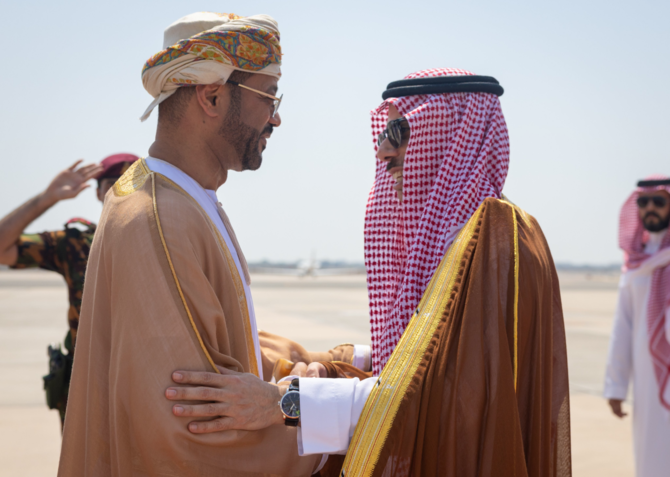

RIYADH: Saudi Arabia’s Foreign Minister Prince Faisal bin Farhan and his Omani counterpart agreed on the importance of security in the Strait of Hormuz during talks in Muscat on Wednesday.
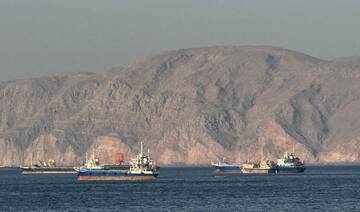
The meeting took place a day after three tankers were attacked in the critical waterway along Oman’s coast, sparking the US to resume strikes against Iran.
After arriving in Muscat, Prince Faisal met with Oman’s Foreign Minister Sayyid Badr Al-Busaidi to discuss relations between the two countries and ways to strengthen them.
The ministers then held an official session of talks “to review cooperation and enhance their strategic partnership.”
“They discussed the latest regional and international developments, focusing on issues surrounding the Strait of Hormuz,” Saudi Press Agency reported.
“Both sides emphasized the importance of maintaining waterway security, ensuring freedom of navigation, and supporting peaceful dialogue to resolve disputes and enhance regional stability.”
The talks also covered joint initiatives between the two countries including a land border crossing project, transportation networks, and logistics connectivity.
The ministers explored expanding economic, trade, and investment cooperation by encouraging public-private partnerships.