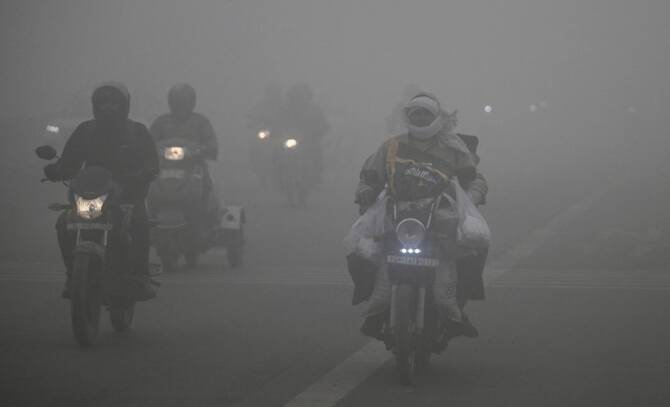

NEW DELHI: India’s capital New Delhi will ban new petrol- and diesel-fueled scooters and rickshaws from its roads over the next two years, as an ambitious new policy aimed at bringing down dangerously high pollution levels in the city came into effect on Wednesday.
Delhi’s new EV policy seeks to accelerate the use of electric vehicles through incentives, tax exemptions and expanded EV infrastructure, with the goal of achieving a minimum 30 percent electrification of the city’s vehicle fleet by March 2030.
“This is a historic step toward effectively controlling vehicle pollution in the capital and promoting clean transportation. The new EV Policy will come into effect from July 1, 2026, and will remain effective until March 31, 2030,” Delhi Chief Minister Rekha Gupta wrote on X on Monday, after the Cabinet approved the 150-billion-rupee ($1.6 billion) policy.
From 2027 onwards, the city’s authorities will only issue new license plates to electric small trucks and three-wheelers, and only to electric scooters and motorbikes from 2028, effectively stopping registration of new petrol-powered versions of those vehicles.
Residents are also offered cash incentives ranging between 5,000 ($53) and 100,000 rupees ($1,050) to scrap old, polluting vehicles as well as for replacing them with electric ones, as the government pledged to establish more than 30,000 public charging points across the capital.
“If this actually gets implemented, this is going to be brilliant. We’re going to see real impact on the ground,” Moushumi Mohanty, senior program manager on electric mobility at the Center for Science and Environment, told Arab News.
Home to 30 million people, Delhi has been struggling with some of the worst air pollution levels in the world. It did not record a single “clean air” day in 2025, with Air Quality Index readings hitting high above the 50 score throughout the year.
On the AQI scale from 0 to 500, good air quality is represented by levels below 50, while levels above 300 are dangerous.
Vehicle emissions account for about 23 percent of the city’s air pollution, according to the Commission for Air Quality Management, while scooters and rickshaws — which largely run on petrol and compressed fossil gas — make up more than two-thirds of the tens of millions of vehicles on Delhi’s roads.
About 3.8 million deaths in India between 2009 and 2019 were linked to air pollution, according to a study in The Lancet Planetary Health last year.
The city has also experienced levels of cancer-causing PM 2.5 microparticles exceeding 300 micrograms per cubic meter, 20 times the World Health Organization’s recommended daily maximum.
With Delhi’s new EV policy, Mohanty is expecting emissions to “reduce dramatically,” and to see visible changes within the next few years.
“If we are ensuring now (from the) registration itself, it’s like cutting it at source,” she said. “So give it a few years. We will, I think, reach a point where several other cities around the world have.”