


Pakistan’s Commerce Ministry said on Wednesday it was working with relevant authorities to bring clarity to a proposed $1 billion South Korean investment in two hydropower projects after the investor raised concerns over pending regulatory decisions and the government’s evolving energy plans.
The proposed investment by KOEN, a South Korean state-owned power company, involves the 229-megawatt Asrit Kedam Hydropower Project and the 238-megawatt Kalam Asrit Hydropower Project in Pakistan’s northwestern Swat district.
According to the Commerce Ministry, the projects have completed major feasibility, environmental and regulatory studies, while the company has arranged about $1 billion in debt and equity financing and already spent around $25 million on project development.
The projects, however, are awaiting tariff determination and inclusion in Pakistan’s draft Indicative Generation Capacity Expansion Plan (IGCEP) 2025-35, as the government reassesses future electricity demand after years of surplus generation capacity and high power-sector costs.
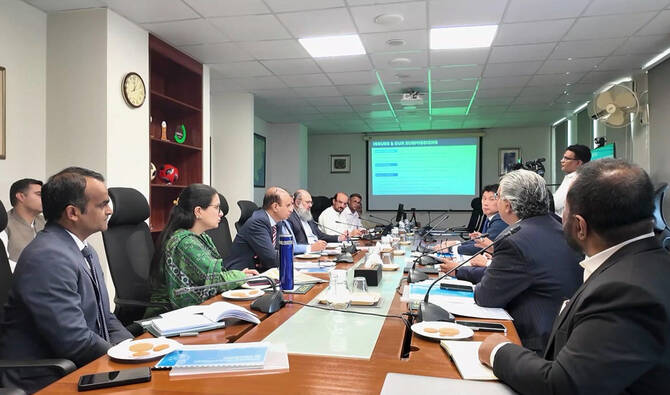
“The Minister assured the delegation that the concerned federal ministries, departments and relevant authorities would be engaged to facilitate coordinated consideration of KOEN’s concerns,” the commerce ministry said in a statement after Commerce Minister Jam Kamal Khan met a delegation led by KOEN Chief Executive Officer Kim Min Young.
“The Government remains committed to supporting credible foreign investors and would extend all possible assistance within the applicable legal, regulatory and policy framework to help bring clarity to the company’s proposed projects.”
The ministry said KOEN has invested in Pakistan’s energy sector since 2011 and completed the 102-megawatt Gulpur Hydropower Project in 2020 before proposing the two new projects under Pakistan’s 2015 power generation policy.
According to the statement, KOEN told the minister it had completed major project milestones, including feasibility studies, environmental approvals, land-related processes, IRSA consent and grid interconnection studies.
The company also highlighted concerns over the pending tariff determination, inclusion of the projects in the draft IGCEP and uncertainty surrounding their future implementation.
Jam Kamal said Pakistan valued its economic relationship with South Korea and welcomed foreign investment in renewable energy and other priority sectors.
He also noted that Pakistan was reviewing its future energy requirements in light of existing generation capacity but said new demand was expected to emerge from green energy, industrial development, data centers and other growing sectors.


