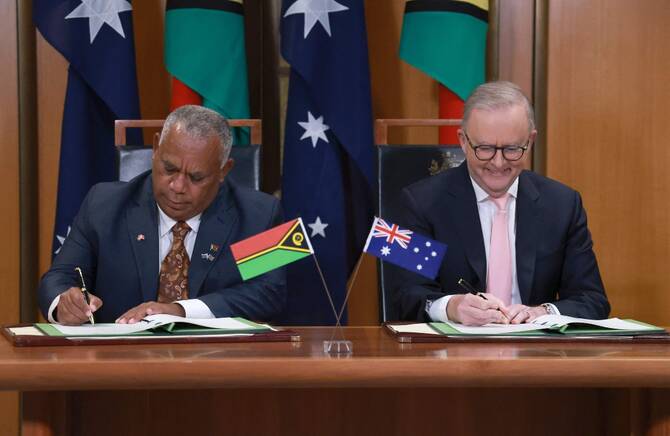
SYDNEY: Australia and Vanuatu on Monday signed a development and security pact that had been delayed for months over Vanuatu’s concerns that it could stifle investment from other countries.
Australia, which is in a battle for influence in the Pacific with China, will be consulted on any third-party investment in Vanuatu’s critical infrastructure and remain the country’s preferred security and policing partner.
Canberra has previously unveiled funding of A$500 million ($344.50 million) over 10 years for the pact, known as the Nakamal Agreement.
“It encapsulates Vanuatu’s sovereign decision not to permit its territory to be used for any foreign military base or infrastructure and that Vanuatu’s critical infrastructure remains free from militarization,” Australian Prime Minister Anthony Albanese said at a news conference with his Vanuatu counterpart, Jotham Napat.
The agreement was to be signed in September, but was delayed after Napat said his coalition partner had raised concerns that it could restrict Vanuatu’s ability to secure infrastructure funding from other countries.
China is Vanuatu’s largest external creditor, having provided loans through Chinese banks that financed Chinese contractors to build major infrastructure projects, including the presidential office complex, parliament building and road network.
Vanuatu is currently pursuing its own economic deal with China that Napat said on Monday was awaiting approval from Beijing.
“We will share the agreement, there is nothing to hide,” he said, responding to a question about whether the deal would contain security elements.


![]()

Australia, Vanuatu sign delayed security deal that is seen as curbing China
Short Url
https://arab.news/8tu5c
Australia, Vanuatu sign delayed security deal that is seen as curbing China
- Australia will be consulted on any third-party investment in Vanuatu’s critical infrastructure and remain the country’s preferred security and policing partner


Latest updates


Recommended


© 2026 SAUDI RESEARCH & PUBLISHING COMPANY, All Rights Reserved And subject to Terms of Use Agreement.