

 Purchasing power crowns Saudi Arabia undisputed leader of Arab publishing

Some Arabs like to play the victim because victims are always beyond criticism. I say this in reference to a documentary aired by Al-Arabiya TV in May of this year, in which a well-known academic spoke about the crisis in Arab cultural publishing.
He stated that the US publishes 85,000 books annually, while all Arab countries combined publish no more than 1,700 books during the same period. This means that for every million Americans, there are 845 books, whereas the same figure for Arabs is 30 books. The figures cited are taken from UNESCO data for 1997, covering the period between 1991 and 1996, and thus are more than 30 years old. From an academic standpoint, they can be considered outdated, and it is not appropriate to cite them merely to stir up controversy or to further belittle Arab culture.
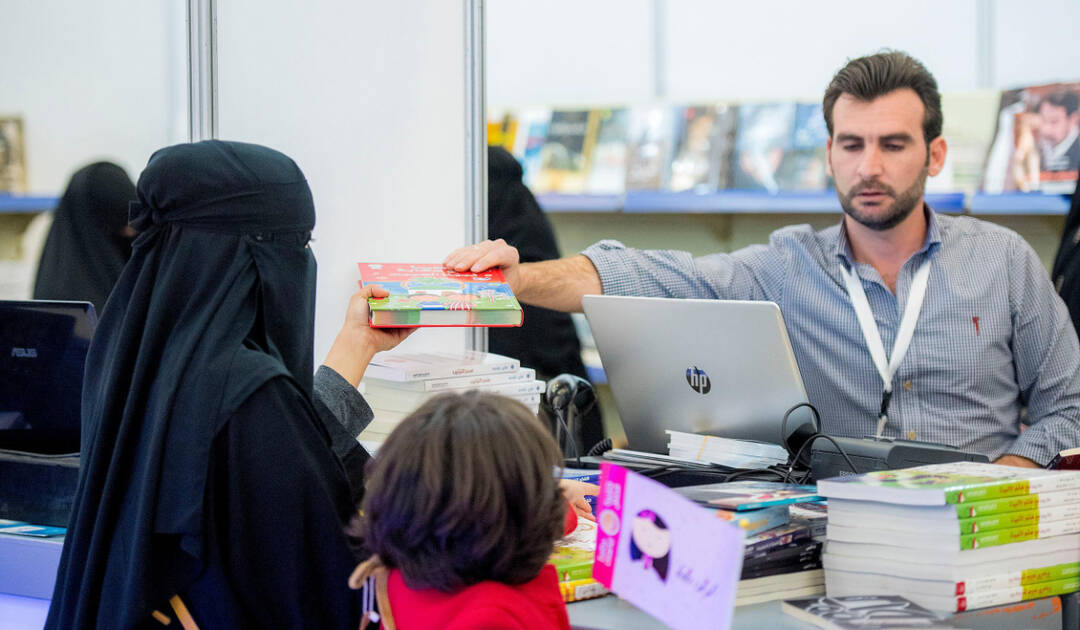
The current landscape of Arabic publishing, specifically within the Arab region, during 2024 and 2025, is dominated by Saudi book fairs, particularly the Riyadh and Jeddah Book Fairs, both of which are considered the top sales outlets for Arab publishers, in addition to the presence of 522 national publishing houses in Saudi Arabia. The contribution of culture to the local economy is estimated at approximately 60 billion riyals, or the equivalent of $16 billion. This share is considered one of the cornerstones of the national cultural strategy regarding the increase of non-oil revenues, and cultural publishing indicators place the Kingdom first in the Arab world in terms of publishing economies, which are linked to purchasing power and financial support.
In the past, Saudis used to purchase cultural publications from Beirut and Cairo, but today, through initiatives such as The Literary Partner, they have organized 4,426 events in cafes. Additionally, the Tarjim (“Translate”) initiative has introduced Saudi culture to the world by translating Arabic works into five international languages and distributing them at the Frankfurt and London book fairs. This represents a well-thought-out cultural diplomatic move that was absent in previous periods. The Saudi publishing and translated books sector is valued at 4.5 billion riyals, or approximately $1.2 billion, and accounts for 7.5 percent of cultural revenues.
The current landscape of Arabic publishing, specifically within the Arab region, during 2024 and 2025, is dominated by Saudi book fairs.
The crisis in cultural publishing in the Arab world stems from a number of factors, the most significant of which is the low print runs, which rarely exceed 5,000 copies, compared to Western averages that break the 90,000-copy mark in their first print run. This is compounded by the weak purchasing power of Arab citizens and the fact that they allocate their funds to basic needs at the expense of books.
Another factor was highlighted in the 2011 Human Development Report by the Arab Thought Foundation, which noted that the average Arab spends only six minutes reading, while Europeans devote 200 hours to it. This was partially refuted by the 2016 Arab Reading Index, which revealed that the correct figure is 36 hours per year, not six minutes, compared to 292 hours for Americans and 343 hours for Britons.
The third point is that, according to a study on the Arab publishing industry published by the Arab Publishers Union in early 2024, religious books are the most popular genre, accounting for 40 percent, followed by literature and novels at 20 percent. Despite the appeal of the former, this indicates that Arabs are primarily engaging with one another and are not interested in engaging with cultures different from their own.
The irony is that in the 10th century, the library of Cordoba housed more than 100,000 cataloged volumes, whereas the libraries of Christian Europe contained only a few hundred books. People in Britain and America may gather and sleep on the streets in winter in front of bookstores to get a copy of a “Harry Potter” novel, but the crowds at Arab book fairs — and I write this because I have seen it with my own eyes — are found only in the coffee shops and food sections, or among cookbooks and self-help books, while philosophy and science sections suffer from a scarcity of visitors.
What is even more troubling is what critical studies, published by the Arab Critics Association in late 2024, have demonstrated: that major Arab literary prizes, especially in the Gulf region, have created a genre of novels known as “prize novels,” in which novelists focus on specific themes that align with the judges’ preferences to increase their chances of winning.
In 2024, UN Trade and Development conducted a comparison between the average income of people in Western and Arab countries and the price of cultural books and found that the price of a modern novel in the West is around 15 euros ($17), or about half a percent of a Western citizen’s weekly income, whereas in Arab countries, the price ranges from 15 percent to 20 percent of that income. This provides academic evidence that the lack of purchasing is due to economic constraints and does not indicate ignorance or a dislike of reading; perhaps they prefer pirated books because of their lower prices, and as a result, the Arab publishing sector incurs an annual loss of $350 million. This is based on the Shadow Economy Report issued by the University of London in 2025.
I believe that self-flagellation is unwarranted because reality, as it turns out, tells a different story.
• Dr. Bader bin Saud is a columnist for Al-Riyadh newspaper, a researcher in media and knowledge management, a university professor and expert in crowd management and strategic planning, and the former deputy commander of the Special Forces for Hajj and Umrah in Saudi Arabia. X: @BaderbinSaud.


