

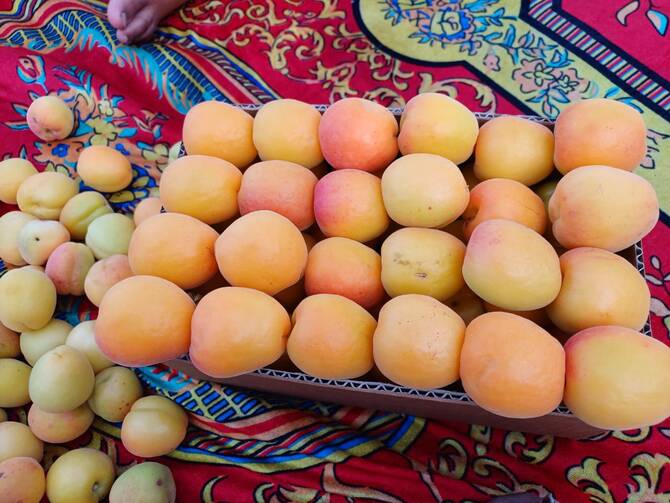
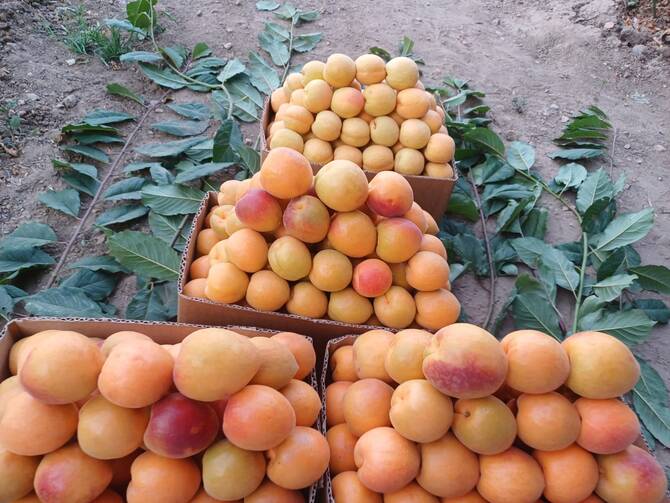

MAKKAH: When Taif claimed the top spot among Saudi Arabia’s apricot-producing regions it was no statistical fluke — it was the payoff of a long apprenticeship; generations of farming knowledge passed down, paired with an unusual fit between what the land offers and what its people are willing to put in.
Up in the Taif highlands, where the air stays mild and winter temperatures fall, conditions have proven near-perfect for apricots of rare quality and unmistakable flavor. The fruit now travels far, prized by buyers across the Kingdom and throughout the Gulf.
Nayef Al-Sufyani, among the most recognized apricot growers in Taif, told Arab News that the region’s standing is a point of pride for everyone who lives and farms there. He credited the success first to the grace of God, then to a kind climate and the hard work growers pour into their trees and their yields.
“Stone-fruit trees, apricots included, start their winter cycle when the leaves drop in December, and pruning usually begins in January — a bit earlier sometimes, depending on the variety and the season,” he said. “It is one of the most important stages of all, because it feeds directly into the quality and the size of the harvest.”
Taif is known for more than apricots, Al-Sufyani said. Its orchards yield peaches, almonds and plums in wide varieties, yet the apricot remains the star, the one consumers reach for first. Some of the varieties grown there today, he said, arrived from outside the Kingdom and then adapted to local conditions with surprising ease, going on to outshine their imported originals in size, taste and color.
“We get visitors from Kuwait, Qatar, the Emirates and all over the Kingdom, and when they see the fruit, they are taken aback — sometimes it beats what the big international companies put out,” he said. “Taif’s cool, balanced climate, by God’s grace, has cut down the fungal infections that are the worst enemy of stone fruit.”
Insect-borne diseases can be managed with the right treatment, he added; the fungal ones are the harder fight. Lower temperatures and steady humidity help to hold them back, but a farmer still needs enough knowledge and experience to reach the kind of quality that earns a consumer’s trust.
What distinguishes his own orchards, Al-Sufyani said, is range. “I grow more than 12 types of apricot, and that stretches the season out. Some are early, some mid-season, some late, so the fruit keeps coming for months instead of a short run that’s over before you know it.”
That range, he explained, is no indulgence but an economic hedge against the weather and other risks. Some trees flower in December, others in January, February or March, which blunts the damage when frost or some sudden turn in the weather hits one stage of the bloom.
This season tested that logic. Frost waves cut into part of the crop, he said. “Some varieties took clear losses to the frost, but having so many of them kept production going. We did not lose the whole season.”
Rising costs, Al-Sufyani warned, have become one of the heaviest burdens on growers, especially with rainfall in decline, and many farms now buy their water by the tanker. “The farmer carries the cost of irrigation, care and pest control all year long,” he said, “while the consumer has no sense of everything the crop goes through before the fruit ever reaches the market.”
Some growers, he said, have given up farming entirely or turned their land over to cheaper, steadier ventures. He called for stronger support programs and real partnerships to keep local farms alive and shield national production.
“The Saudi farmer is not after a handout,” he said. “He is after a partnership that lets him keep going and keep improving. Protecting these farms means protecting our agricultural identity, our food security and the jobs that come with them.”
Khaled Al-Omari, an agricultural specialist in Taif, told Arab News that the governorate’s natural endowments have made it one of the Kingdom’s best-suited environments for apricots. The winter drop in temperature, he said, delivers what growers call “chilling hours,” a key trigger for trees to flower on schedule and set good fruit.
But climate is only half the story. Success, Al-Omari added, also rests on choosing the right varieties, matching rootstocks to local conditions, and getting the timing right on winter pruning, balanced fertilization and preventive treatment.
Planting several varieties on one farm, he explained, is among the smartest modern practices for economic resilience; it spreads out the flowering and the harvest, and limits the losses from frost, pests or an abrupt shift in the weather.
“Taif does not just produce apricots in quantity,” he said. “It produces high-quality apricots with real market value and that’s what has earned the Taif fruit its reputation, at home and abroad.”
Holding on to that lead, Al-Omari said, will take sustained cooperation between the authorities and the growers; better agricultural guidance, improved irrigation, wider technical support and more investment in the sector; all of it aimed at keeping this distinctive national product going.
In the end, the story of the Taif apricot runs deeper than farming. It is a case study in how Saudis can take what their environment offers and turn it into a national success. Between the skill of its growers, the particular gift of its climate and the lessons piled up over the years, Taif keeps reinforcing its claim as the Kingdom’s apricot capital; its fruit carries, in a single bite, the story of a land still giving generously.


