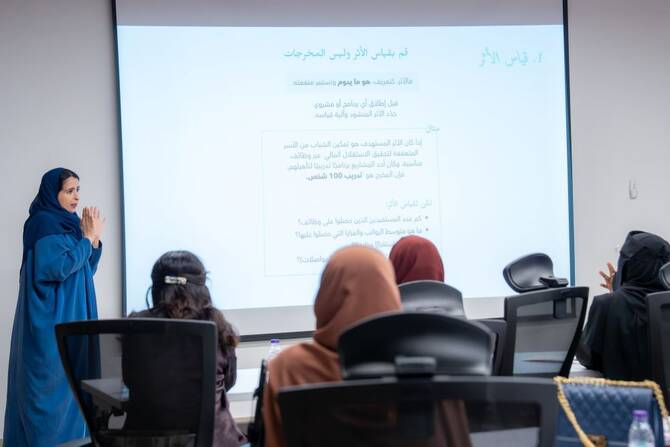

RIYADH: The Kilmitain event held at Misk in Riyadh on June 16-17 gave creative industry leaders and participants a platform to exchange ideas and learn tangible skills through workshops and panels.
The intersection of the creative and social responsibility sectors in the Kingdom continues to evolve as artists, government, and nongovernmental organizations come together for mutual benefit.
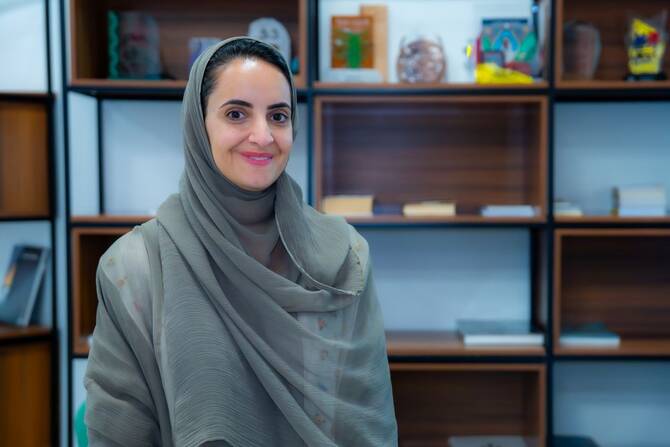
Princess Noura bint Saud bin Naif Al-Saud, the founder and CEO of Rukun and co-founder of AlMashtal, highlighted the impact of creativity on cultural and social transformations, and underscored the art of storytelling as a means for incorporating culture and social causes into the creative industry.
She told Arab News: “It is an industry that is built on connection, whether it’s within the collaboration of the entities or individuals working in it, or connecting with the rest of humanity because it’s all about telling a story.”
She founded Rukun as a design studio, and it has since evolved into a cultural systems and infrastructure design platform working across research, strategy, program architecture, and sector development.
Princess Noura also shed light on the initiatives of AlMashtal, which provides craftspeople with mentorship and the platform to showcase their works.
She said: “We’ve done Saturday market, which is a weekly market. Inshallah, we are launching it again in the summer. Artisans come to share their work, they can meet with the public (and) get people interested in our local culture and crafts.
“At the same time, we do training programs, incubations, to help them understand the business side, and that’s what’s going to make them sustainable.”
AlMashtal is a creative infrastructure platform in Riyadh that supports creative practitioners through programs, production facilities, workshops, memberships, and access to knowledge, tools, and community.
Social advocate Basma Al-Tuwaijri said that creativity within the nonprofit sector should be viewed as a tool for creating lasting impact rather than one-time charitable contributions.
The example embodies the core principles that drive creativity in the nonprofit sector, with Al-Tuwaijri stressing that impact should be measured not only by immediate outcomes but also by its lasting and sustained benefits.
She further explained that the connection between creative projects and social issues were the result of connecting passion, skills, and community needs into solution-based initiatives.
Al-Tuwaijri cited the “Dakkakeen Al-Khair” exhibition, an initiative developed by Nouf Al-Sudairi during her tenure as a board member of Sanad Association. Held annually for the past 14 years, the exhibition has become a sustainable source of funding, helping cover treatment costs for hundreds of children.
She also pointed to the National Center for Non-Profit Sector Development’s documentation of more than 6,000 nonprofit organizations across the Kingdom, underscoring the growing opportunity for creative collaboration within the sector.
Speaking to Arab News on the unique positioning of the Kingdom in terms of accessible resources and opportunity for creatives looking to enter the nonprofit space, Al-Tuwaijri said: “Everyone wants to give, but people don’t understand how creative they can be and how applicable they can be, so people just go down the traditional path. Sometimes you can be more creative and generate better impact.”
She added that as the shift from traditional to innovative occurred, government backing through investments, platforms such as Ehsan for donations, volunteer programs, and enforced regulations enabled the streamlining of creativity into social impact.
Princess Noura said that the future of the creative industry in the Kingdom was a bright one filled with opportunity, and affirmed that as the infrastructure of the creative industry grew bigger, the nonprofit space would grow with it.