

 Why chemical coatings won’t save Riyadh from its own concrete heat
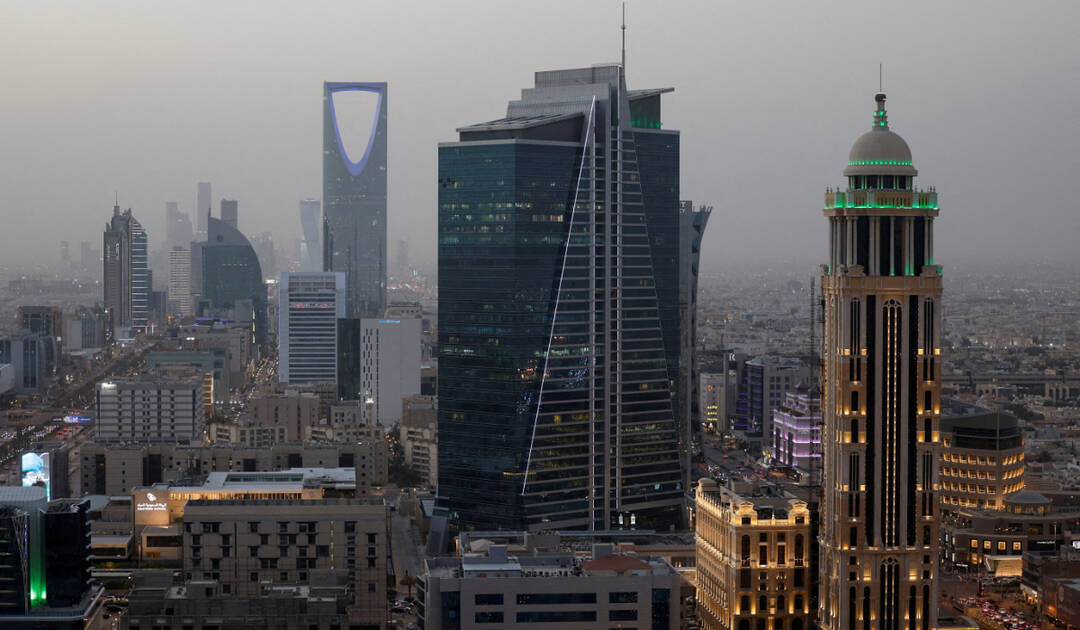

Al-Eqtisadiah newspaper reported in late May of this year on a Saudi initiative to implement a project to cool the city of Riyadh, set to begin in 2027.
The goal is to reduce the temperature of the asphalt and the walls surrounding insulated buildings by 8 to 15 degrees Celsius. The project’s budget and implementation phases have not yet been determined, as it remains under consultation and analysis by the Greek firm Planet, which has identified five pilot areas to test and evaluate cooling solutions. The firm has been given a 12-month period to understand the thermal challenges, submit its complete plan and begin implementation.
The project is considered a proactive measure to enhance the appeal of the Saudi capital as a global destination for residence and investment, in addition to transforming it into one of the most sustainable and climate-moderate cities in the region. It falls under the umbrella of Green Riyadh, which is linked to the Kingdom’s Vision targets and the Saudi Green Initiative.
The Riyadh Cooling Project is not merely a cosmetic measure, but rather an urgent emergency plan to correct an engineering flaw that cannot be postponed, especially since human civilization has been turning cities into concrete heat traps for more than a century. Many cities, both in the Arab world and globally, are struggling with this issue, foremost among them the Gulf cities with their dense horizontal sprawl, which face a crisis of heat-saturated buildings.
Concrete walls and glass towers store heat during the day and release it at night, preventing temperatures from dropping even after the sun has set. In a study conducted by the Massachusetts Institute of Technology in collaboration with the World Meteorological Organization in December 2025, it was found that traditional black asphalt acts as a heat reservoir that absorbs 95 percent of the sunlight falling on it and then re-releases it into the surrounding air.
Those in charge of the cooling project are well aware of all this, and they are exploring the use of white or light gray nanomaterials to coat roads and sidewalks, which reflect solar radiation rather than absorb it, thereby lowering temperatures by up to 15 degrees Celsius, accompanied by a decrease in ambient air temperature of about 2 to 4.5 degrees Celsius.
Concrete walls and glass towers store heat during the day and release it at night, preventing temperatures from dropping.
Additionally, new projects will be required to include specific percentages of greenery on their facades to generate what is known as evaporative cooling, which is the same principle that explains the coolness of oases in the middle of the desert. A building code would be implemented to ban the use of traditional reflective glass, replacing it with low-carbon alternatives that excel at radiative cooling and reflect long-wave heat directly into outer space, rather than trapping it in the streets.
The American city of Las Vegas, located in the desert, is considered the climatic twin of Riyadh. Its engineering reports for 2025 have shown that the massive concrete expansion of the 1990s raised its nighttime temperatures by approximately 4.2 degrees Celsius, which caused the city to lose its historic desert characteristic; it was once known for its cool nights, but today it has become more like an oven or an energy storage facility that never cools.
In November 2025, the Energy Research Institute in California published an important study confirming that replacing dark roofs with reflective ones in cities can reflect up to 80 percent of sunlight back into space, reducing indoor temperatures by 18 percent.
An Arab study conducted in March 2026 performed a climate simulation of cities in the Gulf and North Africa. The results showed that cities relying entirely on glass facades, without external shading, require 240 percent more cooling energy than buildings with advanced thermal insulation. It recommended an immediate transition to hybrid architecture, which incorporates air vents and natural shading. This concept was not lost on the Saudi cooling project, as the Riyadh Municipality considers opening giant corridors to allow the natural breezes of valleys such as Wadi Hanifa and Wadi Al-Sali to penetrate the concrete blocks into the city center and disperse the hot air trapped between the towers. This concept is drawn from the genius of ancient Islamic urban planning.
The Riyadh Cooling Project focuses on scraping off the asphalt and coating it with heat-reflective materials, which is a good idea, but it is not suitable for the Saudi capital, according to architectural experts, as its surface is largely impervious — being concrete or asphalt — and prevents the soil from breathing.
We can draw on an engineering study published by the Royal Institute of British Architects in September 2025 on “sponge cities,” which allow the soil beneath the ground to release its stored moisture into the atmosphere to cool the air, reducing air conditioning loads by 22 percent without resorting to chemical coatings that may erode due to tire traffic, thereby transforming streets from energy reservoirs into self-cooling pathways.
Water experts caution against planting millions of trees in a dry environment like Riyadh without regulated irrigation and a full reliance on graywater, as this would lead to the opposite result: dry soil will absorb the remaining moisture in the air, raising the perceived heat stress index among people.
All of this is not lost on government agencies and experts working on the Riyadh cooling project, but I state what I have said as a reminder and out of concern, especially since it is the most beautiful city on the nation’s map and in its memory.
• Dr. Bader bin Saud is a columnist for Al-Riyadh newspaper, a researcher in media and knowledge management, a university professor and expert in crowd management and strategic planning, and the former deputy commander of the Special Forces for Hajj and Umrah in Saudi Arabia. X: @BaderbinSaud


