VENICE: The National Pavilion of Egypt invites spectators at the 61st Venice Biennale to quietly experience “Silence Pavilion: Between the Tangible and the Intangible,” a solo exhibition by Egyptian artist Armen Agop.
“I believe silence is very important for us, in general,” Agop told Arab News. “Silence is not mute.”
With such a noisy world externally — and even internally — this space is meant to give you a chance to reset.
The pavilion begins with an invitation for visitors to enter “in silence” and to keep their cameras and phones tucked away.
You will be physically led through a passage of three sequential spaces; the exhibition seamlessly moves from the abstract to the physical to the contemplative.
The first part of the space is designed to establish a mode of reflection and reception rather than consumption.
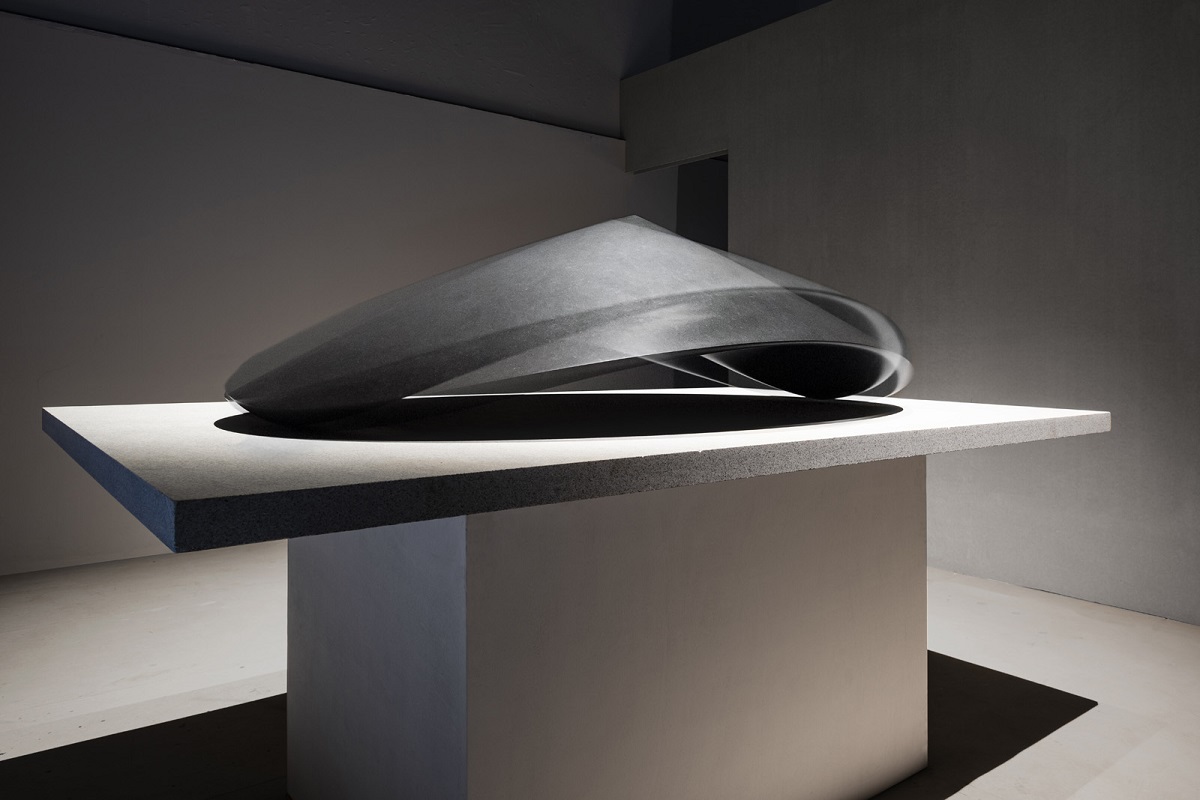
The second part places the visitor in direct contact with matter — which visitors are literally invited to touch — allowing the material to respond to you.
The third represents “an unhurried zone,” a place to sit or stand still before emerging back out into the world.
Again, you are encouraged to exercise silence.
“Silence can be very expressive,” Agop said. “It is one of the very important keys to open the pathway to our inner world. I can’t really be in contact with my inner life when I’m surrounded with a lot of noise.”
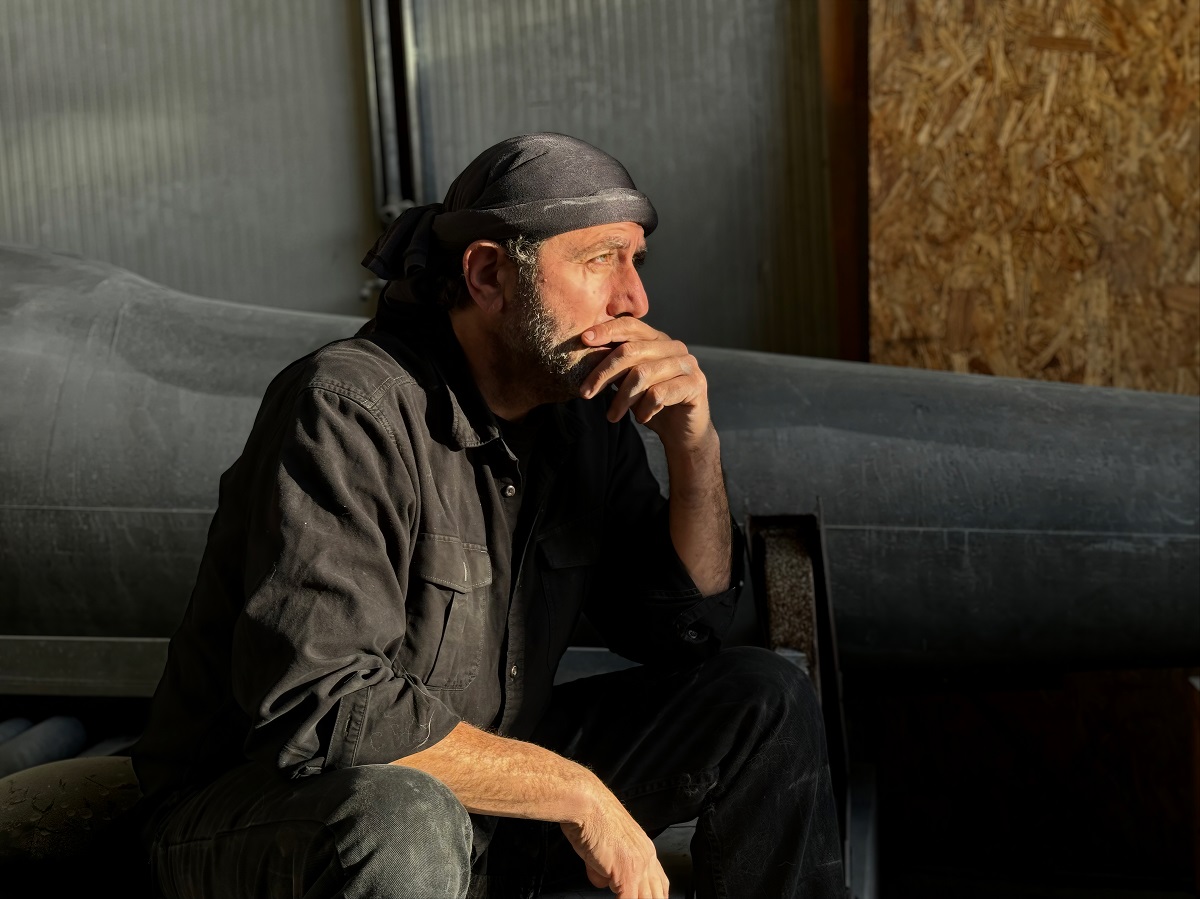
That silence is an invitation to let stillness seep in.
“Silence allows the inner world to surge a bit in our consciousness, in our presence. And when that happens — when it goes a bit deep — silence allows the inner voice to come out.”
Born in Cairo in 1969, Agop has been creating sculptures and paintings that explore and express the relationship between the physical and the spiritual for decades.
Rooted in his Egyptian-Armenian heritage, his work connects ancient traditions with contemporary practice. In an era in which we celebrate speed and spectacle, the exhibition offers a smoother rhythm.
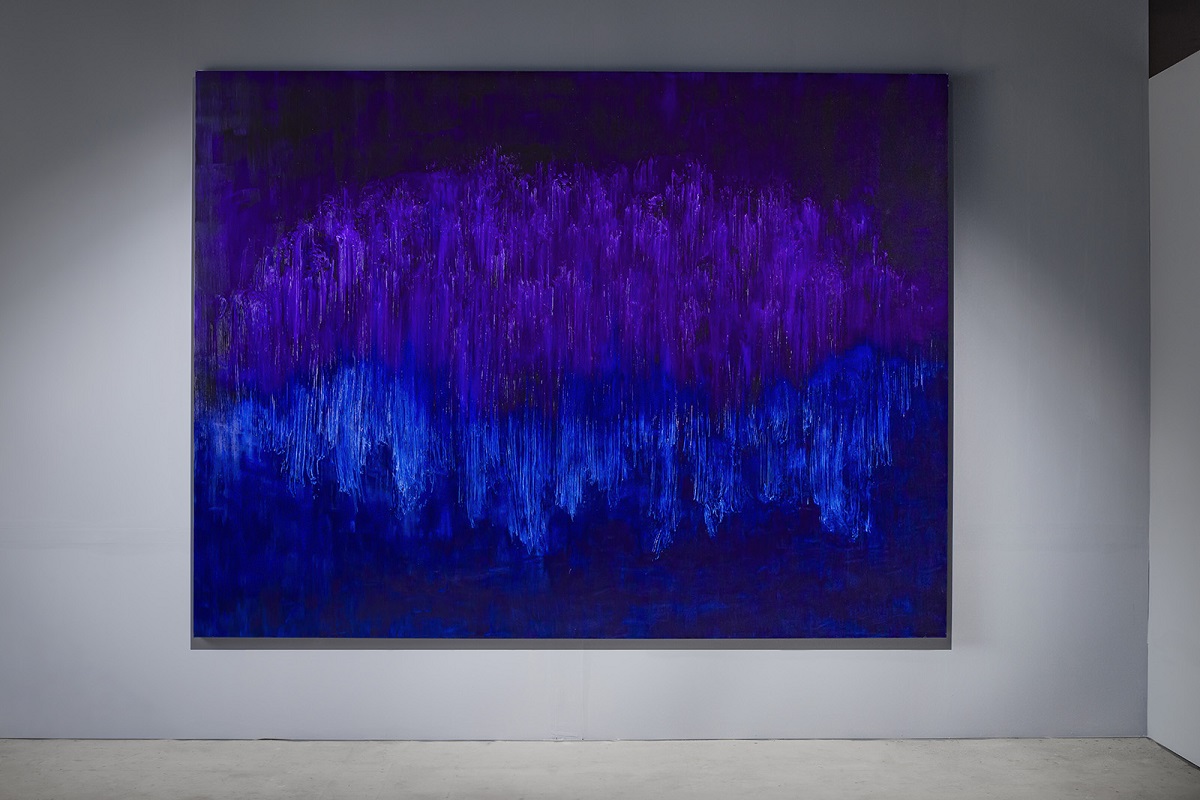
Throughout the pavilion, soft sounds and the sweet scent of lotus linger through the rooms alongside the sculptures and paintings, evoking what the artist describes as “the tangible and intangible at once.”
The exhibition presents three granite sculptures and two large paintings. The sculptures vary in scale and orientation and thus differ in aura and vibe.
“My invitation here to ‘be silent’ is a chance for each of you to unite with himself, first of all. And maybe the artworks can be a medium to make us unite with ourselves,” he said of the work.
“I believe if we really unite with ourselves, we unite also with the whole universe, because we are a small microcosm in this macrocosm, but we’re not aware of it. We underestimate ourselves,” he added.
“Inside us, we have a lot of answers. We know how to survive, we know how to live with each other, we know how to love each other. We are, in each one of us, a source of humanity.”
Commissioned by the Egyptian Ministry of Culture-Accademia d’Egitto a Roma, the National Pavilion of Egypt has participated at the Giardini venue since 1938, and is one of the longest-standing participants at the International Art Exhibitions of La Biennale di Venezia.
The building was designed by architect Brenno Del Giudice in 1932 and has served as Egypt’s permanent pavilion home since 1952.
The space will be silently awaiting visitors until Nov. 22.