

 Why Saudi Arabia’s tech revolution is driving us back to our roots

A few weeks ago, a Silicon Valley tech consultant handed me a pair of augmented reality goggles in a sleek Riyadh showroom. “Look at the future,” he whispered, gesturing with the practiced reverence of a man who believes code can cure human flaws.
I slipped them on. Suddenly, the space around me morphed into a sprawling, hyper-neon metropolis. Buildings were shimmering columns of liquid chrome, automated transport pods buzzed through grid-like skyways, and every surface screamed with cold, frictionless geometry.
It looked spectacular. It also looked entirely soulless. It was a copy-and-paste vision of the future that could have been set in Tokyo, New York, or a generic science-fiction movie. It had absolutely nothing to say about Saudi Arabia.
I took the goggles off, looked out the window at the actual Riyadh skyline, and realized something profound: The tech industry has a massive imagination problem.
We have been conditioned to believe a lazy, dangerous lie — that to move forward into the future, we must erase our past. We are told that modernization requires a clean slate of concrete and glass. But as we move deeper into 2026, a highly disruptive countermovement is emerging right here in the Kingdom. It is an aesthetic and philosophical rebellion that I like to call retro-innovation.
Retro-innovation is the deliberate, calculated marriage of tomorrow’s cutting-edge technology with the timeless structural wisdom of our cultural heritage. It is the refusal to let artificial intelligence make our world look sterile. Instead, it is about forcing code, algorithms, and advanced engineering to serve as the ultimate tools for preserving our national identity.
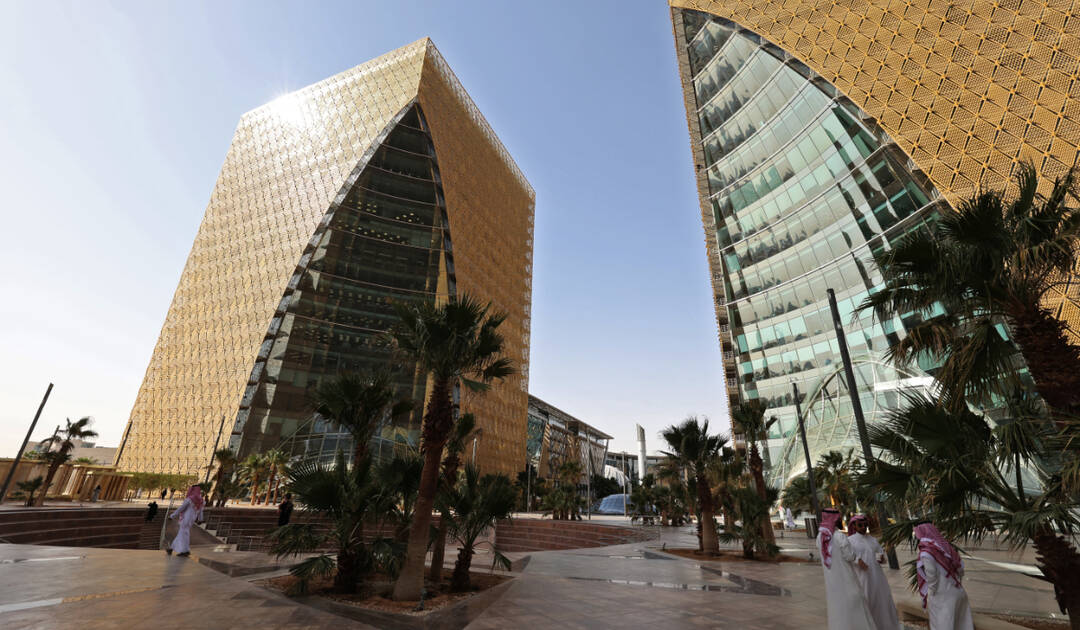
Take a look around Riyadh right now. The trend is already breathing life into physical spaces. Study the blueprints and emerging structures of a project like King Salman Park. You are not looking at cold, alien glass monoliths imported from Western design catalogs. You are looking at a masterclass in urban planning that respects traditional Najdi architectural geometry — the deep recesses, natural ventilation, and earthy textures that honor the desert.
Yet beneath those traditional mud-brick tones lies a highly sophisticated nervous system of smart-city infrastructure, automated water-conservation systems, and structural engineering workflows driven by advanced CAD technology.
This is not an accident. It is a highly intentional design language. It proves that our heritage is not something to be locked away in a museum; it is a living, breathing asset that can be scaled using the frontier tools of tomorrow.
The real magic happens when you bring generative AI into the creative studio. Over the last year, AI has evolved from a quirky novelty into a core creative partner. But while global agencies are using AI to generate generic, flashy sci-fi concepts, local creators are doing something far more compelling: They are feeding AI neural networks with centuries of Saudi architectural history, traditional geometric motifs, and indigenous materials.
We are teaching machines to think like ancient Najdi master builders and then asking them to optimize those designs for a sustainable, modern world.
When you use AI to analyze the mathematical proportions of traditional clay walls, the algorithm does not just see “old dirt.” It recognizes a brilliant, climate-conscious insulation system that has kept families comfortable for generations, adapting seamlessly to harsh desert conditions.
The AI takes that structural logic, calculates modern material densities, and outputs a blueprint for a contemporary commercial building that requires 40 percent less air conditioning while preserving the aesthetic soul of our ancestors.
That is the true definition of a tech revolution. It is not about escaping reality; it is about deepening our connection to it.
As the Kingdom cements its position as a global epicenter of innovation, our competitive edge will not come from how well we copy Silicon Valley or London. It will come from how fiercely we protect our uniqueness. The brands, architects, and creators who dominate the next decade will not be the ones building the most sterile technology; they will be the ones mastering retro-innovation.
The future of Saudi Arabia is not a sci-fi movie. It is a world where our grandchildren will sit in smart, AI-optimized spaces that still feel exactly like home.
• Abdulelah S. Al-Nahari is the group head of marketing and business development at a diversified investment group. He leads market expansion and brand strategies for subsidiaries in the events, MarCom and hospitality technology sectors, aligning portfolio growth with Saudi Arabia’s evolving economic landscape.


