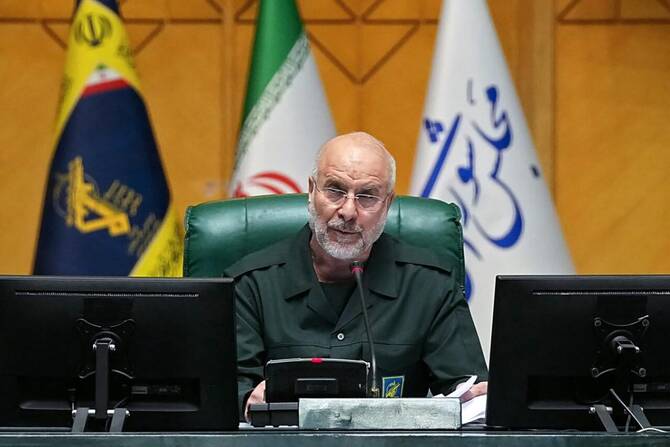

TEHRAN: Iran’s parliament speaker Mohammad Bagher Qalibaf, who recently emerged as a chief negotiator in talks with the United States, has been appointed to oversee relations with China, Iranian media reported on Sunday.
“Mohammad Bagher Qalibaf has recently been appointed as a special representative of the Islamic republic of Iran for China affairs,” Tasnim news agency reported, citing “informed sources,” with other media carrying similar reports.
Qalibaf was appointed to the position at the proposal of Iranian President Masoud Pezeshkian and with the approval of supreme leader Ayatollah Mojtaba Khamenei, according to Tasnim.
He will “coordinate various sectors of relations between Iran and China,” it added.
Fars news agency said late security chief Ali Larijani, who was killed in US-Israeli strikes on March 17, held a similar position.
Larijani oversaw the advancing of negotiations with China which led to a 25-year cooperation agreement in 2021.
Following the outbreak of the war on February 28 with Israel and the United States, Qalibaf has emerged as a central figure steering high-stakes diplomacy in the single round of talks with the US in April.
A number of senior Iranian officials, including former supreme leader Ali Khamenei, were killed in the war, which spread across the Middle East before a fragile ceasefire took hold on April 8.
Iran has in recent days allowed a number of Chinese ships to pass through the strategic Strait of Hormuz, a vital global energy conduit which it had blocked since the war erupted.
The Revolutionary Guards said the ships transited after “an agreement on Iran’s strait management protocols.”