

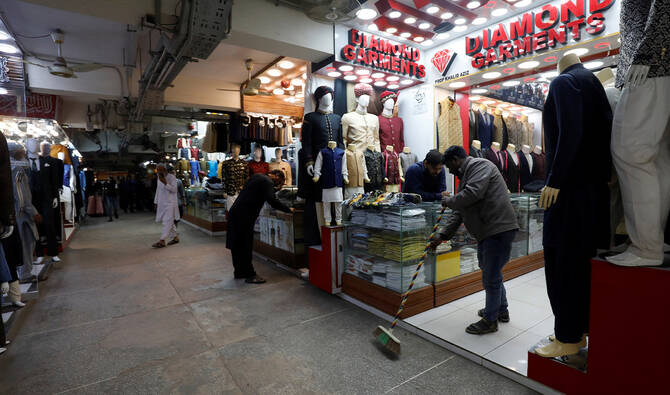

ISLAMABAD: The Pakistan Business Forum (PBF) on Thursday urged the government to impose a monthly fixed tax of Rs10,000 ($35) on shopkeepers in the upcoming budget, saying the move would simplify compliance and also broaden the country’s tax base.
The PBF describes itself as a platform for entrepreneurs, industry leaders and policymakers to engage in dialogue and share insights on business opportunities, challenges and strategies. The statement was released by the PBF in its budget proposals for the fiscal year 2026–27 to the Ministry of Finance. Pakistan’s government presents its federal budget in June every year.
Pakistan has undertaken tax reforms in recent years to broaden the tax base in the country. The Federal Board of Revenue (FBR) collected a provisional Rs11.735 trillion ($41.9 billion) in taxes during the fiscal year 2024–25, recording a 26 percent increase over the previous year’s collection of Rs9.3 trillion ($33.2 billion). However, this figure fell short of the annual target of Rs12.3 trillion ($43.9 billion).
“The Pakistan Business Forum, a non-partisan body, says that the government could collect up to Rs480 billion [$1.7 billion] annually if a fixed tax of Rs10,000 per month is imposed on shopkeepers in the upcoming budget, with no further questioning or documentation requirements, aiming to simplify compliance and broaden the tax base,” the forum said in its statement.
The PBF said the monthly tax could be collected from shopkeepers through electricity bills, noting that there were around 4 million shops across Pakistan.
The body also proposed abolishing the super tax, an additional charge imposed on top of a taxpayer’s normal income tax liability once their income crosses a certain threshold. It said the tax was imposed as a temporary measure initially that had become “permanent.”
The PBF highlighted that the cost of doing business in Pakistan was around 34 percent higher than regional competitors, urging the government to introduce targeted reforms to attract investment. It recommended rationalizing taxes and surcharges on electricity bills across domestic, industrial and commercial sectors to reduce operational costs.
It also proposed abolishing sales tax on local cotton seed and oil cake, noting that domestic cotton production has fallen sharply from about 15 million bales in Pakistan to nearly five million over the past four decades.
The statement added that PBF’s proposals also included limiting non-filers to ownership of only three vehicles and granting a seven-year tax holiday for corporate farming to promote large-scale agricultural investment and expand cultivated land.
“It also called for improved access to credit finance, particularly for small and medium enterprises (SMEs) and startups, to promote entrepreneurship and inclusive economic growth,” the PBF said.


