

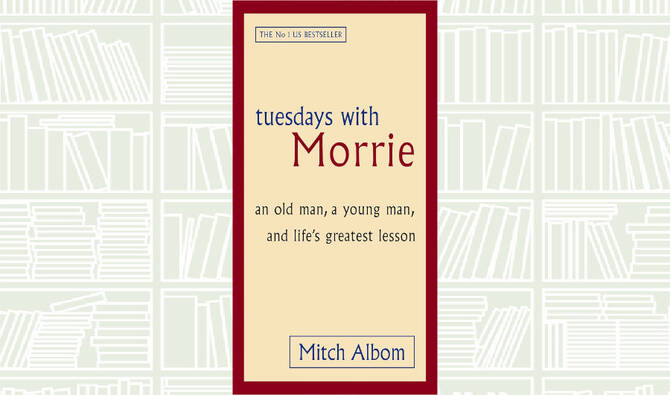

Mitch Albom’s nonfiction work relies on conversation and personal reflection to explore subjects such as ambition, love, and shifting priorities. At the center of the book are two real people.
Albom, a former student-turned-journalist, writes as a narrator looking back on his life. Morrie Schwartz is the Brandeis University sociology professor who taught him and, in Albom’s telling, set the standard for what a teacher and a decent adult could be.
Early on, Albom sketches a familiar pattern: graduation, a promise to keep in touch, and then the long fade-out as work takes over. Years later, Albom is based in Detroit, busy and well paid, moving from assignment to assignment, and treating exhaustion as proof of purpose.
Schwartz’s life has narrowed in a different way. He is living with amyotrophic lateral sclerosis, an illness that steadily weakens the body, while leaving the mind alert. When Albom sees Schwartz interviewed on television, he reaches out and drives to his former teacher’s home in West Newton, Massachusetts. From there, the Tuesday visits become a regular event.
The book’s design is straightforward, almost intentionally spare. Each meeting lands on a topic — family, money, aging, fear, forgiveness.
Schwartz’s voice carries much of the weight. He can be playful, blunt, even theatrical, but the warmth feels genuine rather than staged. He is not trying to win an argument; he is trying to make his former student pay attention.
The best thing about “Tuesdays with Morrie” is how readable it is without feeling empty. Albom does not hide that he is offering lessons, and the writing aims for clarity over complexity, an approach that may not work for everyone.
Some passages feel polished, as if life’s mess has been edited into clean takeaways. Still, the emotional effect is real. The book leaves the reader looking hard at what their schedules and habits reveal about what they value.
It is also, quietly, a book about friendship — not the kind sustained by quick texts, but those that demand time and effort. I finished it feeling steadier, not sadder, and more aware of how often people postpone what they claim matters most.


