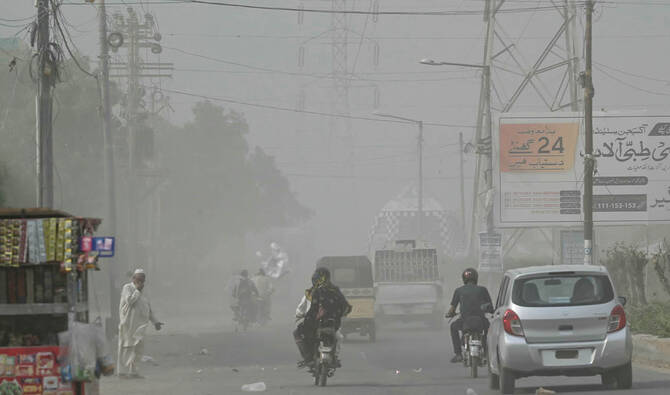

ISLAMABAD: Pakistan’s weather authority on Tuesday warned of strong winds, dust storms and thunderstorms in parts of Punjab and Kashmir over the next few hours, as the country also braces for rising temperatures in southern regions later this week.
The Pakistan Meteorological Department (PMD) said an active weather system over northeast Punjab is likely to bring gusty winds and rain to several cities, including Lahore, Gujranwala and Sialkot.
Pakistan is among the countries most vulnerable to climate change and has faced increasingly frequent extreme weather events, including deadly heatwaves and floods in recent years, highlighting the growing risks to public health and infrastructure.
“Strong winds/dust storms and thunderstorms with rain are expected at isolated places over the next 2 to 4 hours,” the PMD said in its latest update.
The advisory covers areas including Chakwal, Gujrat, Gujranwala, Lahore, Sialkot and parts of Pakistan-administered Kashmir, with authorities urging residents to take precautionary measures.
Separately, the PMD has indicated that mild heatwave conditions are likely to develop in southern parts of the country from April 29 to May 3, with temperatures expected to rise above seasonal averages.
Weather officials say May and June are typically the hottest months in Pakistan, particularly in regions such as Sindh, south Punjab and parts of Balochistan, where temperatures can exceed 50°C during heatwave conditions.
Recent observations suggest temperatures in some of these areas are already running several degrees above normal levels, raising concerns about further intensification.
Global climate patterns may also add to the risk, with forecasters warning that El Niño conditions could emerge in the coming months, a phenomenon associated with higher global temperatures and disrupted weather patterns.
Pakistan’s disaster management authorities have already issued alerts warning of a potential heatwave in the coming days, urging preparedness as temperatures rise.