

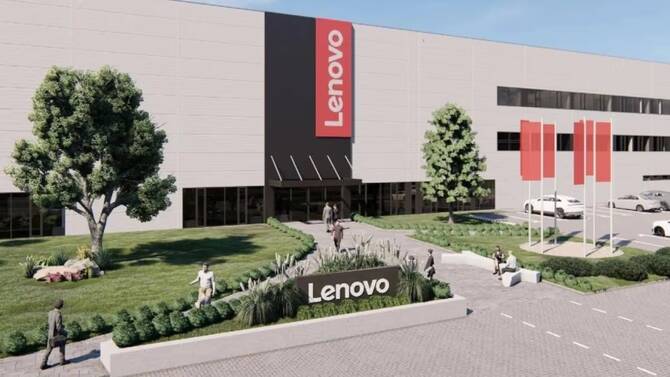

RIYADH: Saudi Arabia is approaching a historic industrial milestone in 2026, as it prepares to celebrate the launch of the first fully commercial production of smartphones, laptops, desktop computers, and data servers from its Riyadh factory.
This follows the completion of trial production phases carried out over recent months, according to Tareq Alangari, president of Lenovo for the Middle East, Africa, Turkiye, and Pakistan, and senior vice president of the group, who confirmed this to Al-Eqtisadiah.
Alangari revealed that the investment in the first phase exceeded SR2 billion ($533.2 million), with a gradual production plan aiming to reach an annual capacity of 2 million units within a period of one-and-a-half to two years.

Tareq Alangari, president of Lenovo for the Middle East, Africa, Turkiye, and Pakistan, and senior vice president of the group. Al-Eqtisadiah
He explained that the second phase of the project, which will depend on the capacity of the local and regional markets to absorb production volume, aims to increase capacity to 8 million units annually.
This could make the factory one of the largest globally among the company’s facilities, and possibly the largest outside of China, except for one major plant.
Riyadh hub oversees 60+ markets
Alangari clarified that the company’s investment in Riyadh represents a qualitative shift in its regional and global business model, stating that “Lenovo no longer only works in Saudi Arabia, but has begun working from within the Kingdom,” referring to the transfer of operational and administrative gravity to Riyadh to manage operations spanning more than 60 countries.
He noted that the management of the company’s regional operations from Riyadh, which geographically extends from Pakistan and Afghanistan to Turkiye, through the Levant and North Africa to Morocco, in addition to the African continent, is conducted entirely from Riyadh, in a region with a population exceeding 2 billion people.
Alangari highlighted that Lenovo’s Riyadh factory is the company’s largest outside China, within a network of around 30 global factories. He pointed out that this factory fundamentally differs from traditional models of the company’s factories worldwide, which often focus on a single production line per facility.
The top official added that the new factory, spanning an area of 200,000 sq. meters, brings together four integrated production lines in one location: smartphones, laptops, desktop computers, and high-performance data servers. This represents a significant operational and investment challenge, reflecting the scale of commitment to the Saudi market.
Factory to produce phones, PCs, servers
Alangari explained that the factory will produce high-end Motorola phones, alongside a wide range of laptops across various price segments, from high-performance to mid-range and economy models, as well as desktop computers, with a special focus on producing high-compute servers, which are a pivotal element in supporting Saudi Arabia’s push toward artificial intelligence and digital infrastructure.
He indicated that the investment volume in the project exceeds SR2 billion in its current phase, with a gradual operational plan targeting an annual capacity of 2 million units within one-and-a-half to two years.
He noted that these figures are significant by industry standards, especially given that other factories around the world have annual capacities of only a few thousand or tens of thousands of units.
He added that the second phase of the project, which depends on market response and its ability to absorb production, aims to raise capacity to about 8 million units annually, which could make the factory one of Lenovo’s largest globally, possibly surpassed only by one factory inside China.
Regarding operational flexibility, Alangari stated that the company does not currently disclose production distribution details among the different lines due to their direct link to customer order volumes.
He confirmed that the factory has high flexibility, allowing the allocation of a full production line — or even more — to meet orders from government entities or major corporations, whether for smartphones, servers, or computers, giving the company a significant competitive advantage in the market.
He noted that one of the biggest challenges facing companies and government entities is what is known as fulfilment time, as manufacturing and shipping processes from countries like China, the US, or Brazil can take several months before final product delivery, negatively impacting project schedules and customer service levels.
He pointed out that having the factory in Riyadh drastically shortens these durations, improves supply chain efficiency, and gives customers in Saudi Arabia and the region greater speed in obtaining products.
He noted that the positive impact is not limited to the local market but extends to regional and international markets, citing his experience managing the region, including Turkiye, where he observed significant interest from officials there in having a nearby factory in Saudi Arabia that reduces waiting times from months to much shorter periods.
He stated that the same applies to Gulf countries and several Arab nations, strengthening Saudi Arabia's position as a regional manufacturing and distribution hub.
Riyadh plant targets global exports
Alangari emphasized that the factory does not target only the local market but constitutes a flexible export platform based on efficiency and delivery speed, not traditional geographic distribution.
He indicated that, depending on order scheduling, customers in Europe, such as the UK or Germany, could be supplied with devices manufactured in Saudi Arabia if delivery speed from Riyadh surpasses other alternatives, something expected to strengthen in the first and second phases as production capacity increases.
Regarding partnerships, he explained that Lenovo has deep strategic relationships with major global technology companies, including NVIDIA, Intel, AMD, and Qualcomm.
He noted that these partnerships are not limited to supply or technical integration but include direct collaboration on product development, with teams from these companies working within Lenovo’s offices in Riyadh as part of advanced operational and marketing integration.
He added that this collaboration extends to developing joint devices inside the factory in Saudi Arabia, whether using NVIDIA technologies in AI and graphics processing, Intel and AMD technologies in processors, or Qualcomm in connectivity solutions, which enhances local added value and gives the factory an advanced technological dimension.
Regarding the ownership structure, Alangari indicated that Lenovo is an international, multi-shareholder company with investors from the US, China, Saudi Arabia, and other countries.
He highlighted the role of the Public Investment Fund through Alat, which invests in the company via financial instruments convertible into shares, making the fund one of the largest potential shareholders.
He affirmed that this partnership represents significant strategic value, as major global companies seek to associate with the Public Investment Fund due to its investment weight and long-term vision.
Full-scale production set for 2026
Alangari considered that the year 2026 will witness what he described as a “historic” event in Saudi Arabia: celebrating the production of the first full commercial batch from the factory.
Following the production of non-commercial trial batches of some devices over recent months, supply operations to customers within Saudi Arabia will be launched, alongside the start of exports to external markets.
He confirmed that the project is not limited to manufacturing but extends to building human capabilities. Saudi cadres are currently being trained internally and externally, with batches of male and female engineers being sent to China to gain technical expertise before returning to work at the factory. The first batch includes around 27 engineers out of 100 targeted in the initial phase, with the project expected to provide thousands of jobs in the future.


