

 The $10 trillion blueprint: How Riyadh can unify the fragmented halal world
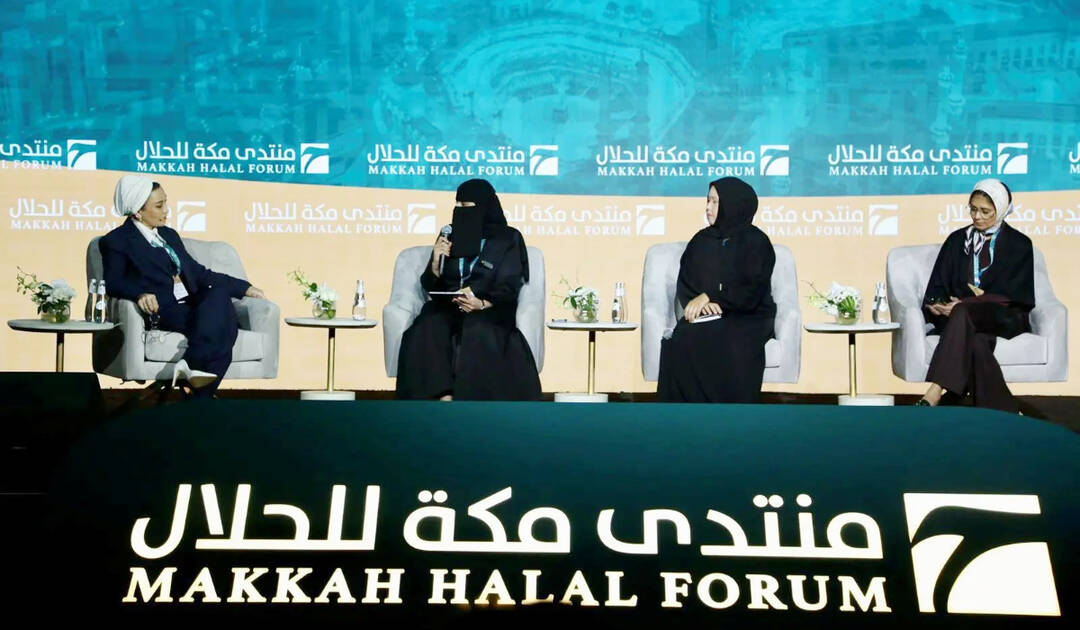

The Makkah Halal Forum held its third session in February, following two earlier sessions in 2024 and 2025. A total of 140 countries participated, representing Africa, Asia, Europe, North America, and South America. Local and international strategic partnerships were established, 30 cooperation agreements were signed, and 320 exhibitors took part over the forum’s three years.
The forum is organized under the supervision of the Ministry of Commerce and its Minister Majid Al-Qasabi, whom I had the honor of calling about 16 years ago during my studies in Britain to seek support for a student event. He did not hesitate to help, for which I remain grateful. This was during his work in the charitable sector.
At its most recent session, the forum announced the establishment of the Global Halal Academy to train and empower professionals for careers in the halal industry, and the adoption of the Golden Halal logo as a Saudi standard for quality, commitment, and reliability.
The forum is organized in partnership with the Islamic Chamber of Commerce and its counterparts in Makkah, Jeddah, Madinah, and Taif, alongside the Halal Products Development Co. — a subsidiary of the Public Investment Fund — and the Saudi Halal Center, affiliated with the Food and Drug Authority.
It aims to transform the region of the Two Holy Mosques into a hub for Islamic economic activities. In my view, this initiative brings significant economic benefits to Saudi Arabia, especially as the global halal trade is estimated to reach $7 trillion by 2025 — more than three times the gross domestic product of countries such as Canada and Italy — and is likely to rise to $10 trillion by 2030.
Figures from the global market research firm Emark estimated the Saudi halal food market at approximately $43.4 billion in 2024, rising to $126.8 billion by 2033, with a compound annual growth rate of about 11.7 percent.
There are no available statistics for other halal sectors such as pharmaceuticals, tourism, fashion, banking, and insurance; overall, food alone accounts for 60 percent of the sector’s activity.
Saudi Arabia is seeking to join the ranks of major players in the halal industry, or at least compete with leading Islamic countries in this field, meaning current figures require significant improvement
Saudi Arabia is seeking to join the ranks of major players in the halal industry, or at least compete with leading Islamic countries in this field, meaning current figures require significant improvement.
According to the BBC in 2022, the top 10 exporters of halal products are not Islamic countries and include Brazil, India, Austria, the US, Argentina, and New Zealand, as well as France, Thailand, the Philippines, and Singapore. Their combined share is at least 85 percent, compared to 15 percent for Muslim countries, led by Malaysia, Indonesia, and Turkiye. Western countries’ involvement in the halal sector is driven by financial rather than religious motives.
This is evident in the US halal tourism market, which offers venues free of alcohol or mixed-gender swimming pools. The global halal tourism market is estimated at $320 billion in 2024, or 11 percent of the global tourism market. Similar initiatives exist in Spain and Hong Kong, and South Korea hosts “Halal Week” every November.
In 2025, Halal Products Development Co. established the world’s largest institutional entity in the halal protein sector, Sadia Halal, after consolidating all halal assets into a single company headquartered in Saudi Arabia.
The company has access to markets in more than 17 Muslim-majority countries, serves over 500 million Muslim consumers, and generates annual revenues exceeding SR10 billion ($3.75 billion).
However, these efforts remain relatively modest compared to Brazil, the largest exporter of halal protein with $27.9 billion annually, followed by India at $24.31 billion and the US at $15.4 billion. A clear target should be set within a defined timeframe to ensure Saudi Arabia ranks among the top 10 in the halal trade.
The global halal market faces many challenges, most notably the lack of unified standards for halal certification; what is considered halal in Malaysia may not be recognized in the Arab region, the Gulf states, Europe, or the US.
It is essential to standardize these criteria, and the process should begin in Saudi Arabia, the birthplace of Islam, which established the concept of halal in its widely accepted form and has the necessary capabilities and tools. Examples include the International Halal Academy and the Golden Halal logo, whose significance is unmatched.
Through Halal Services Development Co., regulatory frameworks for halal have been established in Greece, Nigeria, Somalia, and Indonesia, and consulting services have been provided to nearly 200 companies supporting halal initiatives.
Training programs and workshops have also been organized for 800 professionals in this high-demand industry. All of this will give Saudis a competitive edge over global players and ensure a strong presence in the international halal industry in the near future.
• Dr. Bader bin Saud is a columnist for Al-Riyadh newspaper, a researcher in media and knowledge management, a university professor and expert in crowd management and strategic planning, and the former deputy commander of the Special Forces for Hajj and Umrah in Saudi Arabia. X: @BaderbinSaud


