

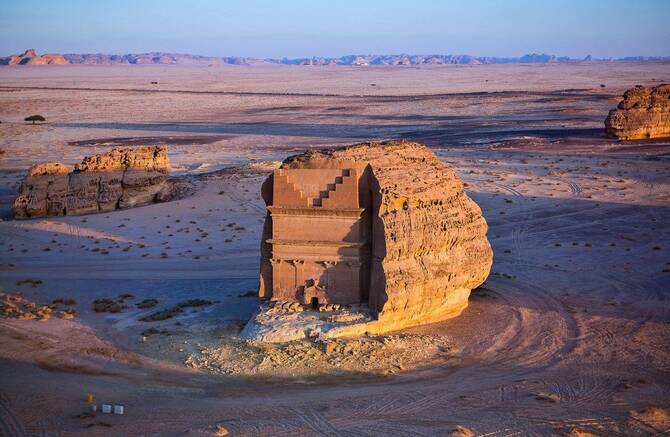



RIYADH: AlUla has recorded the highest improvement in the IMD Smart City Index 2026, advancing from 112th place in 2025 to 85th this year, placing it among the most improved cities globally.
“The top three cities in this year’s ranking are Zurich (first), Oslo (second), and Geneva (third). AlUla jumped 27 places while Washington DC rose by 23. Big drops were seen from Bordeaux (down 19), Lyon (also down 19), and Ottawa (down 18, together with Shenzhen),” said the IMD Smart City Index official portal.
“The most advanced urban centers, where citizens feel happiest, are not necessarily distinguished by their utopian skylines, visible sensor networks, or pure technological sophistication,” said Arturo Bris, director of the IMD World Competitiveness Center that produces the yearly Smart City Index measuring economic and technological aspects of smart cities on the one hand, and “humane dimensions” of smart cities (quality of life, environment, and inclusiveness) on the other.
“AlUla recording a significant leap points to the rapid progress of its development and tourism projects, and reflects its ambition to become an ideal destination for living, working and visiting,” Mohammed Helal, an AlUla resident told Arab News.
This achievement is a continuation of the comprehensive and sustainable development objectives pursued by the Royal Commission for AlUla since its establishment, and in line with the AlUla vision, which targets the development of infrastructure, improvement of services, and enhancement of quality of life for the people and residents of AlUla, whilst preserving the unique natural and cultural environment of the governorate, Saudi Press Agency reported.
This year’s edition of the index measures city performance across key pillars including quality of life, service efficiency, technology, environmental sustainability, and smart governance.
These pillars are central to the commission’s priorities and are being continuously advanced in partnership with stakeholders across the public and private sectors.
On the quality of life front, RCU continues to develop services for the people and residents of AlUla, spanning education, healthcare, infrastructure, and public utilities, within an approach that balances urban development requirements with the preservation of the destination’s identity.
On the education front, RCU has established an integrated system that encompasses a language institute offering instruction in five languages, a scholarship program that has benefited more than 690 students, teacher qualification programs in which more than 800 educators have enrolled, and community activities that have engaged approximately 7,400 students.
In the area of transport, RCU has completed the expansion of AlUla International Airport, increasing its annual passenger capacity from 400,000 to 700,000, doubling the number of passport control lanes, and integrating smart technologies to enhance the passenger experience, alongside the introduction of smart mobility solutions.
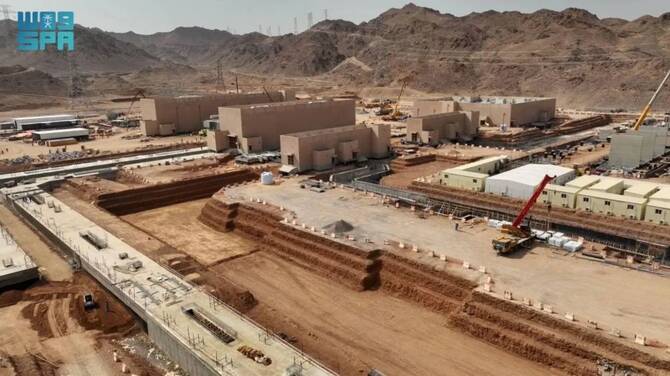
RCU continues to develop infrastructure through the construction of power stations and water storage facilities, as well as the enhancement of public utilities, all within the framework of the second masterplan, “Path to Prosperity,” which aims to elevate quality of life.
This progress aligns with the objectives of Saudi Vision 2030 and reflects the accelerating transformation AlUla is undergoing across urban development and contributing to its growing presence on global smart city rankings.
Saudi Arabia dominated this year’s smart city index, published by the International Institute for Management Development, as eight cities made notable showings.
The result reflects faster development and improving quality of life across the cities, in line with Saudi Vision 2030.
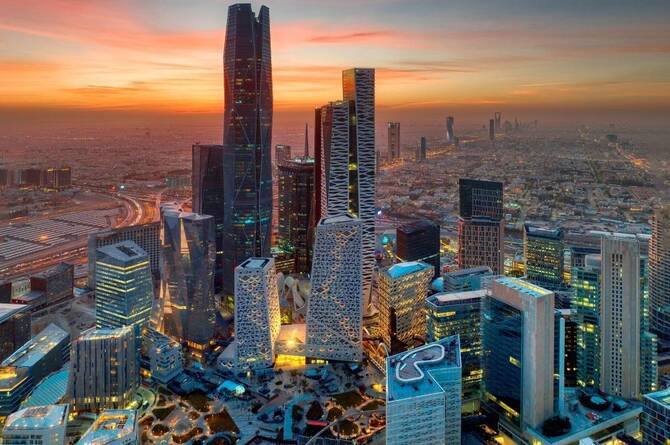
Riyadh advanced to 24th globally from 27th. Makkah ranked 50th, Jeddah 55th, Madinah 67th, Alkhobar 64th, and AlUla 85th.
The index also listed Hail and Hafar Al-Batin Governorate for the first time. Hail ranked 33rd, while Hafar Al-Batin placed 100th among the 148 cities assessed.
The IMD Smart City Index is a global benchmark that measures how far cities have advanced in adopting modern technologies. It does so by assessing residents’ views of service quality, digital infrastructure, and their impact on daily life.
This strong progress underscores the Kingdom’s continued efforts to upgrade urban services and build smart, sustainable cities that improve quality of life and strengthen global competitiveness, as Saudi Arabia marks 2026 as the Year of Artificial Intelligence.
Makkah Mayor Musaed bin Abdulaziz Al-Dawood said Makkah’s advanced ranking reflects the qualitative development the city is witnessing in its digital transformation.
This ranking is an extension of the great support provided by the Saudi leadership for development projects in Makkah, and their continuous directives to enhance its position as a smart destination, he added.
“In the Smart City Index, the Kingdom is absolutely dominating. Riyadh has jumped to 24th place globally, leading a pack of 8 Saudi cities that are redefining what it means to be a Smart City. From AlUla’s massive climb to the debut of Hail and Hafar Al-Batin, Saudi's cities are getting smarter, faster, and more sustainable every single day!” a social media account, Lovin Riyadh, posted on X.


