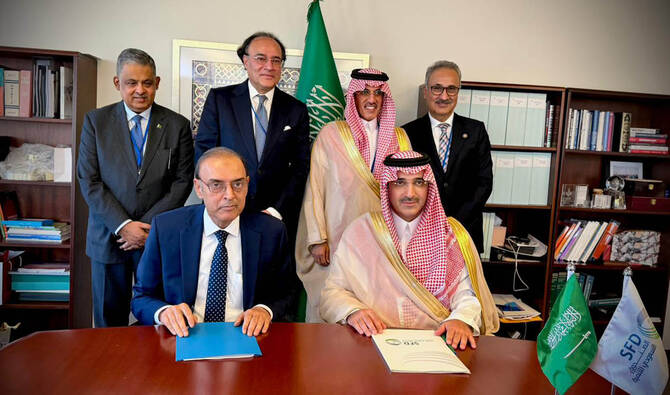

KARACHI: Saudi Arabia and Pakistan have signed an agreement to extend the period of a $3 billion deposit by the Saudi Fund for Development (SFD) with the Pakistani central bank, the Pakistani finance ministry said on Friday, providing Islamabad a much-needed breathing space to implement fiscal reforms.
Pakistan relies heavily on external financing to meet its import needs and debt obligations, with support from allies such as Saudi Arabia playing a critical role alongside an International Monetary Fund (IMF) program aimed at restoring macroeconomic stability.
Islamabad is working to rebuild its reserves and meet targets under a $7 billion IMF program after a prolonged balance-of-payments crisis, with authorities aiming to lift reserves to around $18 billion by the end of the current fiscal year in June.
The Pakistani finance ministry said the agreement was signed by SFD Chief Executive Officer Sultan bin Abdulrahman Al-Marshad and State Bank of Pakistan Governor Jameel Ahmad, without elaborating on the duration of the extension.
“The extension of the deposit reflects the strong and longstanding economic partnership between Pakistan and the Kingdom of Saudi Arabia, and will further support Pakistan’s external sector stability,” the ministry said on X.
Riyadh has been a key financial backer of Pakistan, providing deposits, oil financing facilities and budgetary support to help the country navigate external financing pressures.
The extension in the $3 billion Saudi deposit comes a day after Pakistan’s central bank said it had received $2 billion from the Kingdom, providing immediate support to the country’s foreign exchange reserves.
The inflow followed a statement by Pakistan’s Finance Minister Muhammad Aurangzeb, in which he said Saudi Arabia had committed $3 billion in additional financial support and agreed to extend an existing $5 billion deposit to help shore up Pakistan’s reserves.
It came after Pakistan’s recent repayment of about $1.4 billion in Eurobonds and coincided with repayments of around $3.5 billion to the United Arab Emirates under maturing deposits, underscoring pressure on its external account.