

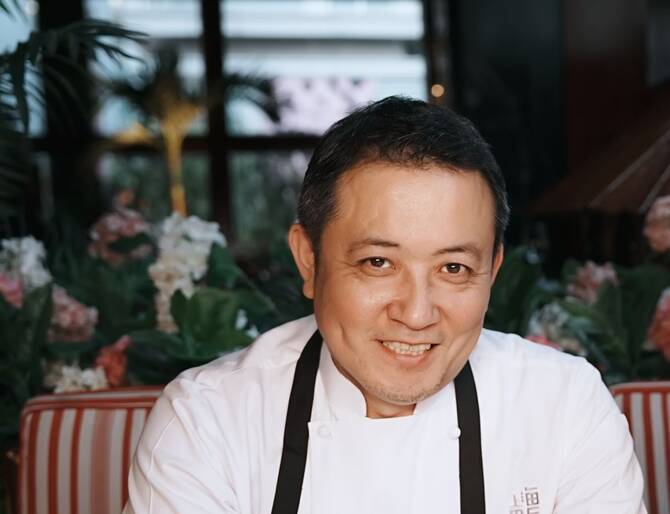

DUBAI: Tokyo native Yukitaka “Yuki” Kitade arrived in the UAE in 2006, having previously worked in the US. He has since been involved in the launch of several Japanese dining concepts within major hotel groups. He currently oversees culinary operations for Shanghai Me across Dubai, Doha, and London. Alongside Chef Izu Ani, Kitade also leads the brand’s culinary direction, billed as “seamlessly blending classic Chinese recipes with Japanese precision and elegance.”
Here, Kitade discusses washing ingredients correctly, the joy of sudachi, and his love of Italian food.
When you started out, what was the most common mistake you made?
I wasn’t good at sharpening knives. In fact, I ruined several of them. It took me several years to master the technique.
What’s your top tip for amateur chefs?
Wash ingredients at 50°C. This is good to do at home if you’re concerned about the smell, bacteria, or dirt on frozen fish or raw meat bought from the supermarket. Wash the surface of the meat with warm water at 50-55°C. For lamb, beef, and chicken, soak them in hot water for four to five minutes (two minutes for whole cuts, up to three minutes for frozen), scrub lightly, then cool them in cold water, completely wipe off the moisture with kitchen paper, and cook immediately. This removes oxidized fat, dirt, and odors, reduces scum, and results in a tender texture.
What one ingredient can instantly improve any dish?
My choice is sudachi. It’s a traditional Japanese citrus fruit that’s a great supporting player — enhancing the flavor of grilled and simmered dishes, as well as sushi and sashimi. Sudachi has a crisp acidity and a refreshing aroma. Its flavor is more refreshing than lime and lemon, and it goes exceptionally well with fermented foods. It can be used not only in Japanese cuisine but also in Western and Chinese dishes. It contains more vitamin C and citric acid than lemons.
What’s the most common issue that you find in other restaurants you visit?
I really believe that pushy or unfriendly service can all make food taste bad. And unsanitary conditions, of course.
What’s your favorite cuisine or dish to order?
I like Italian food, I always order something with bolognese or ragu sauce. That’s my favorite. Bolognese is available at almost every Italian restaurant, and you can tell if it’s good or not by the style, so I always order it at least once. If I find that it’s carefully prepared, well-balanced, and delicious, it makes me happy to have discovered a restaurant I like.
What’s your go-to dish if you have to cook something quickly at home?
Tori Nanban Soba — that’s traditional chicken and buckwheat noodles. Making the broth is a bit of a hassle, but I always keep my favorite soba noodles on hand, so I make it for a late-night snack or when I’m short on time. It’s much healthier than ramen, even though it’s also a noodle dish, and I never get tired of it.
What customer behavior most annoys you?
A customer at a sushi restaurant once told me that they couldn’t eat raw food.
What’s your favorite dish to cook?
Chinese crispy chicken with spicy scallion sauce. It’s great as a side dish or as a snack with drinks.
What’s the most difficult dish for you to get right?
The dishes that I remember from my mother and grandmother. It’s so hard to get them to taste the same.
What are you like as a leader?
I’m a disciplinarian, but as I’ve gotten older I’ve become more laidback.
Chef Yuki’s homemade sushi, Shanghai Me style

Preparing & Cooking Sushi Rice
Ingredients
Japanese Short Grain Rice - 1 kg
Water – 1,000 ml
How to Wash the Sushi Rice
Place the rice in a large bowl with a fine-mesh strainer and rinse it with water a total of four times, using your hands to gently stir and rub the grains. The water should become mostly clear, which removes excess starch and is essential for achieving a proper, non-gummy texture.
Soak the sushi rice in water for 20 minutes.
How to Cook Sushi Rice
Transfer the prepared sushi rice to the rice cooker using a ratio of 1 kg of sushi rice to 1,000 ml of water. After the rice has finished cooking, let it rest for 10 minutes.
Special Tips: How to Cook the Rice in a Clay Pot
Place the prepared sushi rice in the clay pot and add the water.
Turn the stove to high heat and bring it to a boil. Once it starts boiling, close the lid and cook for 3 minutes.
Then reduce the heat to very low, keep the lid on, and cook for another 7 minutes.
After turning off the heat, let the rice rest with the lid on for 5 minutes.
Preparing Sushi Rice Vinegar
Ingredients
Japanese Rice Vinegar - 400 gms
Caster Sugar – 200 gms
Table Salt – 100 gms
Dry Kombu – 10 gms
How to Prepare
Combine all the ingredients in a small mixing bowl and stir continuously until the sugar and salt are completely dissolved and the liquid is clear.
Seasoning the Sushi Rice
Ingredients
Cooked Sushi Rice - 1 kg
Seasoned Vinegar - 300ml
How to Prepare
Transfer the hot rice: immediately after the rice has finished cooking and steaming, transfer it to a large, wide, non-reactive bowl (a traditional wooden hangiri is ideal, as it absorbs excess moisture).
Season the rice: pour the seasoned vinegar evenly over the hot rice. Using a rice paddle or a flat wooden spoon, gently fold the rice with a cutting or slicing motion to separate the grains and distribute the vinegar mixture evenly.
Cool with a fan: use a hand fan to cool the rice while gently mixing it. This helps remove excess moisture and gives the rice its characteristic glossy, shiny appearance.
Store the rice: transfer the rice to a rice warmer or a covered rice container.
Spicy Mayonnaise
Ingredients
Kewpie Mayonnaise - 250 gms
Shichimi Togarashi - 10 gms
Layu Chili Oil - 20 gms
Grated Garlic - 10 gms
Soy Sauce Yamasa - 10 gms
How to Prepare
Combine all the ingredients in a mixing bowl and mix well.
Nigiri Sushi: Tuna, Salmon & Seabass
Ingredients
Tuna Akami - 15 gms
Salmon - 15 gms
Seabass - 15 gms
Sushi Rice - 10 gms per nigiri
How to Prepare
Pre-slice the fish into individual portions.
Thoroughly moisten both hands, then pick up a small 10g ball of rice with your right hand.
Hold a pre-sliced piece of fish in your left hand and apply a small amount of wasabi on top.
Place the rice ball onto the fish, then gently press down with two fingers until the rice is perfectly shaped.
Remember to keep your hands moistened as needed so the rice does not stick to your hands.


