

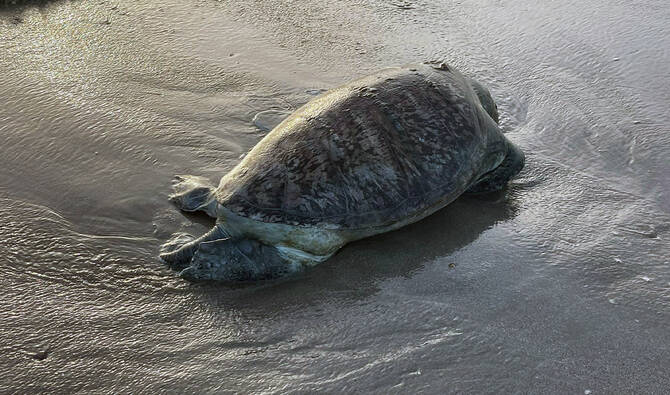

ISLAMABAD: Three sea turtles were found dead on Pakistan’s southwestern Gwadar beach this week after getting entangled in fishing gear, the World Wildlife Fund-Pakistan said on Tuesday, highlighting continued threats to marine life along Pakistan’s coast.
WWF-Pakistan has previously warned that ghost nets (abandoned, lost or discarded fishing gear) not only threaten turtles but also have a negative impact on their nesting activity and hatchling survival rate in Pakistan. It says marine turtles are also accidently caught as bycatch by fishing techniques and operations such as gillnet, trawling and longline in Pakistan.
The dead turtles found in Gwadar on Apr. 13 belonged to the loggerhead, green and olive ridley species, WWF-Pakistan said.
“The mortality of turtles was attributed to their entanglement in the fishing gears,” WWF-Pakistan said in a statement on Tuesday. “WWF-Pakistan expresses concern about the mortality of rare species of turtles in these events.”
It said the loggerhead turtle (Caretta caretta) is among the rarest species recorded in Pakistan, with only 12 sightings in the past 40 years. Its scarcity and ongoing threats suggest it may be critically endangered at the national level.
WWF-Pakistan said the green turtle (Chelonia mydas) is among the species that frequently visit selected sandy beaches along Pakistan’s coast for nesting and egg-laying.
The olive ridley turtle (Lepidochelys olivacea), it added, is prone to entanglement in gillnet fishing and is the most commonly observed sea turtle in Pakistan. The species once nested along the coast, though no nesting has been recorded since 1990.
The environmental conservation organization said it launched an offshore gillnet monitoring program in 2012 to assess marine turtle bycatch. It found olive ridley turtles were frequently entangled in fishing operations.
WWF-Pakistan said it has trained fishermen in safe release techniques, leading to the release of over 50,000 turtles since the program began.
However, it warned that green turtle populations in Pakistan face multiple ongoing threats, calling for urgent conservation measures.
Muhammad Moazzam Khan, WWF-Pakistan’s technical adviser, stressed the need to raise awareness among fishermen and the public to ensure the survival of marine turtles in Pakistan.
“These recent events are a setback to the ongoing conservation efforts of WWF-Pakistan, relevant government departments and other organizations,” the organization said.


