


NEW YORK CITY: UN Secretary-General Antonio Guterres said on Tuesday that rare direct talks between Israel and Lebanon could help shift long-standing dynamics that have fueled instability in the region, even if no immediate breakthrough is expected.
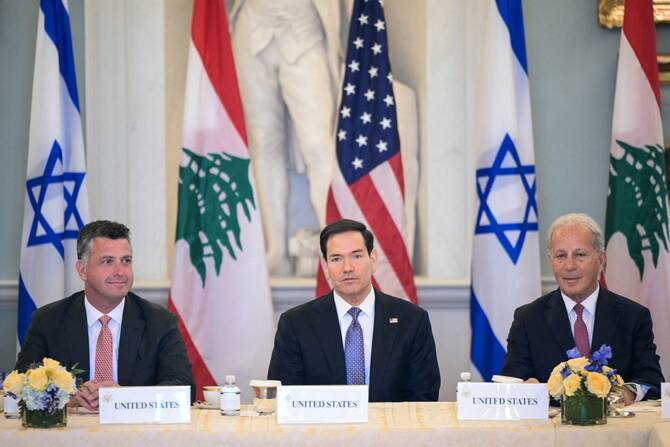
Guterres’ remarks in New York came as delegations from the countries met in Washington for their first direct discussions since 1993.
“Nobody expects that these talks today will solve all the problems,” Guterres said. Progress would instead be measured by whether they “create the conditions for a change” in the behaviors of key actors, he added.
The UN chief described a cycle of mutual escalation between Israel and the Iran-backed militant group Hezbollah, and said each side’s actions had historically reinforced the other’s position while undermining Lebanese state authority.
“Whenever Israel occupies part of the territory of Lebanon, that is the pretext that Hezbollah uses to say, ‘We cannot disarm. We must keep the resistance,’” he said.
“Whenever Hezbollah sends rockets against Israel … Israel immediately uses that pretext for this massive operation against Lebanon.”
Guterres warned that this dynamic had left Lebanon trapped in a cycle that weakens its government, which he said was committed both to preserving territorial integrity and to asserting a state monopoly on the use of force, a goal that would require the disarmament of Hezbollah.
He called for a shift toward cooperation between Israel and Lebanon, and said the latter should no longer be “the victim of this kind of negative” interplay between the two sides.
The talks in Washington were being closely monitored by diplomats for signs of a potential opening to ease tensions along the Israel-Lebanon border, one of the most volatile frontiers in the region.


