


KARACHI: Pakistan is courting Saudi Arabia and other global partners to cushion the economic fallout of the Middle East crisis, the finance ministry said on Monday, as Finance Minister Muhammad Aurangzeb holds talks in Washington on the sidelines of the IMF-World Bank Spring Meetings.
The meetings included high-level engagements with Saudi, US and multilateral officials aimed at securing financial support, advancing reforms and reinforcing investor confidence as Islamabad navigates the economic fallout from the regional crisis.
The conflict involving Iran, the United States and Israel has disrupted global energy markets and trade flows, driving up oil prices and raising risks for countries like Pakistan that rely heavily on fuel imports and remittances from the Gulf, with potential spillovers into inflation, growth and the external sector.
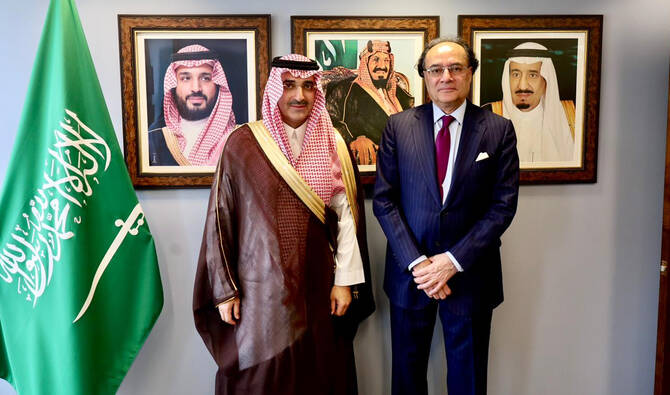
“The two sides discussed the implications of the ongoing conflict in the Middle East on global energy security and its potential economic impact,” the finance ministry said in a statement after Aurangzeb met with the CEO of the Saudi Fund for Development.
The minister also “emphasized the importance of continued cooperation between Pakistan and Saudi Arabia,” the statement said, as both sides reaffirmed their commitment to strengthening economic and development ties.
In a separate meeting with officials from the Multilateral Investment Guarantee Agency, Aurangzeb welcomed a proposed short-term trade finance facility of up to $500 million, describing it as critical for supporting imports of “food, fertilizer, energy, and essential machinery.”
He urged expedited progress on the facility to help meet Pakistan’s external financing needs as the country manages the impact of higher global energy prices.
Aurangzeb also met IMF director Jihad Azour and highlighted progress on reforms under Pakistan’s $7 billion IMF program, expressing hope for early approval of a recent staff-level agreement that would unlock about $1.2 billion in funding.
During the meeting, he described the Middle East conflict as “one of the most significant supply shocks in recent times,” and said the government was managing its effects on economic growth and inflation, according to the finance ministry.
The minister reaffirmed Pakistan’s commitment to fiscal and structural reforms and to meeting its external obligations, including the recent repayment of a $1.3 billion Eurobond.
In meetings with US officials, including United States Trade Representative (USTR), Ambassador Jamieson Greer, and Treasury officials, Aurangzeb discussed expanding trade and investment ties, improving market access and strengthening economic cooperation.
The engagements also included outreach to global investors and technology firms, with meetings held with Google and Mastercard on artificial intelligence, digital payments and financial inclusion.
Officials said the discussions are part of Pakistan’s broader effort to position itself as an investment destination while managing the economic fallout of the Middle East crisis and sustaining reform momentum under its $7 billion IMF bailout program.


