


RIYADH: The Strait of Hormuz and continuing Israeli strikes on Lebanon emerged on Thursday as twin threats to the fragile Middle East ceasefire.
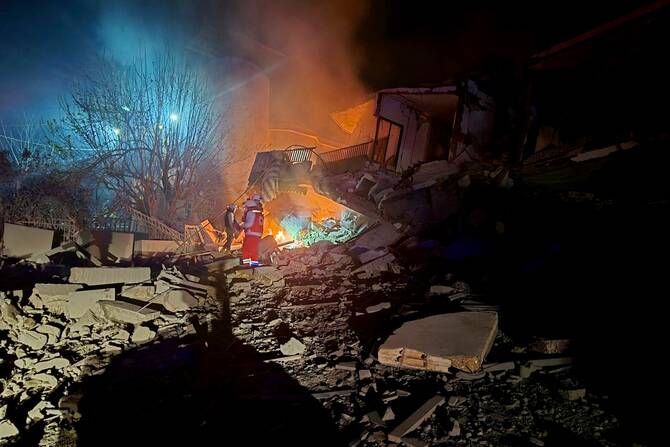
Israeli attacks killed at least seven people in southern Lebanon a day after hundreds died in the largest attack since the war began.
Israeli Prime Minister Benjamin Netanyahu agreed to a Lebanese request for direct negotiations “as soon as possible,” amid mounting calls for Lebanon to be included in the ceasefire.
UN chief Antonio Guterres “unequivocally” condemned the Israeli strikes, as did French President Emmanuel Macron and British Foreign Secretary Yvette Cooper. The attacks were “completely wrong” and Lebanon must be included in the truce, Cooper said.
Iran’s parliamentary Speaker Mohammad Bagher Qalibaf said Israeli attacks on Lebanon would bring “explicit costs and strong responses,” but Netanyahu said Israel would continue striking Hezbollah.
Meanwhile Donald Trump’s position on the Strait of Hormuz caused confusion. Initially the US president described Iran’s 10-point ceasefire proposal, which included Iranian control over the strait, as “workable.” He then insisted the waterway must remain free and open. But then he suggested that the US and Iran could share the proceeds of the so-called “Tehran toll,” a fee of up to $2 million per vessel for permission to transit the strait.
Deputy Foreign Minister Saeed Khatibzadeh said Iran would allow ships to pass through in accordance with “international norms and international law” once the US ended its “aggression” in the Middle East and Israel stopped attacking Lebanon. “I think that we have shown to everybody that energy security is pivotal for Iran, is pivotal for this body of water,” he said.
But Iran also published a chart suggesting it had mined the strait, and there were growing demands for Tehran to reopen the waterway immediately and unconditionally. Italian Prime Minister Giorgia Meloni and the European Commission called for freedom of navigation under international law, and UAE oil chief Sultan Al-Jaber condemned “the weaponization of this vital waterway.”
Ahead of US-Iran peace talks expected to begin in Islamabad on Friday, Saudi Foreign Minister Prince Faisal bin Farhan spoke by telephone on Thursday with Iran’s Foreign Minister Abbas Araghchi, their first conversation since the war began.


