ISLAMABAD: Large crowds pack buses and trains in Islamabad Monday after the government made all state-run public transport in Pakistan’s major cities free, in response to drastically raised fuel prices due to the Iran war.
Citizens shared mixed reactions, ranging from fears that this will only make services more crowded and provide only temporary benefits, to welcoming the move as “good news.”
“This is very good news for poor people, especially those in the labor class, Raja Naeem Sarver, 40, said.” It is a very positive step indeed, and we view it positively.
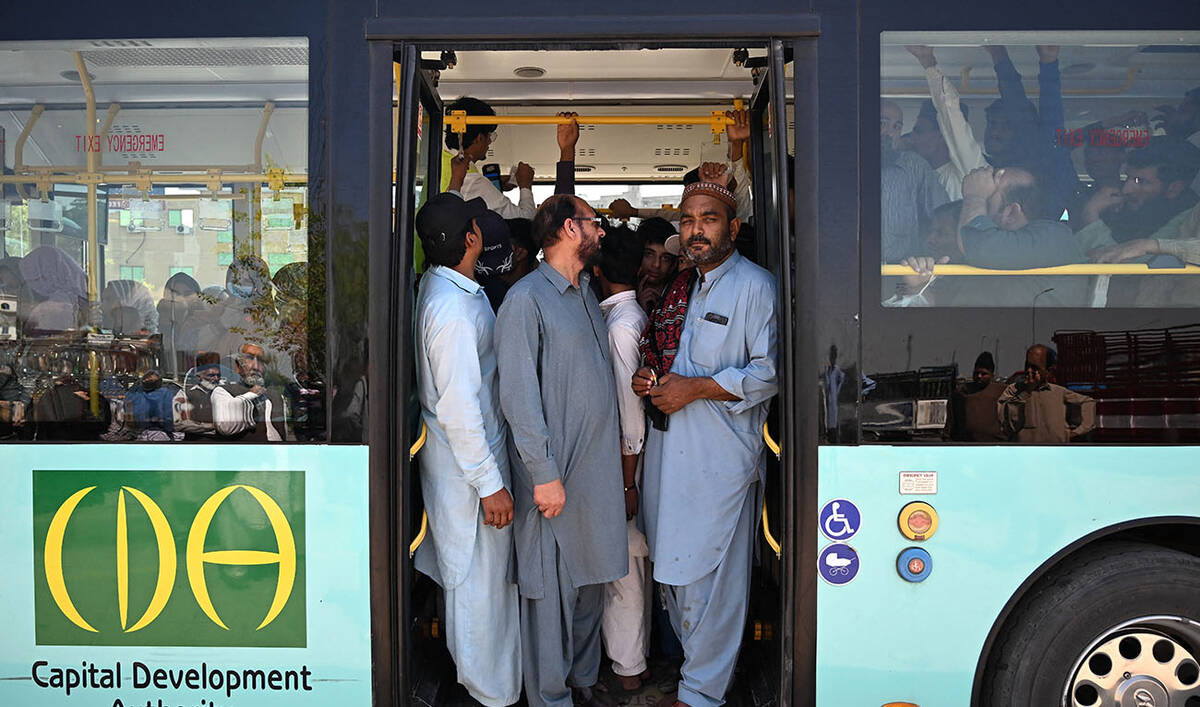
Commuters travel on an overcrowded free state-run public bus in Islamabad on April 6, 2026. (AFP)
“However, one issue is that, as you can see, there is a very large crowd. People who didn’t need to travel before are now coming because it’s free.”
Another Islamabad resident, Minhas Akhtar, said transport should not be “completely free.”
“Trust me, if it’s free, people will abandon other modes of transport and come here, creating a shortage of space in vehicles,” she explained. “Instead, the number of vehicles should increase. Even if the fare is around 50 rupees [$0.18] that would be reasonable.”
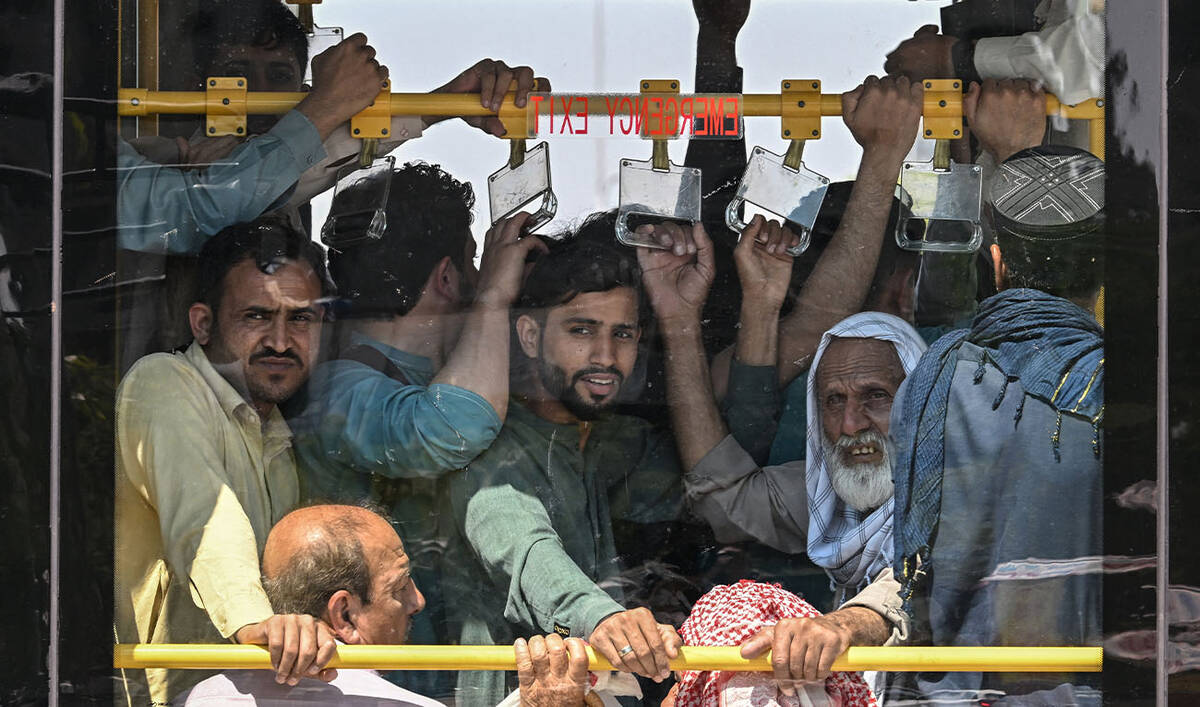
Commuters travel on an overcrowded free state-run public bus in Islamabad on April 6, 2026. (AFP)
Shakeel Ahmed, a retired government official aged 62, called for a reduction in the prices of everyday items.
“While paying Rs50–60 [$0.18 to $0.22] is affordable for most people, reducing the price of essential items such as ghee, flour and sugar would benefit the public much more than reducing fares by Rs30–40 [$0.11 to $0.14],” he said.
“People already spend Around Rs100–150 [$0.36 to $0.54] a day, which they can manage, but what if they have no flour or sugar at home?”
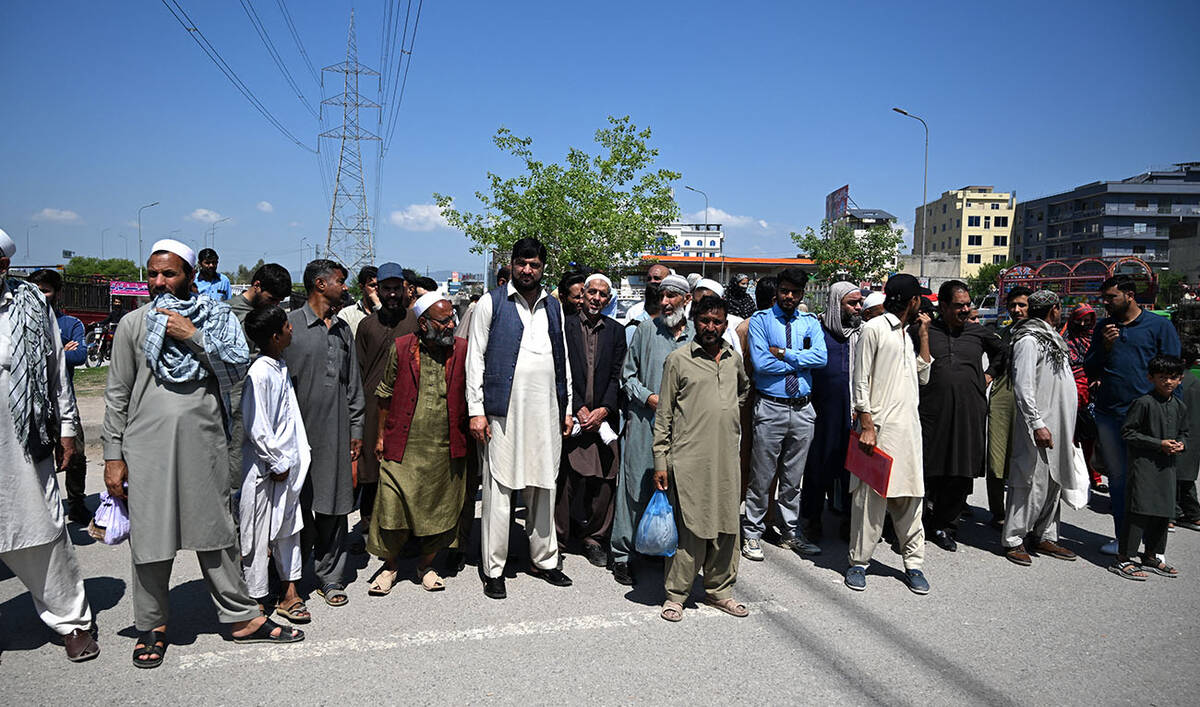
Commuters wait to travel on a free state-run public bus in Islamabad on April 6, 2026. (AFP)