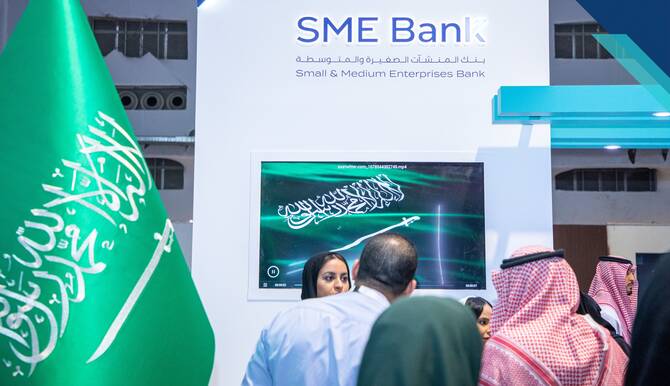

RIYADH: Saudi Arabia’s banks and financing companies extended SR468 billion ($124.6 billion) in credit to small and medium-sized enterprises in the fourth quarter of 2025, a 33 percent increase from a year earlier, official data showed.
The share of SME lending in total credit rose to 11.5 percent by the end of the quarter, up from around 9.6 percent a year earlier, according to a Ministry of Investment report citing Saudi Central Bank data. Banks accounted for 95 percent of total SME credit, with financing companies providing the remainder.
Saudi Arabia aims to increase the contribution of SMEs to gross domestic product to 35 percent under Vision 2030, up from around 20 percent previously, with expanding access to credit seen as a key enabler of that goal.
Authorities have prioritized increasing the share of SME lending within total bank credit, as part of broader efforts to deepen financial inclusion and support private sector-led growth.
The increase in SME lending coincided with broader economic growth in Saudi Arabia. Real GDP rose 4.5 percent in 2025 from the previous year, driven by 5.7 percent growth in oil activities, 4.9 percent growth in non-oil activities, and 0.9 percent growth in government activities, according to the report.
The report also showed Saudi Arabia’s insurance sector expanded in the third quarter of 2025, with gross written premiums rising 9.7 percent year on year.
Health insurance, which made up 53 percent of total premiums, increased 14.4 percent, while motor insurance, representing 21 percent of total premiums, also rose 14.4 percent. Property and casualty insurance climbed 11.5 percent, while protection and savings insurance fell 18.2 percent.
The data also showed gross fixed capital formation was broadly flat in 2025, edging up about 0.1 percent from a year earlier, driven by a 4.6 percent increase in non-government sector investment, which accounted for 89 percent of total GFCF. In the non-oil, non-government sector, GFCF rose 7.3 percent, according to the report.
The labor market remained relatively stable at the end of 2025. The unemployment rate among Saudis stood at 7.2 percent, down from 7.5 percent in the previous quarter, while the overall unemployment rate was 3.5 percent, compared with 3.4 percent in the third quarter.
The labor force participation rate for Saudi women was 34.5 percent.
The consumer price index rose 1.7 percent year on year in February 2026, while point-of-sale transactions increased 3.5 percent, the report showed.