
BEIRUT: Israeli strikes in Lebanon on Sunday killed at least 15 people, a day after Israel threatened to hit Lebanon’s main border crossing with Syria, forcing it to close.
Israel has launched airstrikes across Lebanon as well as a ground invasion in the south since March 2, when armed group Hezbollah entered the Middle East war on the side of its backer Iran.
Israeli military chief Lt. Gen. Eyal Zamir visited troops in southern Lebanon on Sunday and pledged to intensify strikes against Hezbollah.
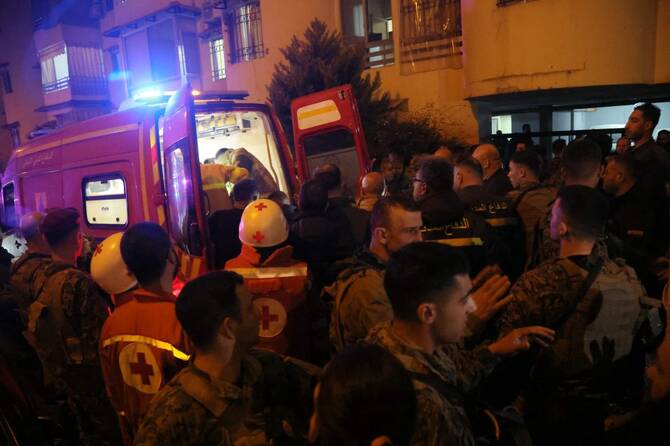
One of Israel’s strikes in Beirut Sunday killed at least five people and wounded 52 in the Jnah neighborhood, the Lebanese health ministry said.
A strike targeting an apartment building in Ain Saadeh town east of Beirut killed three people and injured three others, while a strike in the southern town of Kfar Hatta, far from the border with Israel, killed seven people including a four-year-old girl, the ministry said.
Pierre Mouawad, an official with the Lebanese Forces party, was killed along with his wife in the Ain Saadeh strike, the state-run National News Agency reported.
The Israeli military has made no statement about the strike, and its intended target remains unclear.
The Lebanese Forces party is opposed to Hezbollah and has blamed the Shiite militant group for dragging Lebanon into a new war with Israel.
Hezbollah on Sunday claimed to have fired a cruise missile at an Israeli warship off the coast, but the Israeli military told AFP it was “not aware” of such an incident.
Israeli attacks on Lebanon since the start of the war have killed more than 1,400 people, including 126 children, and displaced over a million, according to Lebanese authorities.
Panic attacks
The strike in Beirut’s Jnah neighborhood landed about 100 meters away from the Rafik Hariri University Hospital, the largest public medical facility in Lebanon, a medical source told AFP.
Zakaria Tawbeh, deputy head of the hospital, said they received “four killed, three Sudanese and a 15-year old girl, and 31 wounded.”
“Lots of glass was broken, and some of our patients had panic attacks.”
After the first attack, 53-year-old Jnah resident Nancy Hassan thought she was safe at home.
“Shortly after, the planes were flying overhead, and we heard a huge bang, then stones rained down on us,” she told AFP.
Hassan lost her daughter in an Israeli strike on the same area during the 2024 war between Hezbollah and Israel.
“My daughter was killed, she was 23 years old. Today, her friends were killed. Every time, they bomb us in the neighborhood without warning,” she added.
Israel also launched several strikes on the southern suburbs of Beirut, an area now largely evacuated but where Hezbollah holds sway.
The United Nations Interim Force in Lebanon warned that attacks by Israel and Hezbollah near its positions “could potentially draw return fire.”
Vital crossing
On Saturday, Israel had said it would target the Masnaa border crossing between Lebanon and Syria, the main gateway between the two countries.
“Due to Hezbollah’s use of the Masnaa crossing for military purposes and smuggling of combat equipment, the (Israeli army) intends to carry out strikes on the crossing in the near future,” said the military’s Arabic-language spokesman Avichay Adraee, urging people to leave the area.
The border post was quickly evacuated on the Lebanese side.
In Syria, borders and customs public relations director Mazen Aloush insisted the crossing was exclusively used by civilians but said it would close temporarily due to the threats.
Masnaa is a vital trade route for both countries and a key gateway to the rest of the region for Lebanese people.
Military expert Hassan Jouni told AFP that Israel’s threat to strike the crossing “is not based on sound security considerations but rather aims to pressure the Lebanese government... to disarm Hezbollah.”
At another border crossing further north known as Qaa, an AFP correspondent on Sunday saw a long line of cars and vans waiting to enter Syria as people sought an alternative route.
As Israeli troops push into border areas in southern Lebanon, destroying villages, Lebanese President Joseph Aoun reiterated his call for talks with Israel, saying he wanted to spare his country’s south from destruction on the scale seen in the Palestinian territory of Gaza.
“Why don’t we negotiate... until we can at least save the homes that have not yet been destroyed?” he said in a televised address.
Killing of Christian party official widens divisions
Following the killing of Pierre Moawad by Israel, the Lebanese Forces Party, a fiercely anti-Hezbollah Christian party condemnded Hezbollah.
“We are paying a heavy price for a war into which we have been dragged by the lawless organization Hezbollah,” Lebanese Forces parliamentarian Razi El Hage told Lebanese broadcaster MTV.
The Israeli military told Reuters it had struck a “terror target east of Beirut” without providing further details.
“Reports that several uninvolved individuals were harmed as a result of the strike are being reviewed,” it said.
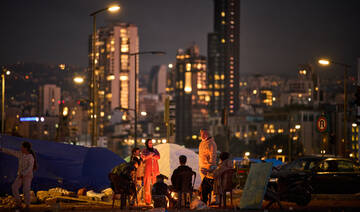
The air campaign and Israel’s orders for people to leave swathes of Lebanon’s south, east, and Beirut’s southern suburbs have displaced more than a million people, most of them from the Shiite Muslim community from which Hezbollah draws its support.
Some residents and local officials in predominantly Christian areas have expressed concern that displaced communities are harboring militants that could be targeted by Israel, with local authorities vetting those seeking rented accommodation.
Nadim Gemayel, a Christian lawmaker opposed to Hezbollah, told Reuters last month he was worried Israel was deliberately pushing Shiites into other parts of Lebanon to create conflict with other communities.
There was no Israeli military order for people to flee before Sunday’s strike. Residents said no displaced people were living in the targeted apartment or surrounding buildings.
“I’ve been in my house for 20 years, I’ve never even seen this apartment lit. There’s no one in it,” Antoine Aalam, a 70-year-old man who lives across from the targeted apartment, told Reuters on Monday.
- With Reuters and AFP