

 Saudi Arabia sets sights on creating the Nobel of the Middle East
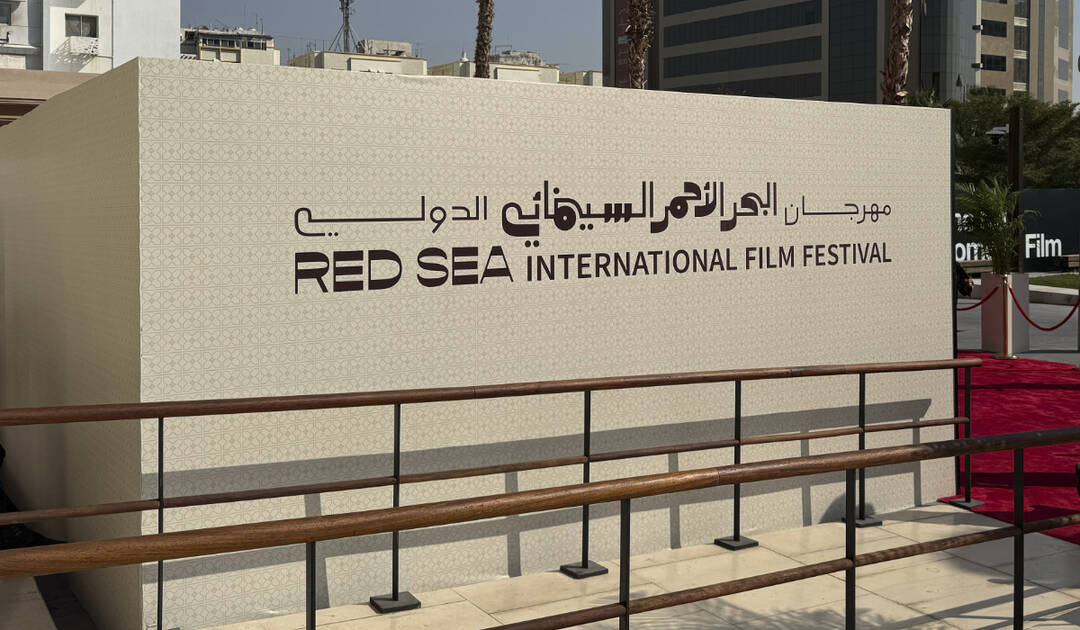

Saudi Arabia is working on establishing an awarding body for international prizes to compete with the likes of the Nobel and the Oscars. By 2030, this would position it among the most important cultural and scientific references in the world, enhance Saudi presence in judging panels and international organizations, and achieve this by globalizing Saudi awards so that they become international platforms attracting creators from all countries.
This will give the Kingdom the ability to shape standards of literary, artistic, and scientific excellence, while simultaneously building a cultural lobby through major events such as the Red Sea International Film Festival and supporting joint productions. This will ensure an influential Saudi presence in global cultural circles and facilitate the international reach of Saudi creators.
An example of this is the contribution of the Red Sea International Film Festival, held annually in Jeddah, in bringing Arab and Saudi films on to the lists of the Oscars, Golden Globes, and Cannes in the foreign film categories. This progress moves beyond the circles of Western guardianship over the standards of Arab creativity, which often focus on stereotypes about Arabs, such as poverty, wars, and cultural clashes, while doubting or marginalizing other narratives under the pretext that they lack human depth.
A prime example is the Saudi film “Norah,” which achieved a historic milestone by entering the official competition at the Cannes Film Festival in 2024 and receiving a Special Mention from the jury. The film showcased the aesthetics of the land and the depth of identity, moving away from the victim narratives often favored in Western perceptions of Arabs.
In contrast, the King Faisal International Prize is considered among the first to challenge the Western monopoly over awards and to place Arab, Islamic, and international names on the global map with a high level of professionalism that does not factor in political polarization. Its independent, multinational, and multiethnic committees grant awards based on pure intellectual merit and demonstrate an ability to identify scientific excellence. This is evidenced by the fact that more than 25 laureates later went on to receive the Nobel prize.
Arabs, however, have recorded modest figures in both the Nobel and the Oscars: Their share in the former has not exceeded 1.3 percent throughout its history, compared with 48 percent for Europe and 40 percent for North America. In the Oscars, they account for 1.2 percent, while Europe has dominated the American award with 74 percent, and Canada and Mexico together account for 4 percent. These latter percentages relate to the total number of foreign films that have won the award since its inception.
This will ensure an influential Saudi presence in global cultural circles and facilitate the international reach of Saudi creators
The rule is that if an Arab creator does not play the role of the victim or the dissident in literature and cinema, or work under a Western umbrella in the sciences, their chance of obtaining an international prize like the Nobel or an Oscar is almost nonexistent.
The renowned Syrian poet Adonis was excluded from the Nobel Prize in Literature despite being a perennial candidate for many years. The reason, in the opinion of critics, was his political stances and their lack of harmony with the standards of the Swedish Academy. Edward Said was also a forbidden name in the circles that grant major prizes in Western countries because of his book “Orientalism” and his defense of the Palestinian cause, as they viewed his ideas as a threat to the dominant narrative about Arabs and the Palestinian-Israeli conflict.
Biases are not limited to Arabs alone. The first Nobel Prize in Literature was won by the French poet Sully Prudhomme in 1901; the committee justified his selection based on his polite and calm idealism, ignoring his contemporaries such as Leo Tolstoy and Mark Twain because they were realists.
After the Second World War, the Nobel mood shifted to focus on the political message of literature. Albert Camus received it due to his positions supporting French colonialism in Algeria, followed by the Colombian novelist Gabriel Garcia Marquez, known for his support of the Cuban Revolution and its leader Castro.
Remarkably, Nobel Peace Prize nominees included Mussolini in 1935, Hitler in 1939, and Stalin twice, in 1945 and 1948 — none of whom received the award. However, it was won by Abiy Ahmed, the prime minister of Ethiopia, in 2019 in appreciation of his efforts to settle a long-standing border dispute with Eritrea, yet he is the same individual involved in the Renaissance Dam crisis with Egypt and Sudan.
The world of awards is not neutral. Evidence of this is the fact that 428 Americans have won the Nobel Prize compared with 25 Africans. A study conducted by the University of Southern California on the Grammy Awards in music between 2010 and 2019 found a lack of racial diversity in the prize. During that period, non-white recipients won only four awards in the main categories, while approximately 38 percent of Black artists whose albums achieved widespread popular success received only a limited number of nominations.
Returning to the Nobel Peace Prize, we find that the Gulf countries, including the Kingdom, have not received it, even though it is awarded to journalists and advocates of peace and is not limited to politicians. More strikingly, those Arabs who have received it, few as they are, made concessions to Israel. It is worth noting that nomination is only made at the request of the individual or their representative. US President Donald Trump had hoped to receive it in October 2025, but it went instead to Maria Corina Machado, the Venezuelan opposition leader.
FIFA compensated him with its Peace Award, the first of its kind in its history, with Trump being its first recipient at the beginning of December of the same year.
The US changed the head of governance in Venezuela in January 2026, after which Machado presented her Nobel medal to the US president in the same month in appreciation of his efforts in supporting Venezuela’s cause, noting that the prize regulations do not permit its transfer to anyone other than its original recipient.
• Dr. Bader bin Saud is a columnist for Al-Riyadh newspaper, a media and knowledge management researcher, an expert and university professor in crowd management and strategic planning, and the former deputy commander of the Special Forces for Hajj and Umrah in Saudi Arabia. X: @BaderbinSaud


