

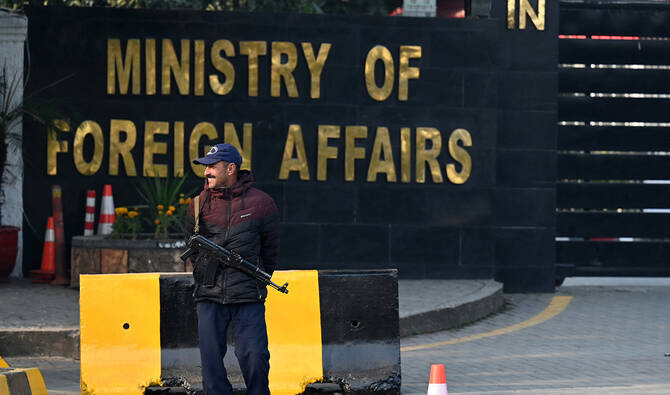

ISLAMABAD: Pakistan on Saturday dismissed reports about potential Iran-United States talks in Islamabad missing a “breakthrough,” urging media platforms to exercise “due diligence.”
Pakistan has served as a go-between for messages passed between Iranian and US officials since the beginning of the US-Israeli war on Iran, which has disrupted global energy and cargo supplies and threatened regional economies.
Late week, Islamabad hosted foreign ministers of Pakistan, Saudi Arabia, Turkiye and Egypt for discussions on ways to bring a permanent end to the ongoing war on Iran and Tehran’s counterattacks against US interests and other infrastructure in the Gulf.
Citing sources, a section of Pakistani media this week reported that Pakistan’s diplomatic effort appeared to have narrowly missed a “breakthrough” twice after Tehran requested more time for consultations and ultimately decided against participating.
“We categorically reject these false insinuations attributed to purported official sources as baseless and a figment of imagination. Any attribution to official sources in this regard is incorrect,” the Pakistani foreign office said on Saturday.
“At a time of heightened regional sensitivity, diplomacy requires both discretion and responsibility. We therefore urge all media platforms to exercise due diligence, avoid speculation, and rely exclusively on officially issued statements and media readouts for accurate and timely information.”
The war that began on Feb. 28 with coordinated US‑Israeli strikes and subsequent Iranian retaliation has roiled global energy markets after Tehran effectively halted shipping through the Strait of Hormuz, a crucial conduit for about a fifth of the world’s oil trade.
The spillover of the conflict in the region has complicated diplomatic efforts aimed at calming the situation, with US President Donald Trump promising a quick end to his country’s military campaign without specifying a clear timeline.
On Friday, Pakistan’s Foreign Minister Ishaq Dar in a phone call with his Saudi counterpart Prince Faisal bin Farhan also discussed the Pakistan‑China five‑point initiative aimed at de‑escalating the Middle East tensions sparked by the war on Iran.
“The two leaders exchanged views on the latest developments in the regional situation, emphasizing the urgent need for de-escalation and dialogue,” the Pakistani foreign office said.
“The Pak-China Five-Point Initiative for peace in the Gulf and Middle East was also discussed.”
The proposal, put forward by Beijing and Islamabad during Dar’s recent visit to China, calls for an immediate ceasefire, the initiation of peace talks, protection of civilian and commercial infrastructure, including shipping lanes and adherence to the United Nations charter.
Islamabad has previously stated that it wanted to act as a “bridge builder” to help lower prevailing tensions in the Middle East.


