


ISLAMABAD: Pakistan on Thursday sharply raised petrol and diesel prices while rolling out targeted subsidies for vulnerable groups, as the government passed on rising global oil costs driven by the Iran conflict.
The new prices take petrol to Rs458.40 ($1.65) per liter and diesel to Rs520.35 ($1.87) per liter from Thursday, reflecting continued volatility in international energy markets. The new prices mark an increase of Rs137.23 ($0.49) per liter for petrol and Rs184.49 ($0.66) per liter for diesel.
The latest revision follows a price hike in March, when the government raised both petrol and diesel prices by Rs55 ($0.20) per liter after the US and Israel launched war on Iran, disrupting global oil supply chains.
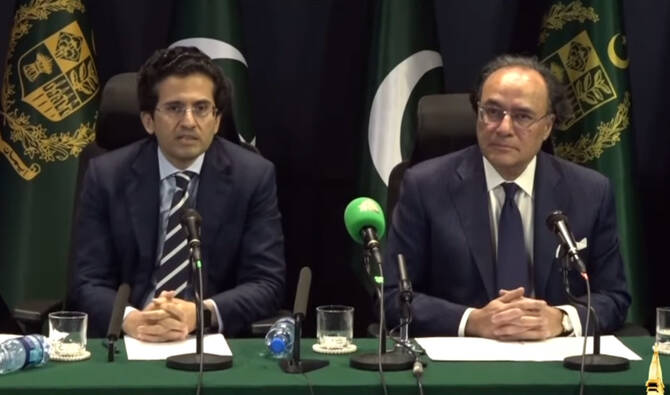
“The decision that has been taken today is that as per international markets, after the increase in the price of petrol, the new price Rs458.40 [per liter] will be implemented from tomorrow [Friday],” Petroleum Minister Ali Pervaiz Malik said at a press conference.
He said the government had tried to limit the increase in diesel prices, given its importance for agriculture and public transport, but added that rising global costs and fiscal constraints left limited room to shield consumers.
Pakistan, which relies heavily on imported fuel, has been hit by volatility in global energy markets as the conflict has disrupted supply routes, particularly through the Strait of Hormuz, a critical artery for global oil shipments.
Officials have sought to cushion the impact through subsidies and cost absorption in recent weeks, but mounting import bills and limited fiscal space have made it increasingly difficult to maintain those measures.
The minister said the government had attempted to provide broad protection to consumers but, with no end in sight to the conflict and constrained resources, it was now passing on the increase in line with international market movements.
Diesel prices remain closely watched due to their impact on agriculture and transport costs, which feed into broader inflation.
TARGETED SUBSIDIES
Addressing the press conference alongside Malik, Finance Minister Muhammad Aurangzeb said the government would introduce targeted subsidies to cushion the impact of higher fuel prices on vulnerable groups, moving away from broad-based relief.
“We are announcing a targeted subsidy program… it should not be blanket relief, it should reach those levels that are really worthy of it,” he said.
Under the plan, motorbike users will receive a subsidy of Rs100 ($0.36) per liter, capped at 20 liters per month, for an initial period of three months.
Small farmers will be given a one-time subsidy of Rs1,500 ($5.40) per acre to offset higher diesel costs during the harvesting season, a critical period for Pakistan’s agriculture sector, which contributes about a quarter of the country’s GDP.
The government is also offering support to the transport sector, which is key to controlling inflation. Freight trucks will receive up to Rs70,000 ($252) per month, larger transport vehicles Rs80,000 ($288), and public passenger buses Rs100,000 ($360) per month.
Aurangzeb said the subsidies would be reviewed monthly given the rapidly evolving situation in global energy markets, while Pakistan Railways would also receive government support to keep fares for lower-income passengers stable.


