


Last week’s column closed with reference to continuing discussions over the privatization of Australia’s Big Bash League (BBL for men/WBBL for women).
At the end of July 2025, Cricket Australia announced the findings of a report it had commissioned the Boston Consulting Group to undertake into the current model and future structure of the league. The BCG’s remit was to recommend ways the Big Bash could “evolve and capitalize on the past 15 years of innovation and investment across Australian cricket.” It should be no surprise that the report suggested that CA could seek alternative forms of investment and ownership — including the introduction of private ownership for the first time.
As with the sale of The Hundred in England and Wales, the suggestion has polarized views. These have been aired in the intervening nine months, during which time CA has explored the recommendations with state and territory bodies, Big Bash clubs, the players’ union, broadcast and commercial partners. Matters are now coming to a head following a meeting in mid-March between CA and representatives of the six state cricket associations. Currently, they control the six BBL and WBBL teams. Over two days, detailed plans were shared about potential profits from team sales and the revenue distribution process. The states have a month to study the plans and provide feedback.
In its current format, the BBL has existed since 2011 and the WBBL since 2015-2016. The BBL was regarded for many years as the best franchise league after the Indian Premier League.
Since 2021, it has been challenged by new leagues, such as SA20, ILT20 and The Hundred, in terms of either direct calendar competition or player salaries. The most recent BBL was held between Dec. 21, 2025, and Jan. 28, 2026, clashing with the peak of the Australian season, including a home Ashes Test match series. This meant that senior domestic players were not available for the BBL, apart from the final matches.
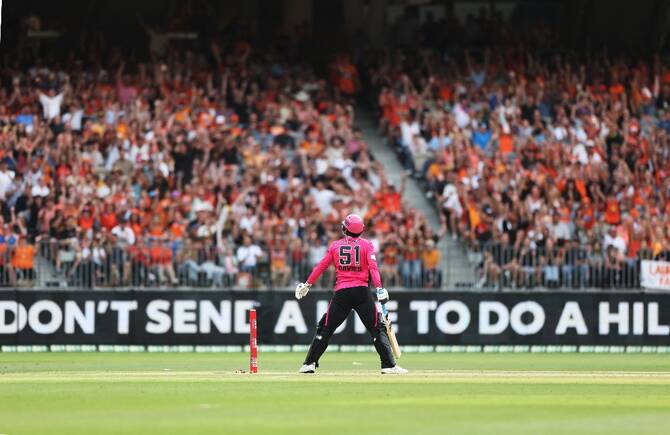
Nevertheless, the 44 matches drew a total attendance of 1,089,043, growing 12 percent year-on-year and the biggest total since the ninth edition in 2019-2020. The average attendance of 24,751 was the highest per match since the seventh edition. There were increases in digital engagement and viewership, with 13 matches averaging more than a million viewers, the most in a season since the eighth edition in 2018-2019.
These numbers are important. There is a narrative around the push for privatisation that the BBL is losing ground to other leagues. Todd Greenberg, CA’s CEO, said: “We need to ensure that the Big Bash remains among the world's top sporting competitions … and that it is vital to keep the tournament at the forefront of the sport.” It does not seem to be losing ground on the basis of spectator interest. However, despite the record numbers, there were downsides in CA’s 2025-2026 financial year. One of these relates to what should be a money-spinning Ashes series, in which two matches ended in two days, causing a serious income loss for CA, estimated at $2m from ticket sales alone.
In 2024-2025, CA declared a net deficit of about $7.5 million, despite an increase in total revenue of $34 million. The year included the hosting of a five-match Test series against India that generated higher revenues and higher costs. Dissatisfaction has been expressed by member state associations, which received barely an increase in funding. Cricket Victoria was particularly critical, expressing concern that CA’s leadership “had failed to achieve meaningful improvement despite conducting several costly internal reviews.” This is the context within which the BBL privatisation proposals are being assessed.
According to the viewing, attendance and engagement metrics, the BBL and WBBL are successful, so the question is how this success can be leveraged to solve CA’s systemic financial shortfall. There are those who hold that CA must be more efficient in controlling its costs and maximising its revenues in a way that would negate any thoughts of privatising the BBL. A part of the conundrum is that Australia and Australians are very protective of Test cricket. Hosting and financing overseas tours is an expensive business, which is one explanation for some of the increased costs that CA has incurred. In an apparent attempt to maximise revenues, CA has shoehorned in a four-match Test series against New Zealand between Dec. 9, 2026, and Jan. 8, 2027.
Traditionalists are upset that the final Test against New Zealand at Sydney has been scheduled to be played on five weekdays. Historically known as the New Year’s Test, it has been pushed further into the new year. Suggestions to start the BBL later in December to minimise overlap with Test cricket and increase the availability of Test players have not materialised.
Another issue faced by CA is the management of its players’ workloads, especially those of its quick bowlers. It has been particularly protective of those who have signed up for the current IPL by delaying their release to the tournament or controlling dates when they can be considered to be fit to play. This caused much indignation among Indian commentators.
It seems that CA is assailed on all sides and the temptation to address a complex set of issues by inviting outside investment is understandable. The sale of stakes in The Hundred is cited as evidence of how an ailing system can be resuscitated. Those who caution CA against adopting this approach point out that the sale of capital assets to resolve an operating deficit only pushes the problem further downstream. It also dilutes the ability of the national body to control the playing schedules across all formats. Lessons from The Hundred can already be learned. August has been sold with no Test match cricket scheduled in that month in England and Wales. The names of franchises have been changed and an auction has diluted player autonomy.
Respected voices in Australian cricket are fearful that Test cricket in Australia could suffer the same fate, pushed to the margins of the season by a privatised BBL whose owners have their own interests at heart rather than that of Australian cricket. It seems that these fears are alive in the state associations, which would like to evaluate alternative proposals to the outright sale of all BBL teams. It is understood that one option is that not all teams are made available for sale. A particular situation exists in Victoria and New South Wales, which each operate two teams. A decision will have to made whether both, neither, or one is sold.
Momentous decisions are about to be made with long-lasting consequences. At the heart of the battle is a single issue — will a sale of the BBL secure the future of Australian cricket or will it lead to a loss of control over that future? There is agreement between the states and CA that further investment in the BBL is needed to keep pace with other franchises. At present, there does not appear to be agreement over the means to that end.


