

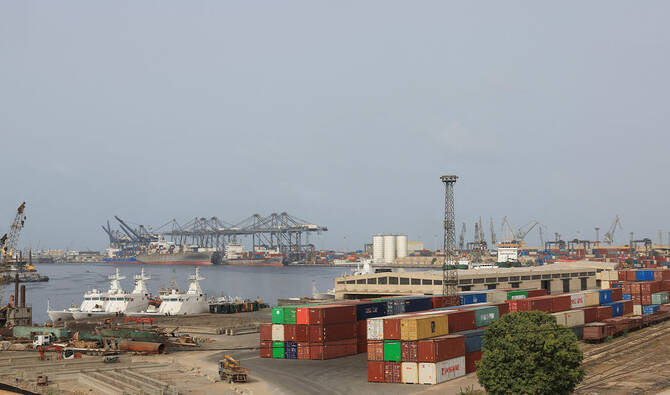

KARACHI: Pakistan is seeing a surge in port activity as vessels divert from Gulf transshipment hubs due to disruption caused by the Middle East conflict, with cargo volumes rising sharply at its main ports, according to officials and data seen by Arab News on Wednesday.
The increase comes as fighting involving the United States, Israel and Iran has unsettled shipping routes, particularly through the Strait of Hormuz, prompting shipping lines to reroute cargo to alternative ports, including in Pakistan.
At Karachi Port, daily cargo handling reached 168,850 tons on Mar. 31, compared with 57,198 tons on the same day last year, according to Karachi Port Trust (KPT) data, indicating a sharp spike in activity.
Vessels, mostly carrying containerized cargo, are being diverted from major Gulf transshipment hubs including Jebel Ali, Fujairah and Khor Fakkan in the United Arab Emirates and Salalah in Oman, officials said.
“The transshipment cargoes of various regional hubs have been diverted to Pakistan, which Karachi Port is handling,” KPT spokesperson Shariq Amin Farooqui told Arab News.
“Ships coming from Gulf country ports like Ras Tanora are coming from Strait of Hormuz to Karachi Port,” he added.
The increase is also reflected in container volumes across terminals. KPT data showed that private terminals at Karachi Port handled 8,313 transshipment containers between Mar. 1 and 24, with 133 vessel calls during the period.
These include facilities operated by Hutchison Ports and Abu Dhabi Ports.
At Port Qasim, Qasim International Container Terminal handled 4,328 transshipment containers, a 2,302 percent increase compared to February levels, according to official data.
The surge has led to congestion, with 17 vessels carrying crude oil, palm oil, coal and containerized cargo waiting at anchorage areas of Karachi Port and Port Qasim on Wednesday.
Officials said Pakistan has also moved to attract transshipment traffic by reducing port dues and berthing charges in recent weeks.
“Though the opportunity is provided by the prevailing Middle East situation, but Karachi Port is well equipped to serve transshipment cargoes for quite some time,” said Farooqui.
Port authorities say the current boom may not last unless structural competitiveness improves.
“This surge in Pakistan’s transshipment trade is conflict-driven, so temporary, but geographic advantage could make it structural,” said Port Qasim Authority spokesperson Asad Warsi, describing local ports as “safer redistribution hubs.”
“If Gulf tensions ease, (transshipment) volumes may decline unless competitiveness is built,” he added.
Industry stakeholders said recent policy incentives could help sustain the trend.
“Recently, the port authorities have reduced vessel charges by up to 60 percent to attract transshipment trade and make it permanent,” said Syed Tahir Hussain, secretary general of the Pakistan Ship’s Agents Association.
“Our ports have become competitive now,” he said, adding that long-term gains would depend on whether shipping lines continue to prefer Pakistan over established Gulf hubs.


