

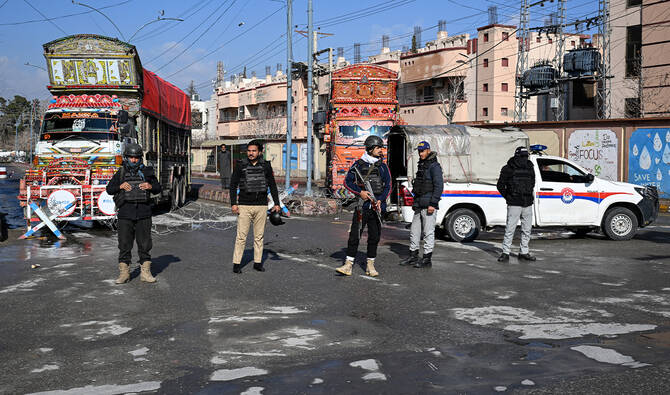

ISLAMABAD: Pakistan witnessed an 18% decline in overall violence related to “terrorism” and counterterrorism during the first quarter of 2026, a local think tank said in its report on Wednesday, with its data pointing out that the law-and-order situation in certain areas of the country has significantly deteriorated.
According to the Center for Research and Security Studies (CRSS), around 813 people were killed in terror-related incidents and 518 injured during the first quarter of 2026. These fatalities and injuries included civilians, security personnel and militants across 248 incidents involving both “terrorist attacks” and counterterror operations.
Pakistan’s security forces have been battling twin insurgencies in the northwestern Khyber Pakhtunkhwa (KP) and southwestern Balochistan provinces. Violence, including suicide bombing incidents and drone attacks by militants, has increased in these areas in recent months.
“In terms of comparative impact, the reported drop in violence between Q4, 2025 to Q1, 2026 (from 990 to 813 deaths) was largely driven by the sharp reduction in the Khyber Pakhtunkhwa province,” CRSS said in its report.
It added that KP recorded over 57% less killings, 311, compared to the last quarter, when it reported 727 deaths.
The report said that the aggregate decline masks a “significant deterioration” of the law-and-order situation in other parts of the country.
“For instance, the Balochistan province saw over 104% surge in violence, with fatalities jumping from 217 to 443 – marking the highest toll in the last thirteen years,” the report said.
Pakistan’s capital city Islamabad saw a 185% surge (13 deaths to 37) in violence during the quarter, driven largely by a suicide attack at a Shia Mosque on Feb. 6.
Pakistan’s Punjab recorded a 367% rise (from 3 deaths to 14) during the first quarter of this year, signaling a rise in violence in the country’s most densely populated province.
The report said that while violence in KP perpetuated by the Pakistani Taliban is receding, it is being offset by “rising lethality” in the southwestern Balochistan province and early signs of it spilling over into Punjab and Islamabad.
The report described both KP and Balochistan as “epicenters of violence” during the quarter, jointly accounting for almost 93% of all violence-linked fatalities.
KP reported 38% of all terror-related deaths, 311, while Balochistan recorded 443, which amounted to 55% of all deaths during the quarter.
The northern Gilgit-Baltistan and southern Sindh province together accounted for only four incidents and eight deaths, the report said, reflecting “minimal terrorist activity” relative to the rest of the country.
The CSSR report said that during the first quarter, “terrorist” attacks outnumbered security forces’ operations by a factor of nearly 2.7 to one in frequency, 180 to 68.
However, security forces’ operations accounted for a disproportionately higher share of fatalities with 449 outlaws killed as compared to 364 killings of civilians and security officials.
“This finding indicates that each security operation is, on average, far more lethal than each terrorist attack,” the report said.
The report said the rise in death toll from militant attacks reflects a marked shift in militant tactics, driven by the increased use of explosives and more sophisticated weaponry.
“A notable development in this period is the adoption of drone technology by both Baloch separatist groups and the TTP [Tehreek-e-Taliban Pakistan] and its affiliates,” it noted.
Pakistani security forces have vowed not to continue anti-terror operations across the country until it eliminates the menace of militancy. Islamabad blames Afghanistan for sheltering militant outfits such as the TTP that it says launches attacks from Afghan soil.
Kabul rejects these allegations and says its territory is not used by militants against Pakistan.


