

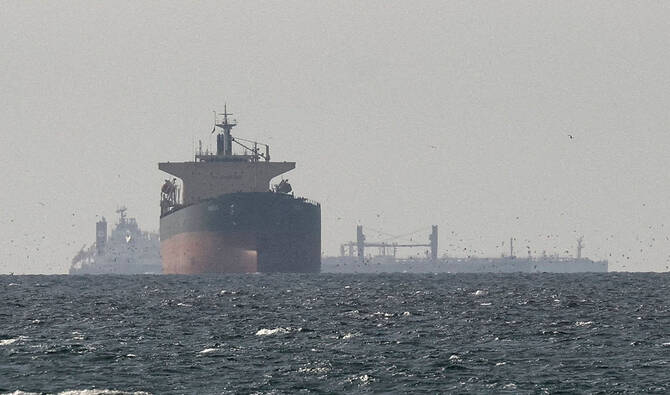

KARACHI: Pakistan plans to develop a maritime energy city and new deep-sea ports along its coastline to strengthen its role in regional energy logistics, Federal Minister for Maritime Affairs Muhammad Junaid Anwar Chaudhry said on Wednesday, as the Iran war and disruption of the Strait of Hormuz reshape global trade flows.
The initiative comes as the conflict triggered by US-Israeli strikes on Iran on Feb. 28 and Tehran’s subsequent retaliation, including attacks on regional energy infrastructure and an effective blockade of the Strait of Hormuz, has disrupted shipping and pushed up oil prices globally.
The strait, a key artery for about one-fifth of global oil supply, has seen traffic collapse, forcing countries to reassess supply chains and storage capacity.
Chaudhry said Pakistan was moving to capitalize on shifting trade patterns by expanding port infrastructure and energy storage capacity.
“Pakistan Maritime Energy City will offer state-of-the-art storage facilities for oil, LNG and LPG,” he said while chairing a meeting on identifying sites for new deep-sea ports, according to an official statement.
He said the country aimed to become a regional energy logistics center, adding that Pakistan had demonstrated its transshipment capacity amid heightened regional tensions.
“Pakistan has proven its transshipment capability despite regional tensions, and we aim to transform the country into a regional energy logistics hub,” he said.
Chaudhry said feasibility studies for three to four new ports along the coastal belt were in their final stages, with consultations planned with provincial governments and other stakeholders.
He added that smaller energy units would be established to support major ports, while international investors would be offered incentives as part of the project.
Pakistan has in recent weeks taken steps to secure fuel supplies and manage demand as global markets react to the disruption in Gulf shipping routes, with officials emphasizing preparedness to maintain energy flows.
The minister said the initiative formed part of a long-term “100-year vision” to strengthen Pakistan’s maritime sector and ensure it can meet both domestic energy needs and regional demand.


