

MATANZAS, Cuba: Cubans on Monday cautiously welcomed the imminent arrival of a Russian oil shipment, with some warning it would do little to ease an energy crisis after US President Donald Trump granted a reprieve from his oil blockade.
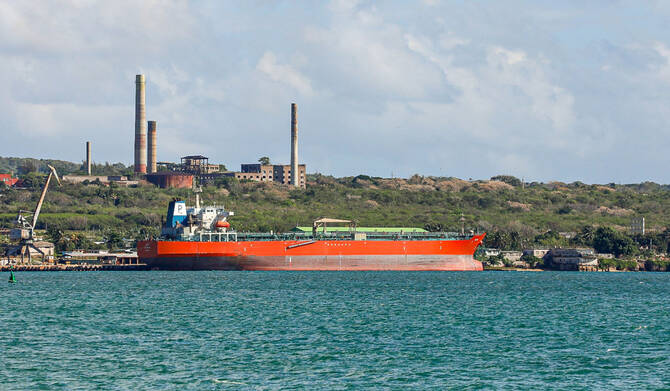
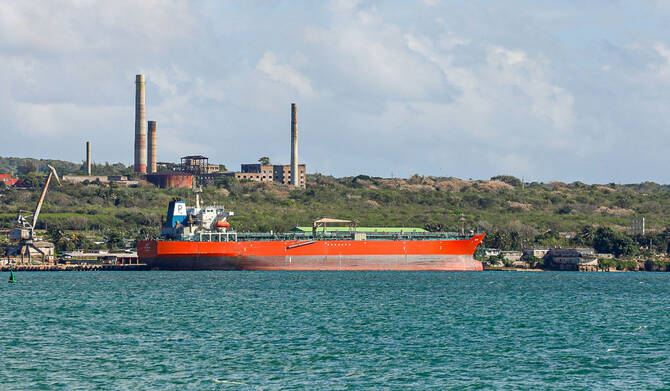
The Anatoly Kolodkin, a tanker under US sanctions carrying 730,000 barrels of crude, was due to arrive at the western port of Matanzas by Tuesday with the first oil shipment to the communist-ruled island since January.
Trump’s decision to let Russia deliver the oil avoids a confrontation with Moscow and provides temporary relief to a country that has endured blackouts, fuel rationing and dwindling public transportation.
“We’ll welcome it with open arms. You have no idea how badly we need that oil,” said Rosa Perez, a 74-year-old retiree who was taking a walk near the Matanzas port as her house had lost power again.
“Let’s see if things improve for us, even just a little...I can’t take it anymore,” she told AFP, voicing hope that more shipments will follow.
Others said it was not enough to solve Cuba’s crisis.
“It’s a drop in the bucket compared to what this country needs. It means next to nothing,” said Raul Pomares, a 56-year-old gardener waiting for a taxi in Havana.
“It’s a symbolic gesture that won’t have any real impact on the economy for ordinary Cubans,” he added.
Moscow said it was “pleased” that the tanker had reached Cuban waters.
“Russia considers it its duty to step up and provide necessary assistance to our Cuban friends,” Kremlin spokesman Dmitry Peskov told reporters, adding that Moscow and Washington had been in touch over the shipment.
“Cuba’s finished, they have a bad regime
Trump said Sunday he had “no problem” with Russia or another country sending oil because Cubans “have to survive” but he predicted that it would have little impact.
“Cuba’s finished, they have a bad regime, they have very bad and corrupt leadership, and whether or not they get a boat of oil it’s not going to matter,” Trump said.
White House Press Secretary Karoline Leavitt said there was no change in US sanctions policy.
“We allowed this ship to reach Cuba in order to provide humanitarian needs to the Cuban people. These decisions are being made on a case-by-case basis,” she said.
Cuba lost its main regional ally and oil supplier in January when US forces captured Venezuela’s socialist leader Nicolas Maduro.
Trump subsequently threatened to impose tariffs on any country sending oil to Cuba and has mused about “taking” the island of 9.6 million people.
Mexican President Claudia Sheinbaum, whose country last sent crude to Cuba in January, said there have been talks with private firms about buying oil from Mexico’s state-owned energy company and selling to private Cuban companies.
She said Monday she had personally donated 20,000 Mexican pesos ($1,100) for humanitarian aid to Cuba.
‘A Band-Aid’
The Anatoly Kolodkin was moving along Cuba’s northern coast on Monday evening on its way to Matanzas, a key oil port east of Havana, according to shipping tracker MarineTraffic.
It would take about 15-20 days to process the oil and another 5-10 days to deliver its refined products, according to Jorge Pinon, an expert on Cuba’s energy sector at the University of Texas at Austin.
It could produce 250,000 barrels of diesel, enough to cover demand for around 12.5 days, Pinon told AFP.
The government would have to decide whether to use the fuel for backup power generators or for buses, tractors and trains needed to keep the economy going for two weeks, he added.
The oil would likely not be used for Cuba’s aging thermoelectric power plants, which rely on the country’s own crude production.
Cubans have endured seven nationwide blackouts since 2024, including two this month.
The blackouts as well as persistent shortages of food, medicine and other basics have fueled public frustration and some rare protests.
Retiree Orlando Ocana, 76, said the Russian shipment was a “Band-Aid.”
“The real solution to our problems is building new thermoelectric power plants,” he said.


