

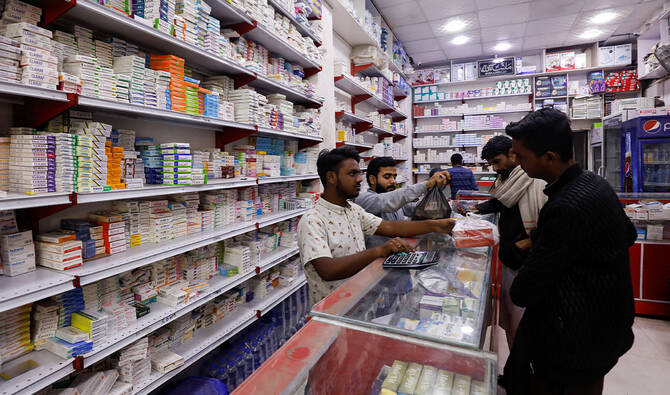

ISLAMABAD: The Drug Regulatory Authority of Pakistan (DRAP) on Sunday refuted “factually incorrect” news reports about an increase in prices of medicines, saying it found the supply chain of medicines and medical devices “satisfactory for coming months.”
The statement comes amid widespread energy and cargo supply disruptions in the Strait of Hormuz due to ongoing United States-Israeli war on Iran, which began on Feb. 28, and Tehran’s subsequent attacks on US interests as well as oil and civilian infrastructure in Gulf countries.
Stakeholders this week said they had observed an unprecedented increase in medicine prices since Feb., though the Pakistan Pharmaceutical Manufacturers Association (PPMA) said the prices of essential medicines had remained unchanged, Pakistani media reported.
Pakistan Drug Lawyers Forum President Noor Muhammad Mehr said on Saturday the price of insulin delivery device HumaPen Ergo II had increased by 114 percent. Though the Pakistan Pharmaceutical Manufacturers Association (PPMA) said the prices of essential medicines had remained unchanged despite a more than 20 percent rise in fuel prices.
“The price mentioned in recent news reports refer to the Maximum Retail Prices (MRPs) already printed on medicine packs and insulin administering device (HumaPen Ergo II is insulin delivery pen for 4 to 5 years use) manufactured in 2024 or 2025 and wrongly portrayed as recent price hike,” DRAP said.
“The Authority confirms that no new price increase has been approved for essential medicines in recent months and pharmaceutical manufacturers are strictly prohibited from implementing unilateral price hikes for any product listed on the National Essential Medicines List (NEML).”
DRAP said it was proactively monitoring the availability of drugs and had conducted a comprehensive review of supply chain of medicines and medical devices and found it “satisfactory for coming months.”
“About 85 percent of medicines consumed in Pakistan are manufactured locally and unaffected by current geographical disputes including Middle Eastern airspace and sea route disruptions,” it said.
It said it had issued adviseries to all manufacturers to have contingency planning and directed firms to adopt “multiple sourcing strategies” and “geographically diverse channels” to further strengthen supply chain resilience.


