

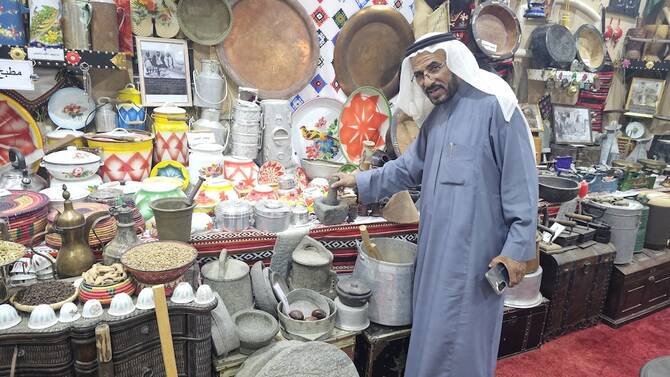
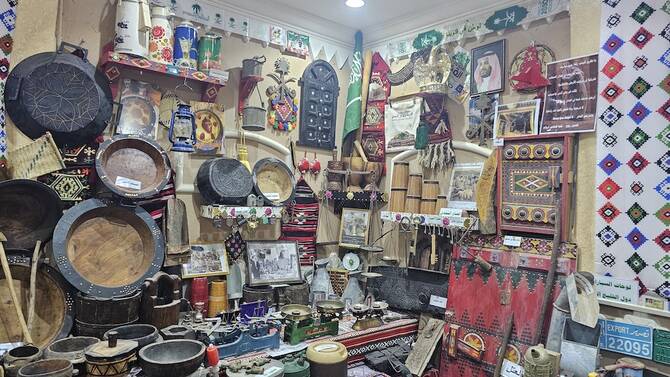
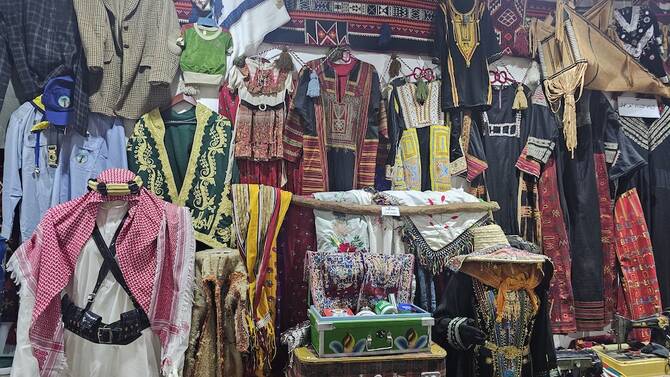


JEDDAH: For more than four decades, Mohammed bin Ali Al-Garni has collected artifacts, antiques and memorabilia, building a collection of more than 12,000 items that now form a private museum in his home.
Stepping into his home museum feels like taking a step back in time. Rooms are loaded with historical artifacts and antiques that showcase the rich history of the Kingdom in its early days.
Al-Garni, a retired Ministry of Interior employee, said he began collecting as a personal hobby that developed into a long-term project aimed at preserving heritage.
“It is not just the items that keep me proud and happy but the memories they reveal,” Al-Garni told Arab News.
His passion stems from his belief that “(He) who has no past, has no present or future.”
Located in the Al-Rahmaniyah district north of Jeddah, the collection is divided into nine sections reflecting different aspects of Saudi Arabia’s heritage, including early state history, education, daily life, communication, agriculture and traditional customs.
“I created this museum out of love for keeping heritage alive,” he added. “These collectibles are precious and hard to come by. I obtained them through auctions or purchased through old markets in Saudi Arabia and abroad, as I am always hunting for rare pieces.”
He has also preserved television shows, old films, music cartridges from the 60s, 70s, and 80s, along with copies of the oldest issues of newspapers that were once popular.
He continued: “I only collect items that captivate me. It is a challenging process and expensive, but it is worth it.”
Asked about his favorite items, he said: “They are all my favorite, but I am proud of the special section which is dedicated to the Kingdom of Saudi Arabia since its (founding) and the history of our kings.”
Al-Garni revealed that he spent a fortune on these pieces. “You could say that I have spent more than SR1 million ($266,000) because when you love something, you have to sacrifice for it.”
The collection includes historical documents, coins, stamps, cameras, typewriters, telephones, radios, gramophones, household tools and traditional clothing, as well as swords, daggers and other artifacts. It also features old newspapers, photographs and media materials dating back several decades.
“I created this museum so that we can show the younger generation our heritage and let them see with their own eyes their past, and our old life,” Al-Garni said.
“Some people asked why I am buying and collecting things which are useless, but I feel there is a story behind every item,” he added. “In the future, I hope to certify this museum at my home and open my door for everyone to see this treasure.”
Al-Garni is still seeking an official permit to open the museum to the public. “It is a treasure, as all my visitors say, but still hidden because I haven’t got the official permit to promote this museum or showcase it to the public. I am working hard to get it,” he said.
“Only friends and close relatives visit my museum, and their reaction is incredibly rewarding,” he added. “Many of them get surprised when they recognize items from their past, and they all say it is like they are reliving their old good times.”
These positive reactions support Al-Garni’s efforts and inspire him to keep his treasures alive.
“I am sure the public will love this museum, especially the older generation because they have used all these items in their early life and they would love to visit my museum to remember,” he said.
He pointed out that the 12,000 items on display represent Saudi Arabia’s history and all aspects of life: “I hope the new generation can learn about the nature of each piece in here.”
Al-Garni, who lives far away from the city, cherishes every minute in his museum.
“From time to time, I sit in every room of the museum and drink tea by myself or with my family and look at some of the old items that were used in Saudi Arabia and remember them, and honestly, it is a great feeling. It’s like I’m going back in time.”


