

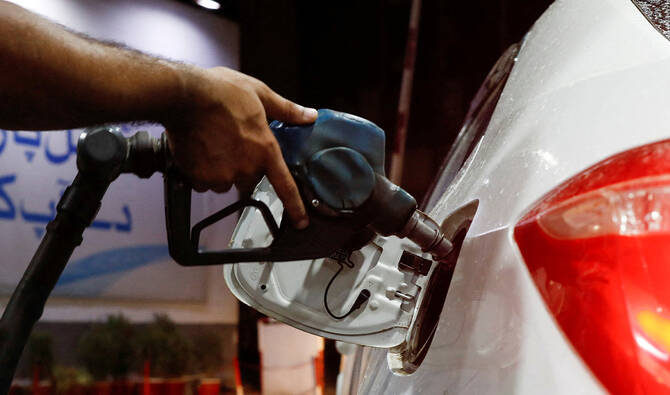

ISLAMABAD: Pakistan has decided to keep fuel prices unchanged despite pressure from rising global oil markets, with Prime Minister Shehbaz Sharif on Friday urging citizens to adopt “revolutionary” changes in consumption and cooperate with a conservation plan to be unveiled soon.
In a televised address, Sharif said he had rejected a proposal to raise petrol prices by Rs95 ($0.34) per liter and diesel by Rs203 ($0.73) per liter, opting instead for the government to absorb the financial burden.
“For the week starting today, I was advised to increase petrol prices by Rs95 per liter and diesel by Rs203 per liter,” he said.
“But keeping your hardships in mind, I once again rejected this proposal. The federal government has decided to bear this burden itself.”
The move comes as Pakistan grapples with economic pressure from the ongoing Iran war, which has disrupted global energy markets and trade routes, particularly after Tehran moved to block the Strait of Hormuz, a key oil transit corridor.
Sharif said the government would absorb an additional Rs56 billion ($201 million) this week, bringing the total burden borne over three weeks to Rs125 billion ($450 million).
At the same time, the prime minister called for immediate changes in public behavior to reduce fuel consumption.
“The time has come for us to bring about immediate and revolutionary changes in our daily lives,” he said. “Before traveling, ask yourself is this journey necessary? Is it necessary to take out your car or motorcycle every time?”
He added that austerity was now a “collective responsibility,” warning that governments around the world were struggling as fuel prices surged.
Despite limited resources, Sharif said the government had so far managed to shield citizens from the full impact of global price shocks.
He urged public cooperation with a broader conservation strategy to be announced in the coming days.
“The government alone cannot win this struggle, and I cannot do it alone,” he said. “I sincerely request you… to fully cooperate with the comprehensive plan we are preparing.”
Sharif also said Pakistan was actively engaged on the diplomatic front to help end the conflict.
“In this context, I have held detailed discussions multiple times with the leaders of Iran and Gulf countries,” he said, adding that Islamabad was making “sincere and dedicated efforts” to push for peace in the region.
The prime minister maintained his government was working day and night to protect the “region and brotherly Islamic countries” from a destructive conflict and its negative consequences.


