

NEW YORK: No country will be spared the economic and food security impacts of escalating tensions in the Gulf if disruptions persist, the chief economist of the Food and Agriculture Organization warned on Thursday, as rising costs for fuel and fertilizers ripple across global markets.
Speaking at a UN briefing, Maximo Torero said that while some nations may be more resilient in the short term, all will ultimately feel the effects of the crisis.
“I don’t see any country that won’t be affected by this,” he said, pointing to globally interconnected supply chains and rising input costs.
Torero highlighted the sharp decline in traffic through the Strait of Hormuz, a critical corridor for global energy and commodity flows.
The route typically carries around 20 million barrels of oil per day , roughly 35 percent of global crude — as well as a significant share of liquefied natural gas and internationally traded fertilizers.
The Gulf is also a major source of sulfur, a key component in phosphate fertilizers, making the disruption particularly significant for agriculture.
Shipping insurance premiums have surged after insurers expanded high-risk zones, with war-risk coverage rising from about 0.25 percent to as much as 10 percent of a vessel’s value.
These increases are already translating into higher input costs for farmers worldwide.
Fertilizer prices have surged, with Middle East granular urea rising 19 percent in early March to around $590 per ton, while Egyptian urea prices jumped even higher due to rising natural gas costs.
Torero warned prices could increase by 20 to 50 percent in the first half of 2026.
“This creates a double shock,” he said. “Farmers are facing more expensive fertilizers alongside rising fuel costs across the entire value chain.”
Producers are likely to respond by reducing fertilizer use or shifting to crops that require fewer inputs, such as soybeans instead of maize.
However, such adjustments come at a cost. Lower fertilizer application can significantly reduce yields, especially in soils already lacking nutrients, raising concerns about future food production.
Torero emphasized that the length of the disruption will be decisive.
If resolved within weeks, global markets could absorb the shock within two or three months, supported by currently adequate food stocks. But a prolonged crisis — lasting three months or more — could disrupt planting seasons, reduce yields and tighten global supply.
Major exporters, including the US, Brazil, Argentina, and Australia, may cope initially due to existing reserves, but they, too, will face rising costs in future planting cycles.
Rising oil prices could also trigger increased demand for biofuels, diverting crops away from food markets.
While this may benefit farmers through higher demand, it risks pushing food prices higher for consumers. Torero cautioned against expanding biofuel mandates under current conditions.
Countries heavily dependent on food and fertilizer imports are most exposed, particularly in South Asia and sub-Saharan Africa.
In the Middle East, major food importers, including Gulf states, face logistical challenges due to reduced shipping flows.
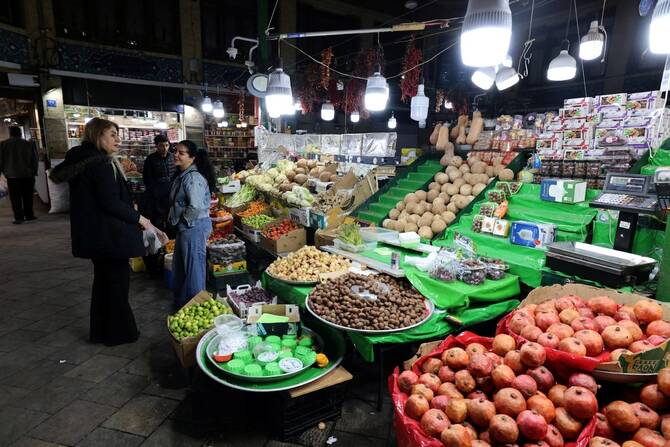
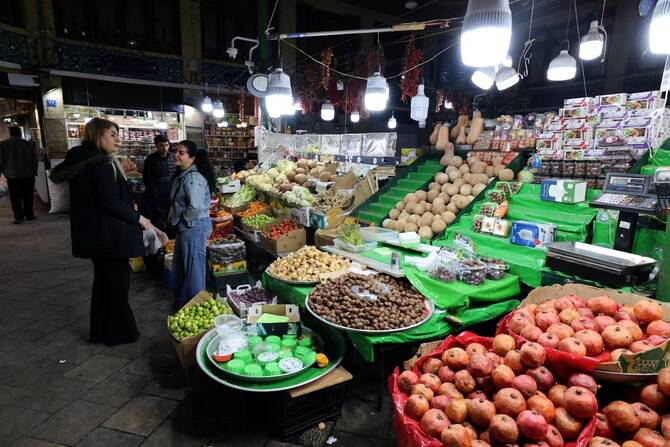
Iran, which produces around 70 percent of its food domestically, is already experiencing rising prices that have worsened during the crisis.
Beyond food systems, the FAO warned of broader economic consequences.
Gulf economies employ millions of migrant workers, and any slowdown could reduce remittance flows to countries where they form a significant share of gross domestic product.
“If the economies in the Gulf are affected, the first to be impacted will be temporary workers, and that will reduce the remittances they send home,” Torero told Arab News, noting that many households in developing countries depend heavily on such income.
Torero compared the situation to the Russian invasion of Ukraine, which disrupted global food and fertilizer markets.
However, he noted that unlike then, farmers today are already facing tight margins, leaving them more vulnerable to rising input costs.
“There is no quick supply response for key inputs like oil, gas and fertilizers,” he said.
The FAO called for immediate measures, including alternative trade routes, emergency financial support for vulnerable countries and efforts to avoid export restrictions.
Longer-term solutions include diversifying supply sources and strengthening resilience in food systems.
“We need to treat food systems with the same strategic importance as energy and transport,” Torero said.
Time is critical, he said.
“If the crisis is resolved quickly, markets can stabilize. But if it continues for months, the impact will extend far beyond agriculture.”
“The clock is ticking,” he added.


