
BEIRUT: Israel’s systematic targeting of bridges over the Litani River marks a significant escalation in its military campaign in Lebanon, which is shifting from airstrikes and evacuation warnings to the deliberate severing of southern Lebanon from the rest of the country.
Lebanese officials and military sources believe the strikes on key crossings linking areas north and south of the Litani were aimed at creating a geographic divide that would isolate large parts of the south, disrupt aid and relief operations and restrict movement across the region.
In recent weeks Israeli operations have progressed from issuing evacuation orders for villages south of the Litani to warning residents ahead of strikes on bridges and major roads.
Israel’s Defense Minister Israel Katz said he had ordered the military to destroy all bridges over the river linking the south to Beirut and the Bekaa region as they were being used to transport weapons to Hezbollah.
Why are the bridges so important?
Lebanon’s longest river, at about 170 km, the Litani rises west of Baalbek and flows through the Bekaa Valley. It lies between 6 and 30 km from the Lebanon-Israel border, with its closest points in the eastern sector and Nabatieh district.
Areas south of the river are known as the border south. These include parts of the South and Nabatieh governorates, notably Tyre, Bint Jbeil and Marjayoun districts.
The Israeli army has identified at least 15 bridges and culverts, stretching from the coastal region to the western Bekaa, as targets for destruction.
Among the most significant are the Qasmiyeh, Tayr Falsay and Khardali bridges, the loss of which would sever key transport routes connecting southern Lebanon to the rest of the country and effectively isolate areas south of the river.
The bridge strikes come amid increased fighting between Israel and Hezbollah in border towns like Khiam and Naqoura and a rise in the demolition, by Israeli forces, of homes in frontline villages — moves that observers believe could be laying the groundwork for a broader ground incursion.
Hezbollah drew Lebanon into the Iran war on March 2 by launching six rockets at a military site in northern Israel. That was in response to what the militant group described as Israel’s continued attacks on Lebanon despite the November 2024 ceasefire agreement and the assassination of Iran’s Supreme Leader Ali Khamenei.
On the same day, Israel launched a new offensive against Lebanon, carrying out airstrikes on the southern suburb of Beirut as well as areas in Lebanon’s south and east. The following day, it started a limited ground incursion in the south.
What is the impact of bombing the bridges?
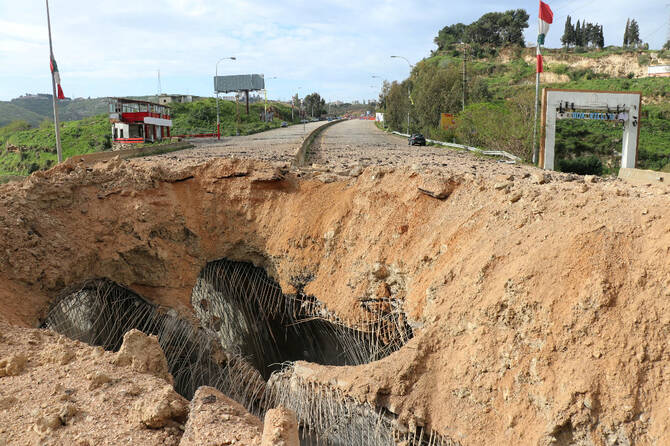
The Al-Qasmiyeh bridge, which was targeted on Sunday amid intensive Israeli airstrikes, is one of the most significant crossings. Situated close to where the river meets the Mediterranean Sea, it is part of the main coastal road linking Sidon and Tyre and used by pedestrians, cars and trucks.
Its destruction has severely disrupted the main artery connecting the south of the country to the capital.
Lebanese President Joseph Aoun described the bombing of the bridges as “a dangerous escalation and a blatant violation of Lebanese sovereignty,” as well as “a prelude to a ground invasion” and “an attempt to sever the geographical connection between the southern Litani region and the rest of Lebanese territory.”
A military source told Arab News that Israel had so far targeted 70 percent of the bridges.
“From a military standpoint, this aims to sever Hezbollah’s supply lines,” the person said.
Why does Israel want to isolate southern Lebanon?
The source said that the incursion into and isolation of southern Lebanon were intended to increase Israel’s gains on the ground to strengthen its position in negotiations.
“The impact that the Israeli superiority will impose on Lebanon in the coming stages remains uncertain,” the source said.
“We only know that it possesses superior and formidable military capabilities, unmatched by any other force in the Middle East, alongside significant air and technological superiority.
“In contrast, Hezbollah has no supply lines, neither from Syria nor from Iraq, and the Lebanese army faces substantial limitations in capabilities and resources, striving to maintain its military presence by all means possible.”
The source said that based on information provided by Lebanese army units stationed south of the Litani, about 10 km from the border, Israeli forces had entered the town of Khiam, though the full extent of the incursion is unknown.
Political analyst Ali Al-Amin told Arab News that the operations carried out by Hezbollah in southern Lebanon would not prevent the Israelis from advancing but would increase the cost of doing so.
“The Israeli objective was to establish a buffer zone, something it had previously discussed during the last war, over an area scorched of its population, residential and agricultural facilities and infrastructure.”
The buffer zone would likely extend to a depth of between 3 and 5 km, he said.
“The Israeli army may penetrate further but I believe the operation will be limited to incursions and withdrawals without maintaining a permanent presence.”
Based on its previous wars in southern Lebanon, Israel understood that a ground occupation would be costly, Al-Amin said.
“Due to its technological superiority, it does not need to occupy territory. It has already forced people out of their homes through threats and aerial road blockages, without requiring troops on the ground.”
He said he thought that the Israelis would continue with their destruction and seek to link the southern areas to Hasbaya, Arqoub and Christian villages — areas that have not been destroyed, unlike the Shiite villages.
Residents of these areas might be forced to evacuate after losing access to food supply routes or resort to Israeli provisions, he said.
“However, this does not mean a return to the border strip that Lebanon knew in the 1970s. It may instead become a border strip without Shiites, as they would be prevented from rebuilding their villages or returning to them.
“If negotiations were to open between Lebanon and Israel, the situation would then change, as Israel, holding significant leverage, would be able to impose its conditions,” he said.
What are the costs of the latest escalation?
There are still no official estimates of the losses resulting from the destruction of bridges in southern Lebanon.
The World Bank previously estimated the cost of rehabilitating Lebanon’s infrastructure in the billions of dollars. Rebuilding bridges would only add to the expense.
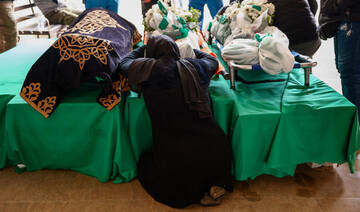
There has also been a heavy humanitarian toll, with more than 1,070 people killed and more than 1 million displaced — about 14 percent of the population — according to the Disaster Risk Management Unit at the Prime Minister’s Office and the Ministry of Social Affairs.