BRUSSELS: The United Nations’ refugee chief urged donors on Wednesday to provide more funds to manage the humanitarian fallout from the widening war in the Middle East, saying his agency had so far received less than 10 percent of the money it needs.
Thousands have been killed across the region and millions displaced in Iran and Lebanon since the United States and Israel launched strikes on Iran on February 28, prompting Tehran to retaliate with attacks on Israel, US bases and Gulf states.
Lebanon was pulled deeper into the conflict this month after Iran-backed Hezbollah fired rockets and drones into Israel, triggering heavy Israeli bombardment across the country.
“We appealed for the region for $69 million. We’ve only received less than 10 percent of that so far,” Barham Salih, the UN High Commissioner for Refugees, told Reuters in an interview in Brussels.
“This is a huge, huge crisis, and people need help.”
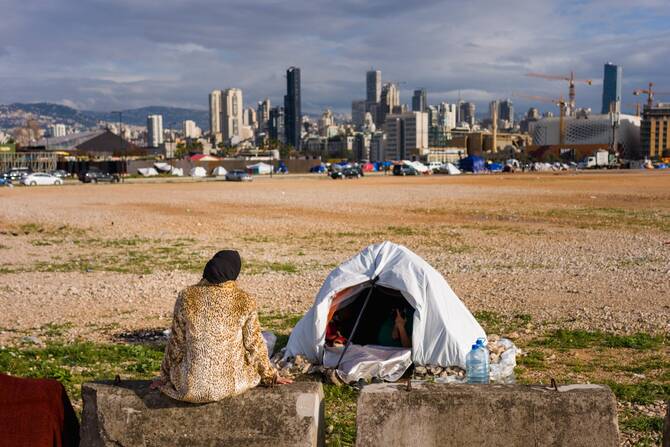
Inside Iran, around 3.2 million people have been displaced, while more than one million people have been forced to leave their homes inside Lebanon — roughly 17 percent of its population — in recent weeks as the humanitarian crisis deepens.
“The number of displaced around the world is unprecedented in history, at a time when the resources have really shrunk,” he said.
Aid agencies have been rocked by funding cuts from major donors, led by the US and other Western powers which have prioritized defense spending prompted by growing concerns about Russia.
The expanding US-Israeli war on Iran has also shaken global supply chains, with airspace closures and the halt of shipping through the Strait of Hormuz affecting humanitarian supplies bound for crises elsewhere.
“We rely heavily on the support we get from our logistics hub situated in the UAE. This is where we fly our material and resources from to Africa and to Asia,” he said.
“Because of these attacks on the UAE, much of these operations have been hampered and delayed. So this has a huge impact on the reality of what we do and on helping vulnerable populations across the world.”


![]()

UN needs more funds to help people displaced by Mideast war, refugee chief says
Short Url
https://arab.news/c4bsk
UN needs more funds to help people displaced by Mideast war, refugee chief says
- Around 3.2 million people have been displaced in Iran since the US and Israel launched strikes on the country on Feb. 28
- Aid agencies have been rocked by funding cuts from major donors, led by the US and other Western powers


Latest updates


Recommended


© 2026 SAUDI RESEARCH & PUBLISHING COMPANY, All Rights Reserved And subject to Terms of Use Agreement.