

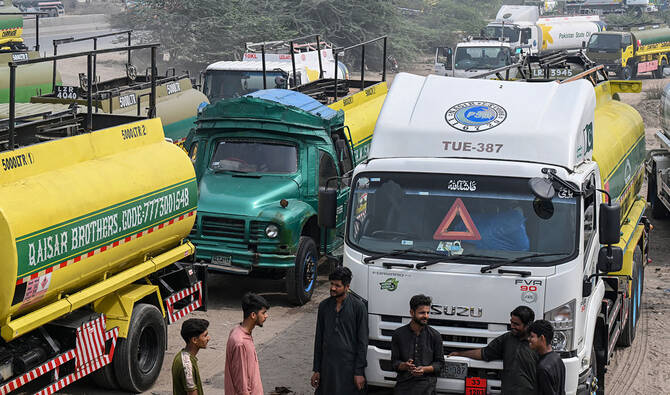

ISLAMABAD: Pakistan’s oil regulator held a training session for industry stakeholders on a digital track-and-trace system for petroleum products, an official statement said on Tuesday, as the country moves to tighten oversight of its fuel supply chain amid market disruptions caused by the ongoing war in Iran.
The Oil and Gas Regulatory Authority (OGRA), in collaboration with the Punjab Information Technology Board (PITB), conducted an industry-wide session in Islamabad to introduce the platform, which aims to digitize monitoring across imports, production, storage and retail distribution.
The initiative comes as Pakistan grapples with rising global oil prices following last month’s strikes by the United States and Israel on Iran, which triggered retaliatory attacks across the Gulf, disrupted shipping routes and pushed up energy costs.
Islamabad earlier raised fuel prices by up to Rs55 per liter and increased the levy on high-octane fuel by Rs200 as part of efforts to manage the impact.
“The initiative will significantly strengthen regulatory oversight, improve service delivery and support data-driven decision-making within the sector,” OGRA Chairman Shahzad Iqbal said about the system, according to the statement.
The digital platform integrates key operational areas, including import and export management, production and stock reporting, sales and dispatch monitoring, and real-time connectivity across refineries, storage depots and retail outlets, allowing regulators to track petroleum movement nationwide.
More than 200 industry representatives attended the session, with additional participants joining virtually, while technical experts from PITB walked stakeholders through modules covering refinery operations, oil marketing dashboards, stock reporting and transit tracking.
Pakistan has been closely monitoring global oil markets and domestic supplies as the Middle East crisis unfolds, with officials holding daily reviews of procurement, logistics and diplomatic channels to ensure continuity.
“We meet on a daily basis so that we look at procurement, we look at the sources of procurement, we look at logistical issues, we look at maritime affairs, we look at diplomatic efforts,” Finance Minister Muhammad Aurangzeb said on Sunday.
“On the basis of this, we say that by April, we are in a good place in terms of the supply situation,” he added.


