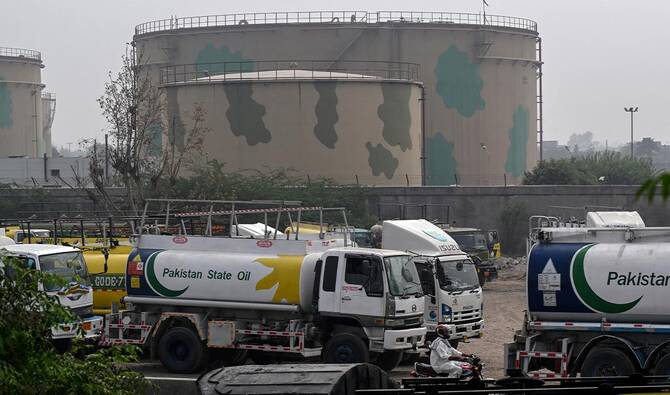

ISLAMABAD: Pakistan on Saturday said support from Saudi Arabia and alternative supply routes were helping sustain fuel imports amid a sharp global oil shock triggered by the ongoing conflict involving Iran, the United States and Israel.
The crisis has driven crude oil prices from around $70 per barrel in late February to as high as $160–170 in recent weeks, disrupting supply chains and raising concerns over energy security for import-dependent economies like Pakistan.
The surge forced Islamabad earlier this month to increase petrol and diesel prices by nearly Rs55 ($0.20) per liter, pushing fuel costs above Rs320 ($1.14) per liter, while also triggering broader inflationary pressures across transport, food and retail sectors.
To manage the impact, the government introduced a series of austerity measures, including closing schools for two weeks, cutting fuel allocations for government vehicles by 50 percent, reducing official travel and shifting public sector offices toward shorter workweeks and remote work arrangements.
“Despite the difficult situation, Saudi Arabia is still providing us oil through alternative routes,” Petroleum Minister Ali Pervaiz Malik said, referring to supply lines that bypass traditional Gulf transit chokepoints.
He said Pakistan was also receiving shipments via ports such as Yanbu and Fujairah, as part of efforts to maintain uninterrupted fuel availability.
Malik said the government’s priority was to ensure supply continuity even as global prices surged, adding that authorities had allowed partial price adjustments earlier while absorbing further increases to ease the burden on consumers ahead of Eid.
The minister said the government had also mobilized resources through internal cuts, including reductions in official expenditures and fuel use, to cushion the economic impact of the crisis.
Analysts say Pakistan’s reliance on imported fuel leaves it highly exposed to external shocks, particularly during periods of geopolitical instability in the Middle East, which supplies a major share of its energy needs.
The ongoing conflict has also disrupted maritime routes and heightened risks around key oil transit corridors, prompting countries across Asia to explore alternative supply chains and conservation measures.